
Money shapes us long before we’re old enough to understand what it is. Growing up with very little doesn’t just teach you practical lessons about budgeting or making do. It rewires how you think, how you feel about rest, how you respond to an unexpected bill, and whether you believe good things are really meant for you. Those lessons don’t disappear the moment your paycheck gets bigger.
Remarkably, the effects of early childhood poverty appear long-lasting and are not simply corrected by better financial security later in life. That’s the part most people don’t expect. You can build a stable income, a full pantry, and a comfortable home, and still carry the mental habits that poverty installed decades ago. Here are eleven of the most common ones.
1. Stockpiling Things “Just in Case”
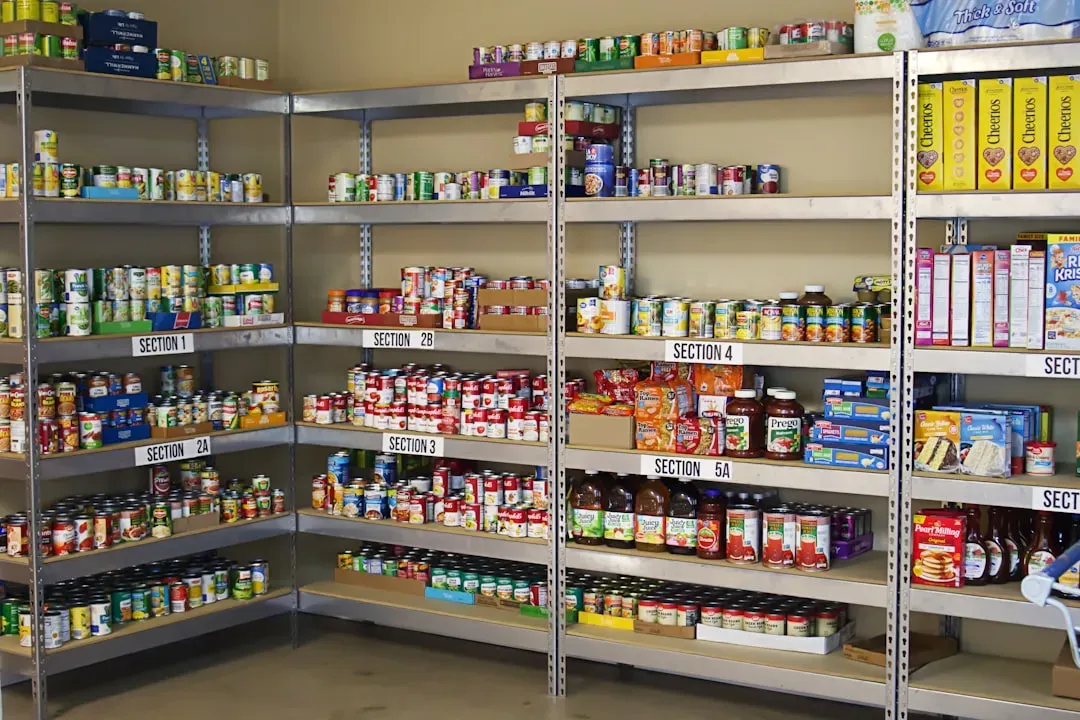
People who grew up in scarcity often accumulate more than they need right now because “right now” was never a reliable indicator of what tomorrow would bring. This behavior is rooted in what researchers call resource anxiety, a persistent fear that essentials might become unavailable. A cabinet full of extra toothpaste or a freezer stacked beyond reason isn’t quirky preparedness. It’s a memory encoded into behavior.
When you’ve experienced empty cupboards as a kid, a full pantry becomes emotional security. Sales trigger a primal response to stock up. Even when the financial situation has long since improved, the relief of abundance doesn’t fully override the old anxiety of running out. The stockpile becomes a standing insurance policy against a disaster that may never come.
2. Feeling Guilty About Spending on Yourself

Adults who experienced financial scarcity in childhood often display patterns like extreme frugality even when financially stable, anxiety when spending money on necessities, shame around financial decisions, and difficulty enjoying financial success. It shows up in small, specific moments: hesitating over a reasonably priced meal, returning something you actually wanted, or mentally calculating whether a purchase was “worth it” long after you’ve bought it.
Growing up in scarcity teaches you that resources flow outward, toward rent, groceries, emergencies, other people’s needs. The idea that money could flow toward your own pleasure feels foreign, almost dangerous. This isn’t generosity. It’s a trained instinct that frames personal spending as irresponsible, even when the numbers say otherwise.
3. An Almost Physical Reaction to Wasted Food

Many people who grew up in families that stretched out meals and struggled to put food on the table learned that wasting food wasn’t an option. Even in adulthood, where they may have more financial control, stability, and comfort, that mindset never truly goes away. It’s a scarcity belief that wasting food is contributing to financial insecurity. Watching someone toss half a meal in the trash can produce a disproportionately strong reaction, one that’s hard to explain to someone who’s never gone without.
When food was uncertain, finishing everything was survival logic. You ate when food was available because availability wasn’t guaranteed. That programming doesn’t automatically update when you reach adulthood and food security. The clean plate habit, the saved leftovers, the guilt about throwing out anything edible – these are not neurotic quirks. They’re logical responses to a past where the next meal wasn’t a given.
4. Difficulty Accepting Help From Others

Growing up poor often means learning early that help isn’t always available. Studies on childhood adversity suggest that limited access to support can lead to heightened self-reliance later in life. For adults, financial independence often equates with safety and dignity. Asking for help can feel dangerously close to being vulnerable, and vulnerability in childhood sometimes came with real consequences.
Relying on others can feel uncomfortable or even dangerous, not because they don’t trust people, but because dependence once came with uncertainty or disappointment. They may work harder than necessary to avoid needing help. Accepting financial support, shared expenses, or even gifts can trigger guilt or unease. The reflex to refuse help, to say “I’m fine” when you’re not, has roots in a time when needing something and not getting it was a real possibility.
5. Overworking as a Default Setting

Overworking as a trauma response involves the compulsion to constantly hustle, driven by the subconscious belief that if you stop working for even a moment, you will lose everything. It doesn’t always look dramatic. Sometimes it looks like never fully switching off, adding a side project when things are going fine, or feeling uneasy during a quiet weekend.
If you grew up in a household where every hour counted toward survival, relaxing feels like danger. Adults carry this forward by overworking, stacking side hustles, or filling every gap with “productive” tasks. Stillness feels uncomfortable, even unsafe. Rest, in a home where money was tight, could carry the unspoken message that someone wasn’t doing enough. That association tends to linger.
6. Keeping Things Long Past Their Usefulness

Psychologists call this behavior scarcity conditioning. It’s a survival strategy born from the mindset that resources are rare, and you can’t count on replacing anything easily. While it can lead to clutter, it’s also a sign of resourcefulness, an ability to see potential in what others overlook. The ripped shirt becomes a cleaning rag. The cracked phone case gets taped. The worn-out shoes get repaired rather than replaced.
There’s genuine practicality in this habit, and it often produces people who are remarkably inventive with limited materials. The harder part is when the behavior persists past usefulness, when the drawer fills with dead batteries, tangled cables, and expired coupons, held onto not because they’re needed but because throwing things away still feels like a small, wrong act.
7. Hypervigilance Around Money

You might notice hypervigilance about money, constantly worrying about financial security, or avoiding financial planning altogether due to overwhelming feelings. This kind of vigilance isn’t always experienced as anxiety by the person who has it. Often, it just feels like being responsible, alert, careful. It’s automatic, like checking the lock on a door you already know is closed.
This hypervigilance around money isn’t a disorder or dysfunction. It’s an adaptation. A survival skill. A form of intelligence that develops when the margin for error is razor-thin. In the context of childhood experience, a scarcity mindset can become a lasting neurobiological adaptation, with the nervous system remaining locked in a state of financial hypervigilance long after the actual threat of poverty has passed.
8. Discomfort With Trusting Financial Systems

Banks, investments, and credit cards can feel like traps waiting to snap shut. Watching parents get burned by fine print and hidden fees leaves a mark. The idea of putting money into anything more complicated than a savings account can cause deep unease. There’s a settled belief that the system is rigged against people like you. That belief isn’t always wrong, but it can become costly when it leads to avoiding investments, retirement accounts, or financial planning altogether.
Resource scarcity induces a “scarcity mindset,” characterized by increased focus on immediate goals at the expense of peripheral tasks and long-term planning. When the priority in childhood was simply making it to next week, thinking decades ahead in financial terms can feel foreign and even naive. The result, in some cases, is an adult who is careful with day-to-day money but disengaged from the longer-term picture.
9. Catastrophizing Minor Financial Setbacks

Catastrophizing involves interpreting a minor financial setback, such as a bad quarter or an unexpected repair, as the beginning of total financial ruin. A car repair, a medical copay, an unexpected utility spike – any of these can trigger a response that feels wildly disproportionate to people who didn’t grow up with financial instability. The brain isn’t being irrational. It’s drawing on a history where small setbacks actually did spiral into serious problems.
Every financial decision becomes a worst-case scenario planning session. A surprise expense can set off a spiral of “what-ifs.” Any financial opportunity is automatically assumed to be too good to be true. Recognizing this pattern is the first, and often hardest, step toward responding to present-day problems with present-day perspective rather than childhood fear.
10. Struggling to Feel Like “Enough” Is Enough

Having enough never feels like enough because you remember when you had nothing. There’s a constant push for more, more savings, more income, more security, even when you’re well past what you need. Every time a financial goal is met, the goalposts move immediately. You can’t enjoy what you have because you’re too focused on getting more of it.
The nervous system’s threat-detection was programmed during a time of actual scarcity. The brain still equates spending money with existential threat, regardless of current bank balance. This is why financial milestones that should feel like victories often feel hollow or even frightening. The goal line keeps moving because the underlying fear, not the account balance, was always the real driver.
11. Avoiding Conversations About Money

Talking about money can feel like walking into a trap. As kids, people may have overheard tense arguments about bills, or learned that money talk was dangerous. As adults, this turns into a kind of avoidance. Salaries get downplayed, negotiations get hesitated over, and financial planning gets pushed aside. Even when money talk is logically necessary, the shame attached to those early conversations makes it hard to face directly.
Compulsive saving is an indication of unresolved financial trauma, which can show up as anxiety around spending. Financial trauma is incredibly common, with roughly two thirds of Americans reporting experiencing it. For many people raised without much money, the silence around finances wasn’t just uncomfortable – it was protective. Breaking that silence as an adult takes more than good intentions. It takes recognizing that the avoidance was learned, not inherent.
These behaviors aren’t character flaws. They’re adaptations. Each one made sense at the time it was learned, in a household where resources were genuinely uncertain and the margin for error was small. The point isn’t to erase them entirely, since some of this frugality and vigilance translates into real strengths, but to know where they come from. Behavior that was once survival is worth examining when it starts costing more than it saves.





Leave a Reply