
History is supposed to make sense. Dates, causes, effects – a clean chain of events we can follow like a trail of breadcrumbs. But every now and then, something happens that makes even the most rational person pause and whisper, “Wait, what?”
These are the moments that don’t fit neatly into any textbook. The overlaps too strange to be planned, the parallels too precise to feel accidental. Some of them have perfectly reasonable explanations. Others? Honestly, it’s hard to say. Let’s dive in.
1. Lincoln and Kennedy: A Century Apart, Mirroring Each Other
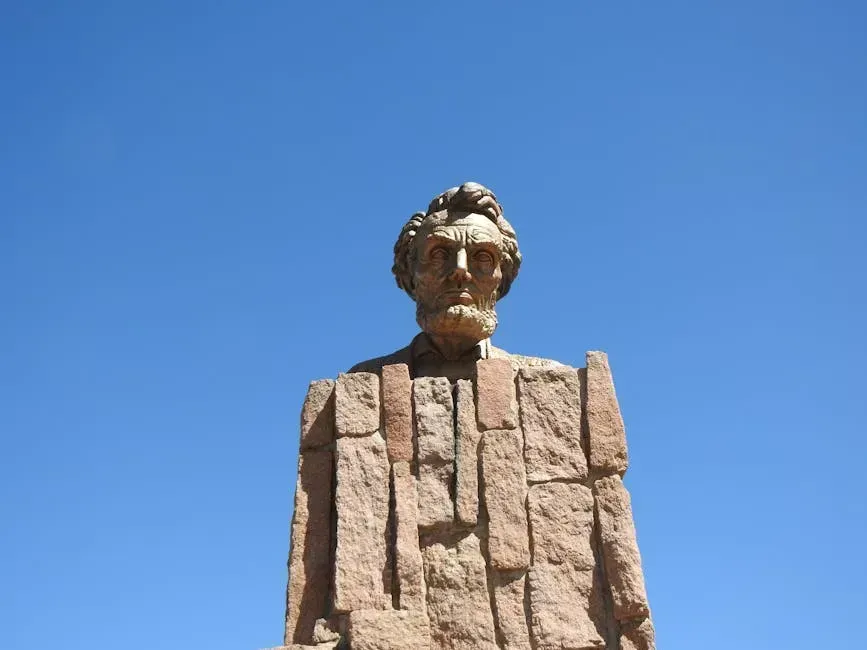
Few historical coincidences have captured public imagination quite like the eerie parallels between Abraham Lincoln and John F. Kennedy. Both presidents were elected to Congress in ’46 – 1846 and 1946 – and later to the presidency in ’60, 1860 and 1960. That’s a one-hundred-year echo so precise it almost sounds engineered.
Both presidents were shot in the head on a Friday and in the presence of their wives. Both of the presidents’ successors were Democrats named Johnson – Andrew and Lyndon – with six-letter first names, both born in ’08. Coincidence stacked upon coincidence, decade after decade.
Booth shot Lincoln in a theater and then fled to a barn that was being used as a warehouse. Oswald killed Kennedy from a warehouse and then fled to a theater. That reversal is almost theatrical in itself. Lincoln and Kennedy were both killed in a “Ford” – Lincoln was shot in Ford’s Theater, and Kennedy was shot while riding in a Lincoln Continental four-door convertible made by Ford Motor Company.
Despite the seemingly impressive surface appearance, several of these entries are either misleading or factually incorrect, and the rest are mostly mere superficial coincidences. Still, the sheer volume of real overlaps is enough to raise the hairs on the back of your neck.
2. The Novel That “Predicted” the Titanic – 14 Years Early

Futility is a novella written by American author Morgan Robertson, first published in 1898. It was revised as Futility, or The Wreck of the Titan in 1912. It features a fictional American ocean liner named Titan that sinks in the North Atlantic Ocean after striking an iceberg. The Titan and its sinking are famous for their similarities to the real-life passenger ship RMS Titanic and its sinking 14 years later.
His imagined ship is nearly a mirror image of the Titanic: both vessels were marvels of engineering, meant to set new standards for luxury travel. Each had a capacity of around 3,000 people, making it the world’s largest passenger ship at the time of its construction, and each was equipped with state-of-the-art safety features meant to protect it from sinking. The ships were remarkably similar in size – Robertson’s Titan was 800 feet long, while the Titanic measured 882.5 feet.
Both ships set sail in April, and disaster struck each ship around midnight. The Titanic sank in the early-morning hours of April 15; Robertson didn’t mention a specific date. Following the Titanic’s sinking, some people credited Robertson with clairvoyance. Robertson denied this, claiming the similarities were explained by his extensive knowledge of shipbuilding and maritime trends. Whether you believe him or not is entirely up to you.
3. Thomas Jefferson and John Adams: Dying Together on the Nation’s Birthday
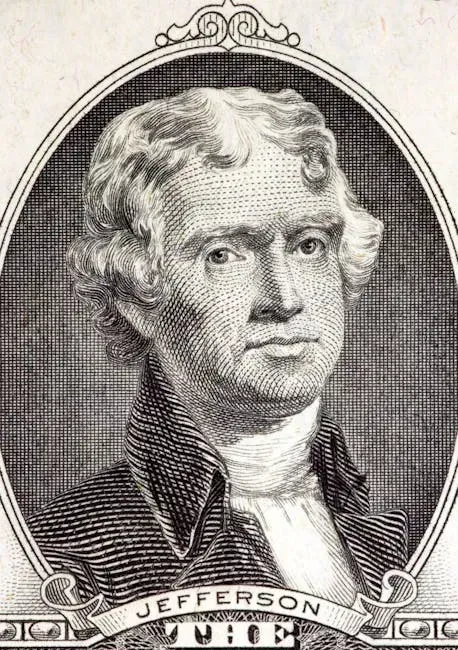
The deaths of former U.S. Presidents Thomas Jefferson and John Adams on July 4, 1826 – the day of the Jubilee, the 50th anniversary of the adoption of the Declaration of Independence – was an extraordinary and eerie coincidence. Jefferson died shortly after noon at the age of 83 in Monticello, Virginia. Several hours later Adams died in Quincy, Massachusetts at the age of 90.
On July 4, 1826, at the age of 90, Adams lay on his deathbed while the country celebrated Independence Day. His last words were, “Thomas Jefferson still survives.” He was mistaken: Jefferson had died five hours earlier at Monticello at the age of 83. There is something almost poetic, almost unbearable, about that.
Whatever the reason behind it, these deaths and their date were a remarkable concurrence – and one made even more striking five years later, with the death of James Monroe on that same auspicious date. Three presidents, all dying on July 4. Scholars evaluated the circumstances under six different criteria, ranging from mere coincidence and divine intervention, to the men’s willingness or desire to die on the anniversary day. No definitive answer has ever emerged.
4. Edgar Allan Poe’s Chilling “Prediction” of a Real Murder at Sea
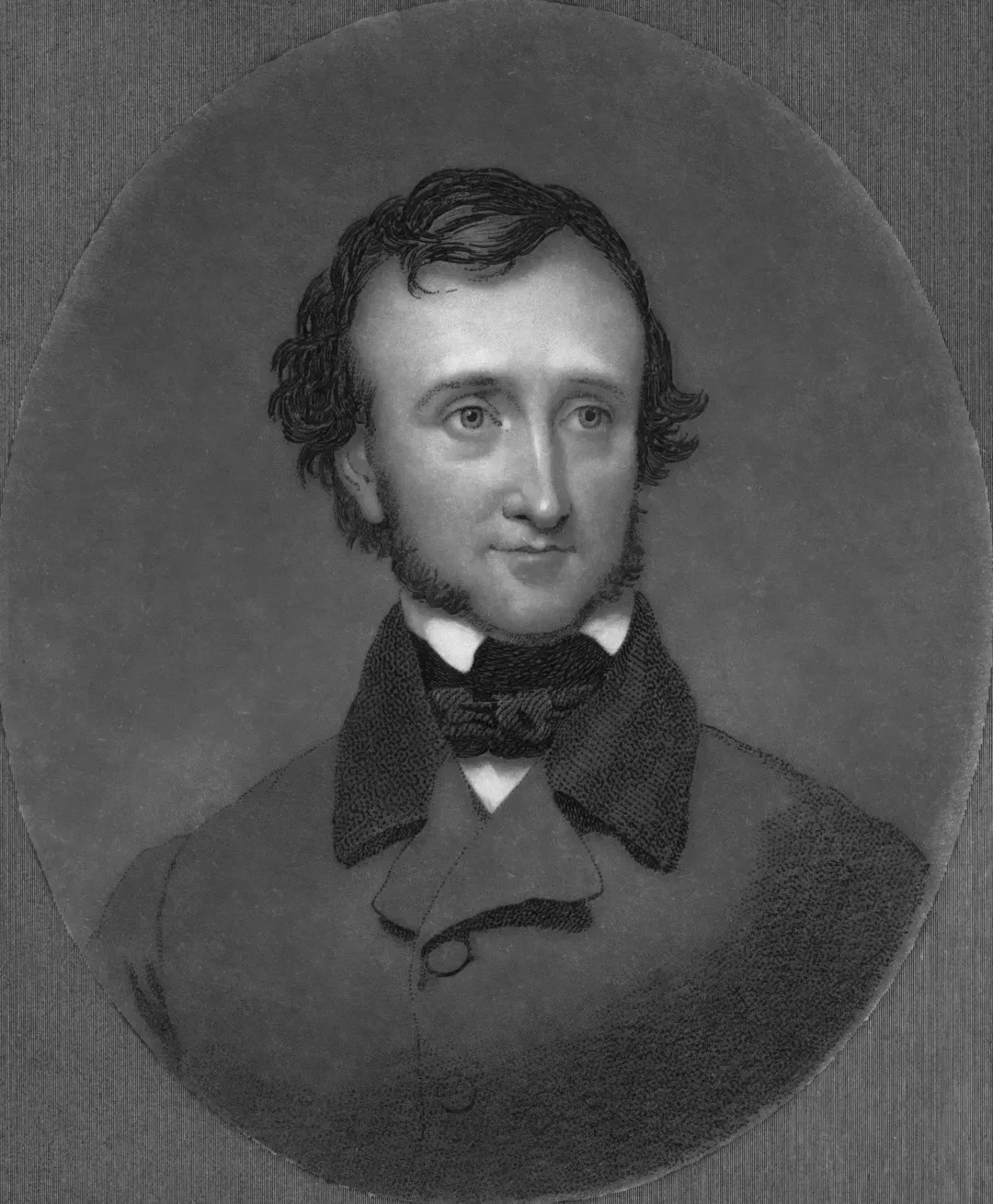
Edgar Allan Poe’s tale, The Narrative of Arthur Gordon Pym, describes a shipwreck where desperate survivors resort to cannibalism – choosing a victim named Richard Parker. Astonishingly, years after Poe’s story was published, a real shipwreck echoed this grim scenario, right down to the victim’s name. The bizarre overlap between fiction and reality leaves readers and historians alike wondering about the limits of coincidence.
In his book, the author describes how four sailors who survived the sinking of their ship were forced to eat a cabin boy named Richard Parker. Although Poe claimed that the story was based on real events, that wasn’t actually true. 46 years later, a boat really did sink, and the members of the crew who were rescued were forced to eat a cabin boy in order to survive.
The cabin boy’s name? You guessed it – Richard Parker. Honestly, this one is the kind of coincidence that makes you question what fiction really is. The real event occurred in 1884, when the yacht Mignonette sank in the South Atlantic. The name match remains one of the most documented and discussed literary coincidences in history.
5. Mark Twain and Halley’s Comet: Born Together, Gone Together
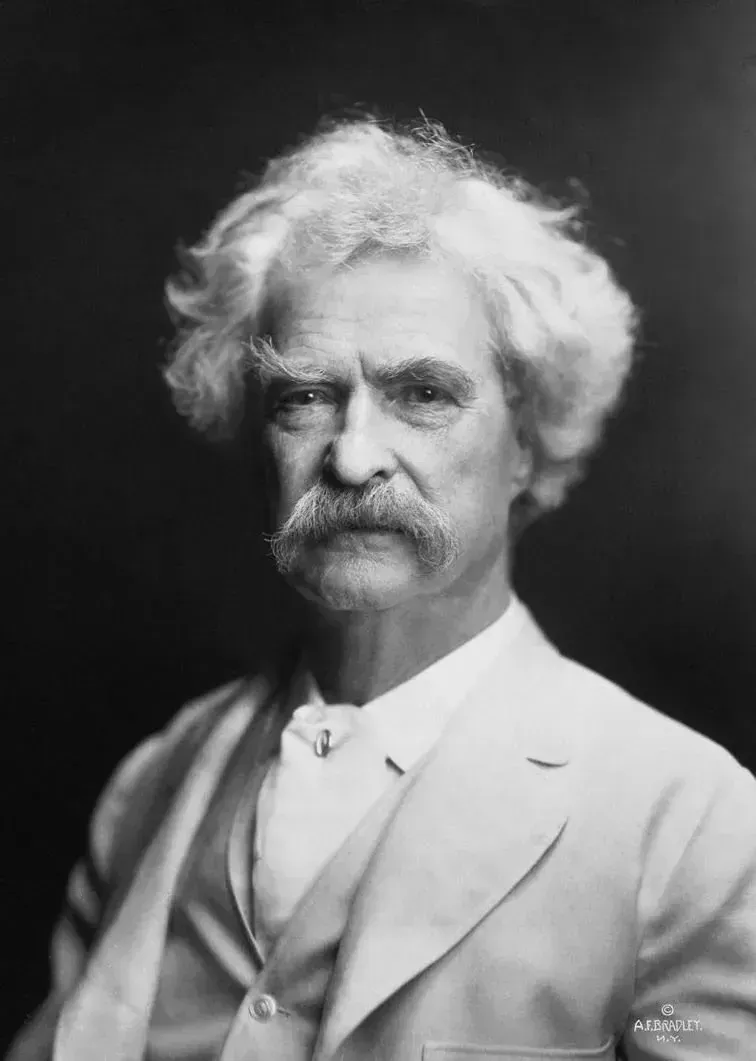
Every 76 years, Halley’s comet soars past Earth, where it’s visible to the naked eye. Mark Twain was born on one year of its passing, in 1835. By 1909, he predicted he’d die the next year, when the comet passed again. Twain wasn’t being dramatic – he seemed genuinely convinced of it.
His prediction was correct. The writer died one day after the comet’s closest approach in 1910. The alignment still stands as an astonishingly personal astronomical coincidence. Think about what it takes for that to actually happen – not just born in a comet year, but dying in the very next one, and predicting it with such calm certainty years in advance.
Twain was known for his wit, but this wasn’t a joke. He spoke about it multiple times in his later years. Whether it was the universe playing along or just a remarkable piece of human intuition, it remains one of the most quoted and verified coincidences in literary history.
6. The Jim Twins: Separated at Birth, Living Identical Lives

In 1979, a set of twins was reunited at age 39. They had been separated at four weeks old, and for 37 years, hardly knew of each other’s existence. So when they met, there were a few surprises: both boys had been named Jim by their adoptive parents, both loved math and carpentry, and both pursued careers in security.
Even eerier, they each married women named Linda, divorced, and remarried women named Betty. Each had a son, one named James Allan and the other one named James Alan, and each also had a dog named Toy. Let that sink in. Same name, same wife names, same dog name, same career. These weren’t choices they made together – they hadn’t even spoken.
The “Jim Twins,” as they became known, were studied extensively by researchers at the University of Minnesota as part of the famous Minnesota Twin Study. Their case became one of the most cited examples in the ongoing debate about nature versus nurture. Science tried to explain it, but even the researchers admitted the depth of the parallels went far beyond what they expected.
7. Franz Ferdinand’s License Plate and the End of World War I
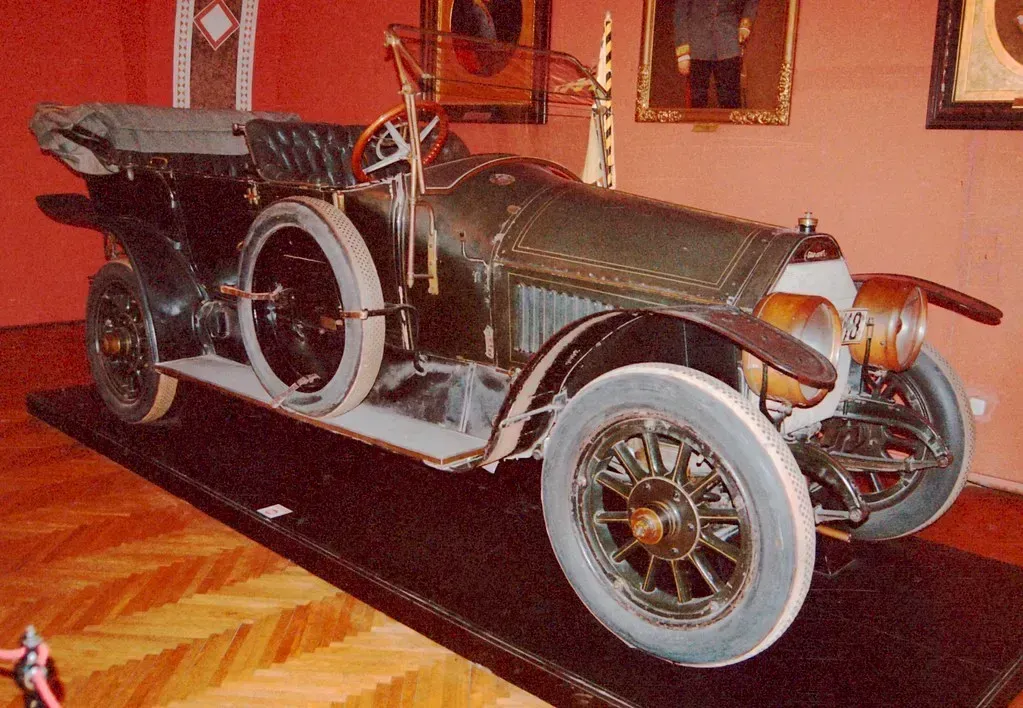
A license plate may seem like trivia unless it reads “AIII 118.” That belonged to the car Archduke Franz Ferdinand rode in when assassinated in 1914. The Great War began. Four years later, World War I ended on 11/11/18. The number on the car that triggered the war matched the date the war ended. Almost impossibly so.
The assassination of Archduke Franz Ferdinand on June 28, 1914 in Sarajevo is widely recognized as the spark that ignited the First World War. Millions of lives were lost in the conflict that followed. Millions upon millions of people died in the First World War, which makes this historical coincidence all the more incredible. According to The Royal British Legion, the first recorded British soldier to die in the war is buried in Belgium’s St. Symphorien military cemetery – mere feet from the grave of the last recorded British soldier to die in the war.
Private John Parr died, reportedly in a German cavalry strike, on August 21, 1914. Four years of bloody combat later, George Edwin Ellison was killed at 9:30 in the morning on November 11, 1918, a mere hour and a half before the call for a ceasefire that would end the war. The men were buried before their identities as the first and last to die were known. A war that began and ended with strangers, forever resting side by side.
8. The Tamerlane Curse: A Tomb Opened, a War Unleashed

When Soviet archaeologists opened Tamerlane’s tomb in 1941, local elders warned it would create a disaster. Within three days, Hitler’s forces invaded the USSR. The tomb, which had been sealed for centuries, carried an inscription warning against its disturbance. The archaeologists, being scientists, proceeded anyway.
On June 20, 1940, Soviet archaeologists uncovered the tomb of Tamerlane, a descendant of Genghis Khan. A warning inscription read “Whoever opens my tomb will unleash an invader more terrible than I.” They opened it anyway. Operation Barbarossa, Hitler’s invasion of the Soviet Union, began on June 22, 1941 – within days of the tomb’s opening.
The legend grew when Stalin ordered the body reburied with honors in 1942, just days before the Soviets claimed victory at Stalingrad. The timing of that reburial, followed so quickly by one of the most decisive Soviet victories of the war, added yet another uncanny layer to the story. Historians treat it as folklore. Those who lived through Stalingrad may not have been quite so dismissive.



Leave a Reply