
Taiwan

Taiwan has recently overtaken its neighbors to record what may be the lowest fertility rate on the planet. Births in Taiwan fell for the 10th consecutive year, with 107,812 newborns, down 20 percent from 2024 and the lowest number since the ministry began keeping statistics. That kind of single year drop is unusual even by the standards of a region already used to bad demographic news.
The fertility rate itself has become almost symbolic of the crisis. Taiwan’s total fertility rate last year dropped from 0.885 to 0.695, marking the fastest decline in recorded history. Officials describe the shrinking population as a security concern, and projections suggest the population could fall by roughly a third within a few decades, with more than half the country eventually over the age of 65.
South Korea

South Korea has been the poster child for low fertility for so long that its recent uptick actually made international headlines. There were 5.0 new births per 1,000 people in 2025, up from 4.7 in 2024. Still, that rise comes off an extremely low base, following eight consecutive years of declines that saw South Korea register the world’s lowest birthrate at 0.72 in 2023, a period marked by sky-rocketing house prices and higher economic participation by women.
The rebound seems tied to something fairly concrete: more people getting married. Marriages, a leading indicator of new births with a lag of one to two years, rose 8.1% in 2025, after a record 14.8% jump in 2024. Seoul, though, remains the toughest spot in the country, since the sharpest rise in new births was in the capital, with Seoul’s fertility rate at 0.63, up 8.9% from 0.58 in 2024, though still the lowest across the country.
Macao

Macao rarely gets the same media attention as its bigger neighbors, but it consistently posts the lowest fertility figures in global comparisons. Macao has the lowest fertility rate of 0.70, followed by Hong Kong (0.75) and South Korea (0.76). Some datasets place the number even lower, with one ranking noting Macau has the lowest at 0.58, followed by South Korea (0.75) and Hong Kong (0.84).
The long term trend line is just as striking as the current snapshot. Demographic trackers point out that Macao, South Korea, and Taiwan have experienced the largest reductions since 1950, each seeing their fertility rates drop by over 85%. Because Macao’s population is small and heavily shaped by its casino based economy and migrant labor patterns, its birth figures swing more sharply from year to year than those of larger countries.
Hong Kong

Hong Kong’s numbers have been genuinely confusing to track lately, bouncing between very low readings and sudden jumps depending on the data source and year. One set of figures shows Hong Kong’s fertility rate for 2024 was 1.43, a 90.01% increase from 2023, when it stood at 0.75. Whatever the exact figure, the underlying birth numbers tell a clearer story of decline.
A 2024 survey captured just how far attitudes have shifted among young residents. The Chinese finance hub has one of Asia’s lowest fertility rates, combined with an ageing population, and last year recorded just 33,200 births in a city of 7.5 million. Perhaps more telling than the raw numbers is the shift in intentions, since a survey by the Family Planning Association of Hong Kong showed 51.1 per cent of young women and 44.8 per cent of young men wanted children, a fall of around nine percentage points over the past decade.
Singapore

Singapore’s fertility rate has been sliding for years, but the 2025 figure marked a particularly sharp drop that caught even local officials off guard. Singapore’s total fertility rate fell to 0.87 in 2025, marking a record low that a top official warned could profoundly reshape the city-state’s society and economy. That’s a steep fall from not long ago, given that the fertility rate declined from 0.97 in 2024, which was also a record low, and a decade ago, it stood at 1.24.
The government’s response has shifted from cash incentives toward a broader rethink of national strategy. Deputy Prime Minister Gan Kim Yong has been direct about the stakes, telling parliament that “Over time, it will be practically impossible to reverse the trend.” Singapore is now leaning more heavily on immigration and workforce technology, since the citizen population is projected to begin shrinking by the early 2040s without new measures.
Japan
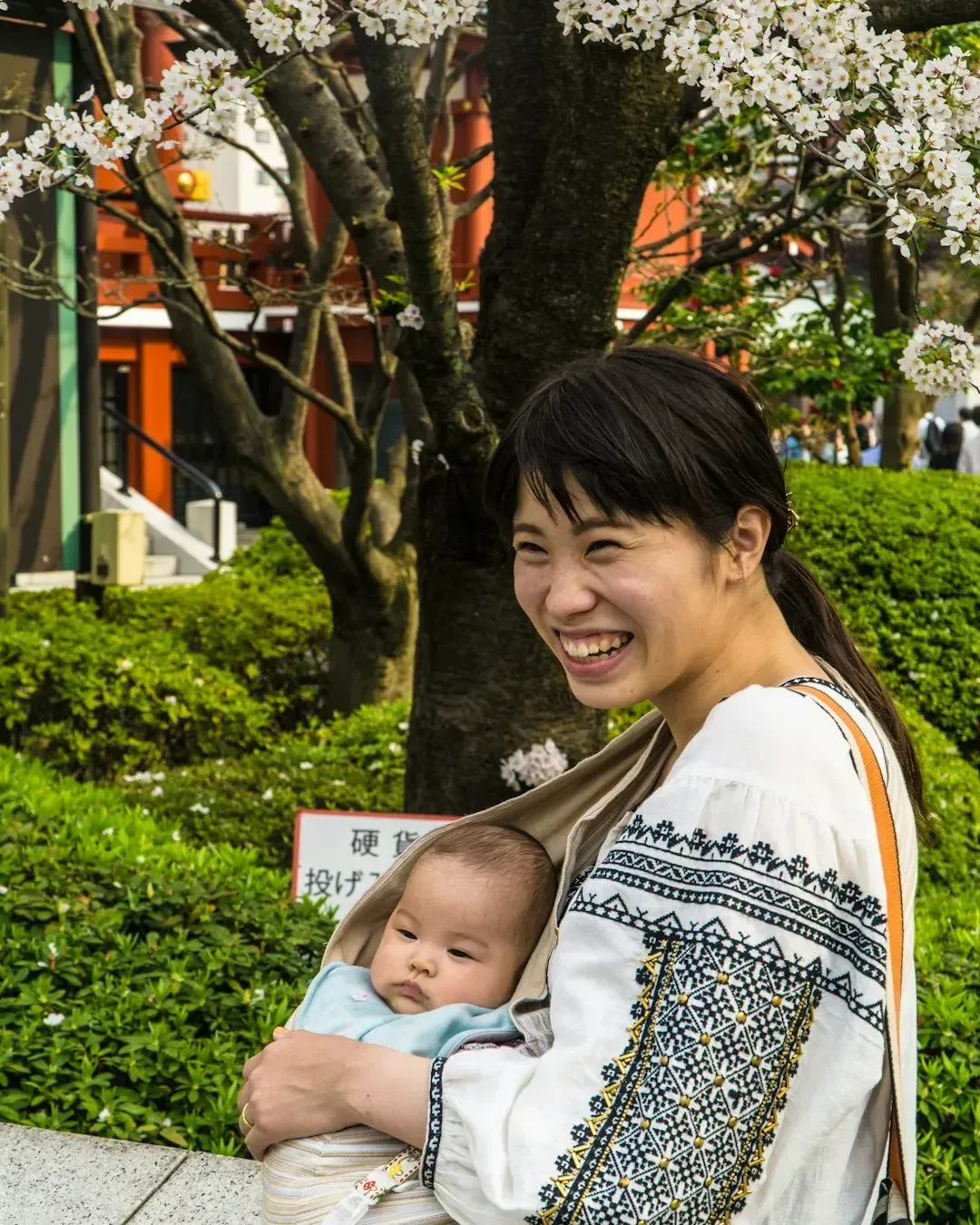
Japan’s birth numbers have been falling for so long that each new low barely registers as news anymore, yet the 2025 figures still stood out. Preliminary data from the ministry shows that 705,809 babies were born in 2025, including those born in Japan to foreign nationals, down 15,179, or 2.1%, from a year earlier, marking the 10th consecutive annual decline and the lowest level since comparable records began in 1899. The scale of the long term drop is hard to overstate, since over the past decade, annual births have fallen roughly 30%.
What makes Japan’s case distinct is the widening gap between births and deaths rather than the fertility rate alone, which at a total fertility rate of 1.14 is actually higher than several of the other countries on this list. Still, the population math doesn’t work in Japan’s favor, because the natural decrease in the population widened to a record 899,845 in a single year, meaning deaths are outpacing births by a margin roughly equivalent to the population of a mid sized city.
Final thoughts





Leave a Reply