
New York City, New York

No city in the country loses retirees at the scale New York does. Retirees are steering clear of New York City, and in just one year, a net 17,084 retirees moved out of The Big Apple, after 23,874 individuals aged 60 and over moved out compared to only 6,790 moving in. That gap isn’t a blip. It reflects years of retirees weighing sky high housing costs and property taxes against what they’d save by relocating to warmer, cheaper states.
The city’s popularity has also been sliding on broader migration measures, not just among seniors. New York City’s in-to-out move ratio went from 1.38 in 2024 to 0.79 in 2025, landing in negative territory alongside very few other major metros. For retirees on fixed incomes, that kind of shift away from the city has been building for years and shows little sign of reversing in 2026.
Los Angeles, California

Los Angeles carries a reputation for sunshine and palm trees, but that image hasn’t kept retirees from leaving in large numbers. Los Angeles ranked second only to New York City in terms of retiree departure, with large net losses of 3,187 retirees. The city’s housing costs and overall cost of living have simply outpaced what many fixed incomes can absorb.
California as a whole has struggled to hold onto its senior population. In fact, 1 in 10 seniors is living in poverty in California, a statistic that helps explain why so many are choosing to relocate rather than stretch a Social Security check further each year. Los Angeles, with some of the highest housing costs in the state, has felt that pressure more acutely than most.
San Francisco, California

San Francisco’s situation is more complicated than a simple decline, but the net effect on its senior population has been similar. San Francisco has a complicated story right now, with crime falling but affordability failing to follow suit. Crime fell dramatically in 2025, with total violent incidents declining more than 25% from the previous year, according to the San Francisco Police Department.
Even so, that improvement hasn’t been enough to reverse the outbound trend among older residents. Crime improvements haven’t made the city affordable, and over the past few years, others have fled the picturesque Northern California city, which has been buffeted by high housing costs and perceptions of poor public safety. For retirees weighing decades of savings against San Francisco’s rent and healthcare costs, the calculation increasingly favors leaving.
Chicago, Illinois

Chicago’s struggles with retiree retention have less to do with any single factor and more to do with a combination working against it. Despite hosting one of the Midwest’s most renowned cities, the combination of budget issues, crime, climate, and lagging public health make Illinois a bottom-ranked state for retirees. Property taxes in the Chicago area rank among the highest in the Midwest, adding another layer of pressure on fixed incomes.
Then there’s the weather, which becomes a genuine safety concern rather than just an inconvenience as people age. The brutal winters alone should give any retiree pause, since icy sidewalks and sub-zero temperatures are genuinely dangerous for older adults, not just uncomfortable. For many longtime Chicagoans, that combination of cold, taxes, and state fiscal troubles has been enough to push a move south or west from a someday plan into an active search.
Ann Arbor, Michigan

Ann Arbor doesn’t come up as often in retirement migration conversations, but the data marks it as a standout case. Relative to population size, Ann Arbor, MI is losing retirees at the fastest rate of any city tracked in a recent SmartAsset study of the nation’s largest metro areas. That’s a striking distinction for a college town known more for its university culture than for retiree flight.
Part of the explanation likely ties to Michigan’s harsh winters and a cost of living that, while not extreme by national standards, still outpaces what many retirees can offset with local tax breaks. Unlike Sun Belt cities pulling in large numbers of younger retirees, Ann Arbor simply isn’t replacing the seniors who leave with new arrivals in the same age bracket. The imbalance shows up starkly once population size is factored into the equation.
Bakersfield, California

Bakersfield has become something of a symbol for California’s broader outmigration story. More than any other city, Bakersfield, California, felt emptier in 2025, with an in-to-out move ratio of 0.48, joining three other California cities as some of the least popular real estate in the U.S. That ratio means roughly two people left for every one who arrived, a stark imbalance for any city trying to hold onto its population.
Retirees factor into that outflow alongside younger residents chasing job opportunities elsewhere. California’s overall affordability crisis, combined with a Central Valley economy that hasn’t always kept pace with rising housing costs, has made Bakersfield a harder sell for people trying to make retirement savings last. The city’s struggles mirror what’s happening in nearby Fresno, Riverside, and Long Beach, all of which show similar patterns of high move-out interest relative to arrivals.
Fort Myers, Florida
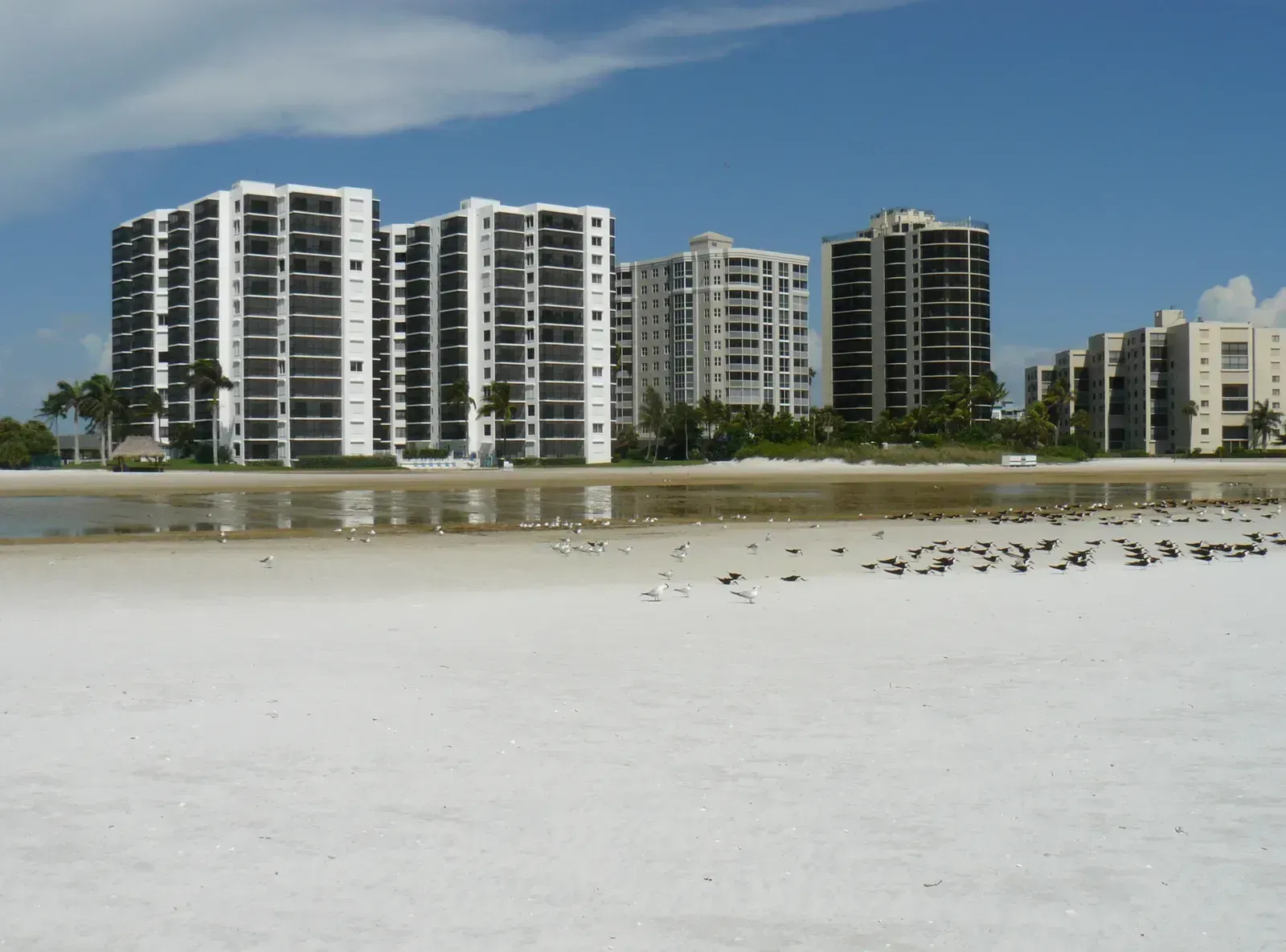
Florida’s retirement magnetism gets most of the headlines, but not every Florida city is thriving in that role. Fort Myers Beach, Florida joined the top five cities nationally, with senior population declines exceeding 21 percent. That’s a remarkable reversal for a coastal community long treated as a retirement destination in its own right.
Rising insurance costs and repeated hurricane damage have reshaped the calculus for many longtime residents. For decades, it was a retiree haven, with sunshine, a reasonable cost of living, and a slower pace of life, but now those same retirees are getting squeezed. Between climbing homeowners insurance premiums and the physical toll of storm recovery, a growing share of Fort Myers’ older residents have decided the tradeoffs no longer add up the way they once did.
What’s driving the pattern

Across all seven cities, the underlying forces look remarkably similar even though the geography couldn’t be more different. Housing costs, property taxes, insurance premiums, and general cost of living show up again and again as the reasons retirees give for leaving. About one-third of retirees in 2025 were already cutting back on essentials like groceries and medical care just to make ends meet, which helps explain why even modest cost differences between cities can tip the decision toward relocating.
There’s also a broader national shift underway that goes beyond any single city’s problems. Retirement migration is more about escaping high taxes and unaffordable living than fleeing snowy climates for a growing share of older Americans, which is why places like South Carolina and Tennessee keep climbing the destination rankings while legacy retirement hubs lose ground. The cities on this list aren’t necessarily bad places to live. They’ve simply become harder places to retire comfortably on a fixed income, and the migration numbers are making that gap increasingly visible.




Leave a Reply