
Hawaii: A hard place to leave once you’ve arrived

Hawaii has topped national happiness rankings for years running, and the reasons go beyond postcard scenery. Hawaii ranked first overall with a score of 69.58, ranking second for Emotional and Physical Well-Being, with the second-lowest share of adult depression of any state, the fifth-highest income growth rate, and the country’s fourth-lowest divorce rate. The state also benefits from something few others can claim: the longest average lifespan in the U.S. of 81.48 years.
What is striking is that Hawaii still loses a small number of residents each year on paper, mostly due to the astronomical cost of housing. Yet those who stay report unusually high life satisfaction, and the islands remain a place many locals describe as impossible to imagine leaving permanently. Hawaii ranked first in the nation in 2025’s report, with the second-lowest depression rate and the highest self-reported life satisfaction. That combination of outdoor lifestyle and long-term contentment keeps generations of families anchored to the same islands.
Maryland: Steady paychecks, steady lives

Maryland rarely gets the attention that flashier states do, but its numbers tell a compelling story. Maryland is the second-happiest state, in part because it has one of the lowest unemployment rates in the nation, at 3.2%, along with the highest percentage of households earning over $75,000 per year. That kind of financial stability tends to reduce the itch to relocate somewhere cheaper or more promising.
It is not only about money, either. Maryland residents report liking what they do and being motivated to achieve their goals at the third-highest rate in the U.S., and the state has the third-lowest share of people who report having traumatic events during their childhood, along with the third-highest share of people who report having supportive relationships and love in their lives. Add in a comparatively low suicide rate, and you get a state where day-to-day life feels manageable in a way that keeps people from looking elsewhere.
Nebraska: The quiet climber

Few would have guessed Nebraska belonged in this conversation a few years ago, but its rise has been dramatic. Nebraska made a notable leap in 2025’s rankings compared to the previous year, when the state placed ninth. Analysts point to broad improvements across nearly every category that matters to daily well-being.
The economic picture explains much of it. Nebraska now has one of the lowest unemployment rates in the country, combined with the second-highest level of economic security, which means residents are more likely to feel financially stable and protected. When people feel secure in their jobs and their finances, the pull toward a bigger city or a different state tends to fade. Nebraska has essentially proven that a low-key Midwestern life can rival the flashier coastal alternatives.
Utah: Where work and community line up

Utah has carved out a reputation as one of the most balanced states in the country, and the data backs that up. Utah is the second-happiest state in the United States, ranking first for Work Environment and first for Community and Environment. That is a rare combination, since most states excel in one category while lagging in another.
The details matter here too. Utah residents work the fewest hours while still enjoying their work more than residents of any other state, and the state has the highest volunteer rate, the lowest divorce rate, and is the fourth-safest state. A strong volunteer culture and a low divorce rate suggest social bonds that run deeper than the average state, which helps explain why so many Utahns describe their communities as tightly knit and hard to leave.
South Carolina: The migration magnet
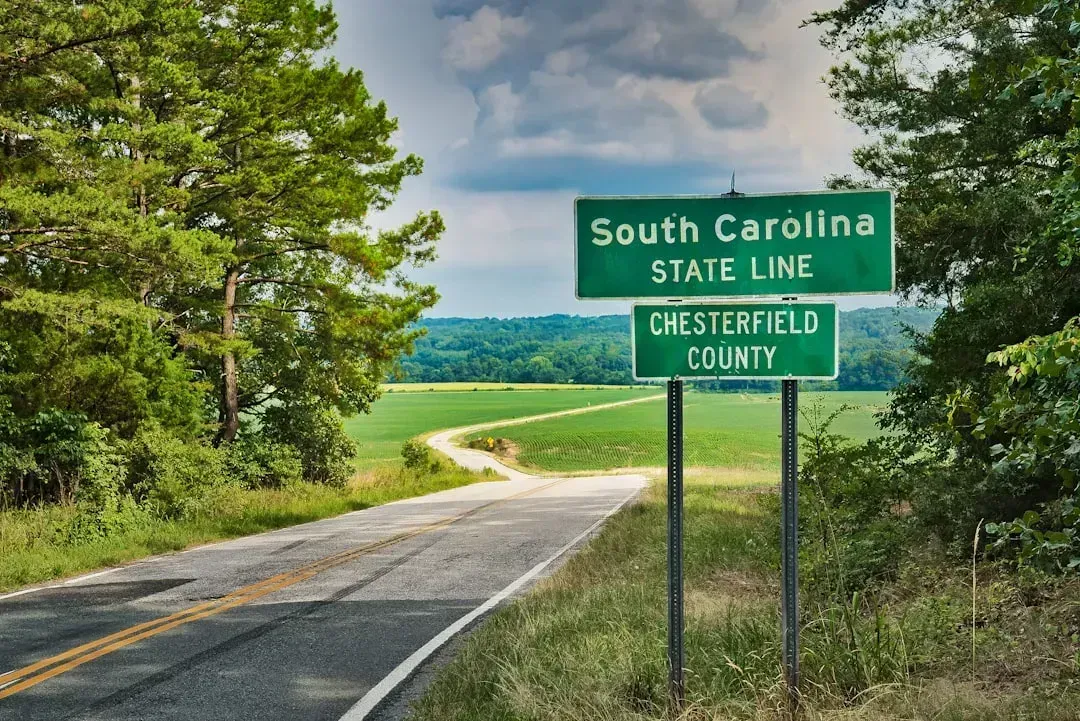
Unlike the states above, South Carolina’s appeal shows up less in happiness surveys and more in raw movement data. People are not just staying, they are actively choosing to arrive. The most moved-to states in 2025 were Idaho, South Carolina, North Carolina, Tennessee and Florida, and South Carolina has consistently ranked among the very top destinations for domestic movers.
The economic backdrop supports that trend. South Carolina announced $9.12 billion in total capital investment in 2025, its third-highest year for industry recruitment on record, along with more than 8,100 new jobs, according to the South Carolina Department of Commerce. With Charleston, Greenville, and coastal communities all drawing new arrivals, the state has become a place where newcomers put down roots quickly rather than treating it as a temporary stop.
Idaho: The mountain state that keeps growing

Idaho’s population boom has been one of the more consistent migration stories of the past several years, and it shows no sign of slowing. The state’s growth has not been driven by international arrivals but overwhelmingly by Americans relocating from other states in search of space, affordability, and a slower pace of life.
Arizona, Idaho, Nevada, Utah, and Washington have all ranked in the top 10 for overall growth in the region, with Idaho standing out for how sustained its appeal has been rather than a single boom year. Once people relocate to Idaho for outdoor access and lower housing costs relative to neighboring West Coast states, relatively few decide to move on again. That stickiness, more than any single ranking, is what earns Idaho its place on this list.
North Carolina: Growth without the churn

North Carolina has become the single biggest magnet for domestic movers in the entire country, which on its own says something about quality of life. North Carolina attracted more domestic movers than any other state in 2025, gaining 84,100 residents from elsewhere in the U.S. That is not a marginal figure. It is the largest net gain of any state in the nation.
What makes North Carolina notable is that this growth has not translated into the kind of instability seen in some fast growing states. Research Triangle jobs, a lower cost of living than most coastal metros, and a milder climate than the Northeast all combine to give new arrivals reasons to settle rather than treat the state as a stepping stone. The state’s consistent position atop migration rankings over multiple recent years suggests this is a durable trend rather than a temporary spike.
The bigger picture behind these numbers

Taken together, these seven states show that resident satisfaction rarely comes from one single factor. It is usually a blend of financial security, low unemployment, strong community ties, and a cost of living that does not eat away at everyday comfort. The states with the worst net domestic outmigration are predominantly high-tax, high-cost states, while the states with the strongest inbound domestic migration are all low-to-moderate tax states.
That contrast is instructive. States that keep residents happy and states that attract new ones are not always the same places, but they tend to share common traits: manageable costs, decent job markets, and communities where people feel supported rather than stretched thin. The seven states above land on one list or the other, and in several cases, both.




Leave a Reply