
Most people can trace a rough outline of why they love the way they do, but the finer details usually stay hidden. A tone of voice, a habit of pulling away during conflict, a need to check in constantly with a partner. These patterns rarely start in adulthood. They tend to trace back to small, repeated moments from childhood that never felt significant at the time.
Psychologists have spent decades studying attachment and early family dynamics, and the research keeps pointing to the same conclusion. The way we were raised, comforted, ignored, or praised leaves a quiet imprint that shows up later in how we handle intimacy, trust, and conflict. Here are ten of the most common childhood experiences that continue to shape adult relationships, often without people realizing it.
1. Inconsistent Emotional Availability From a Parent

When a caregiver is warm one day and distant or irritable the next, children learn that love is unpredictable. This inconsistency is a core feature of what attachment researchers call anxious attachment, where a child grows into an adult who feels unsettled unless a partner is constantly reassuring. The nervous system essentially learns to stay on alert for signs of withdrawal.
In adult relationships, this often looks like needing frequent validation or reading too much into small changes in a partner’s mood. It is not neediness in the way people sometimes dismiss it. It is a learned survival strategy that once made sense in a much smaller, more uncertain world.
2. Growing Up With a Parent Who Struggled With Emotional Regulation

Children who watched a parent have unpredictable outbursts, whether anger, sadness, or anxiety, often become highly tuned to other people’s emotional states. They learn to read a room instantly, sometimes before they can even name why they feel uneasy. This hyperawareness can be useful, but it also tends to create adults who feel responsible for managing everyone else’s feelings.
In romantic relationships, this frequently shows up as over functioning, where one partner takes on the emotional labor for both people. It can also lead to a pattern of choosing partners who need “fixing,” because caretaking feels familiar and even comforting in a strange way.
3. Being Praised Mainly for Achievement Rather Than Character

Kids who grew up hearing praise tied almost exclusively to grades, sports, or performance often internalize the idea that their worth is conditional. This is sometimes referred to as conditional positive regard, a concept popularized by psychologist Carl Rogers decades ago and still widely referenced in relationship therapy today. The child learns that being loved requires constant proof of value.
As adults, these individuals may struggle to feel secure in relationships unless they are contributing something measurable, whether that is financial support, problem solving, or constant helpfulness. Resting in a relationship without “earning” affection can feel unfamiliar or even uncomfortable.
4. Experiencing Frequent Moves or Family Instability

Children who moved often, whether due to divorce, financial hardship, or a parent’s job, sometimes develop a subtle wariness around permanence. Even if the moves themselves were not traumatic, the repeated disruption of friendships and routines can teach a child not to get too attached to anything.
In adulthood, this can translate into a tendency to keep one foot out the door in relationships, sometimes without realizing it. It is less about a fear of commitment in the dramatic sense people often imagine, and more about a quiet self-protective habit of staying ready to leave before being left.
5. Witnessing Healthy Conflict Resolution Between Parents

Not every childhood pattern leads to difficulty. Children who watched their parents disagree respectfully, apologize, and repair after conflict often carry that model directly into adulthood. This is one of the clearer, more encouraging findings in relationship research, particularly studies on modeling behavior in family systems.
Adults who had this experience tend to view conflict as normal rather than threatening. They are more likely to stay calm during disagreements with a partner because their nervous system was trained early on that conflict does not automatically mean the relationship is in danger.
6. Being the “Responsible One” in the Family
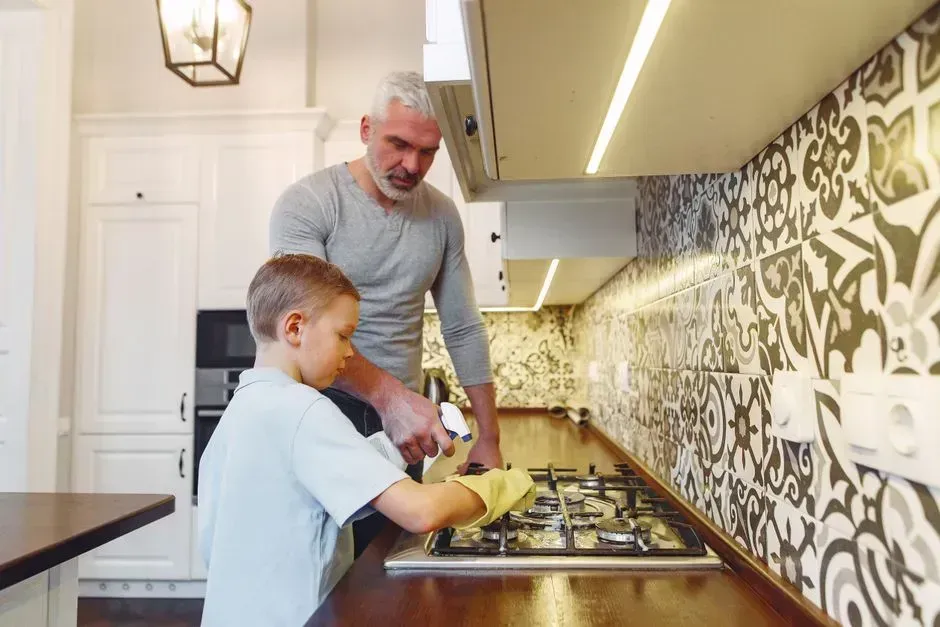
Many people grew up as the oldest child, or simply the one who naturally took charge, whether that meant managing siblings, translating for immigrant parents, or handling household logistics early. This role can build genuine competence, but it often comes at the cost of learning how to be vulnerable or ask for help.
In romantic partnerships, these adults sometimes struggle to let a partner support them, even when they clearly need it. Independence becomes both a strength and a quiet barrier, since needing someone else can feel unfamiliar or even risky.
7. Growing Up in a Household Where Feelings Were Dismissed

When a child hears phrases like “stop crying” or “you’re fine” repeatedly, they slowly learn that emotional expression is inconvenient or unwelcome. Over time, this can lead to what psychologists sometimes describe as emotional suppression, where feelings are still present internally but rarely expressed outwardly.
As adults, these individuals often appear calm and low maintenance, but partners may describe them as hard to read or emotionally distant. The disconnect is not usually about caring less. It is about never having been given the language or safety to express feelings in the first place.
8. Having a Secure, Predictable Primary Caregiver

Decades of attachment research, starting with Mary Ainsworth’s well known studies in the 1970s, consistently show that children with a stable, responsive caregiver tend to develop secure attachment. This means the child learns early that needs will generally be met, and that relationships are a safe place rather than a source of constant uncertainty.
Adults with this background typically find it easier to trust partners, communicate needs directly, and recover from relationship conflicts without spiraling into fear of abandonment. It does not mean their relationships are perfect, but it gives them a steadier internal baseline to work from.
9. Being Compared to Siblings or Peers

Growing up constantly measured against a sibling, cousin, or classmate can quietly shape how a person views their own value in relationships. Even when comparisons were meant as motivation, children often absorb the underlying message that they are not quite enough as they are. This can create a lasting undercurrent of competitiveness or self-doubt.
In adult relationships, this sometimes shows up as jealousy that feels disproportionate to the actual situation, or a persistent need to compare a current relationship to others. Recognizing where that instinct originated is often the first step toward loosening its grip.
10. Experiencing Consistent, Unconditional Affection

Some children simply grow up hearing “I love you” without conditions attached, hugged when sad, celebrated without needing to perform. This kind of steady, unconditional affection builds a template for what healthy love is supposed to feel like, one that many adults spend years trying to recreate if they did not have it.
People raised this way often bring an ease to relationships that others may not immediately understand, since affection and reassurance were never scarce resources growing up. It is one of the simplest childhood experiences on this list, yet arguably one of the most protective for long term relational wellbeing.
None of these patterns are permanent sentences. Awareness of where a habit or reaction originated is often the first meaningful step toward changing it, and many adults do exactly that through therapy, self-reflection, or simply paying closer attention to their own reactions. Childhood shapes the starting point, not the final outcome.


Leave a Reply