
There’s a version of women’s lives that looks perfectly manageable from the outside. They smile, they adapt, they keep things running. What rarely gets discussed is the quieter frustration underneath – the things women routinely put up with, tolerate without complaint, or simply never find the right moment to address. Some of these are social habits. Others are patterns baked into relationships, workplaces, or everyday public life.
None of this is about grievance for its own sake. It’s simply worth understanding that certain experiences, which may feel minor or even well-intentioned to others, consistently land differently for women. The research backs that up.
Being Told to Smile

Few things irritate women as reliably as this one. A survey found that nearly all women reported being told to smile at work at some point in their lives, with a notable share saying it happens weekly or more frequently. The comment tends to feel polite on the surface, but the underlying dynamic is a problem. It ranks among the oldest micro-aggressions directed at women, and the double standard is hard to ignore: men are rarely asked to smile, as this comment is almost always aimed at women.
Responses to being told to smile typically include a range of negative emotions, from anger to annoyance, but the most common experience is feeling demeaned and underappreciated. There’s also something more fundamental at play. The instruction is dismissive of emotions – it communicates that the other person has no time or tolerance for how a woman actually feels. It’s not a compliment. It’s a demand.
Carrying the Invisible Mental Load

The mental load is one of those things that’s hard to explain until you’ve lived it. Remembering birthdays, scheduling appointments, tracking grocery needs, and planning meals takes significant mental energy – and this invisible labor often falls entirely on women’s shoulders, even in households with equal partnerships. It’s not just about doing chores; it’s about being the household’s default manager and memory keeper.
Partners might help when asked, but that still requires someone to delegate and remember everything first. This constant background processing creates exhausting mental clutter that never fully shuts off. The numbers confirm this isn’t imagined. Women who are employed full time in the U.S. spend nearly five hours a day on unpaid labor like housework, child care, adult care, and pet care, compared to just under four hours for men, according to data from the Institute for Women’s Policy Research.
Being Interrupted Mid-Sentence

It’s a moment most women know well: you’re making a point, and someone cuts in before you’ve finished. Research shows women get interrupted significantly more often than men in professional and social settings, and the frustration builds each time it happens, yet speaking up about it often feels awkward or confrontational.
The pattern has been studied for decades and hasn’t gone away. Men cut women off roughly twice during a three-minute conversation when talking with other men, but interrupted women at a comparable rate – and women were interrupted even more frequently by other women. This pattern dismisses valuable contributions and creates an exhausting communication environment. Over time, constantly being cut off makes women hesitate before sharing thoughts at all.
Receiving Unsolicited Advice
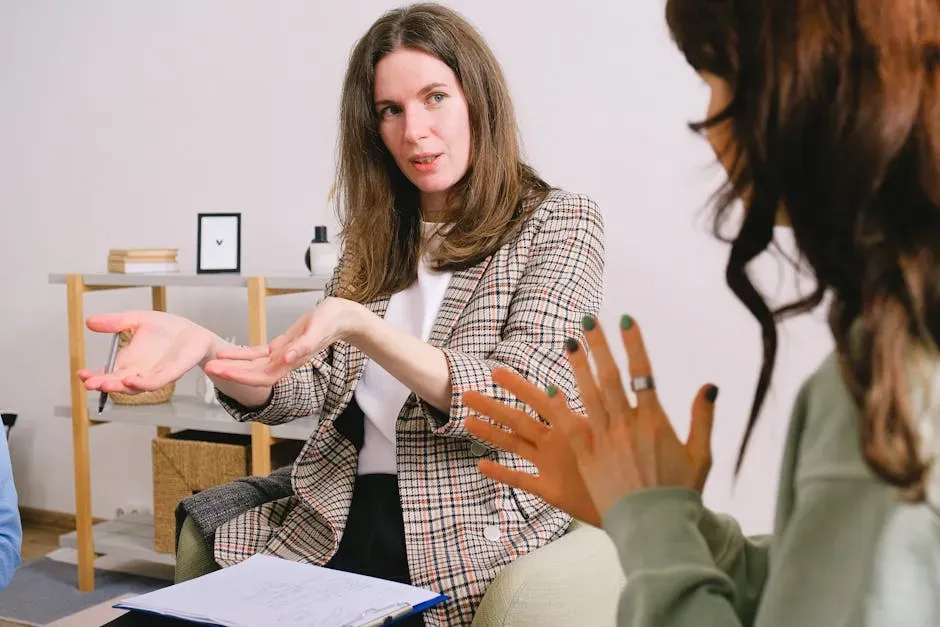
When a woman shares a problem, she’s often looking to be heard rather than immediately fixed. According to a study published in Psychological Science, women are often left feeling less confident, heard, and valued after conversations with someone offering unsolicited and unprompted advice. The intent can be kind, but the effect is the opposite.
Rather than having space to express themselves and seek emotional support, women are left feeling dismissed by “solutions” to their problems that they never asked for in the first place. There’s a layer of condescension built into the reflex, even when the advice-giver doesn’t realize it. Unsolicited advice given as a woman is attempting to explain what she is feeling in a difficult situation is likely to be taken as a sign of not listening and may cause more resentment than gratitude.
Being Dismissed as “Too Emotional”

Express frustration at work and there’s a decent chance the response will focus on how you expressed it rather than what you said. Expressing legitimate concerns or disappointment shouldn’t automatically get dismissed as being emotional, yet women frequently hear they’re overreacting when raising valid issues. Meanwhile, men displaying identical emotions – frustration, passion, or enthusiasm – get described as passionate or dedicated instead.
This double standard has real consequences. The dismissive label invalidates real problems and discourages honest communication. Emotions provide valuable information about situations and shouldn’t be weaponized to shut down conversations. Everyone experiences feelings; only women get consistently penalized for acknowledging them openly. It’s a pattern that quietly trains women to understate rather than communicate clearly.
Being Expected to Carry the Emotional Labor in Relationships

Emotional labor in relationships goes well beyond occasional support. It means managing moods, anticipating needs, softening difficult conversations, and often being the one who holds everything together emotionally. According to a study from Frontiers in Psychology, women tend to engage in more emotional labor in both their professional lives and personal relationships – whether it’s regulating their own emotions to facilitate better conversations or attending to the needs and emotions of others over their own.
The cumulative weight of this is starting to show up in broader behavioral shifts. Women are now roughly a quarter less likely to want to date than men, not because they don’t care, but because many feel they’ve invested too much emotional labor without support in return. In intimate relationships, young women are taking on a disproportionate load of invisible emotional labor, often supporting men through intense feelings of failure and isolation from friends – with many men considering this unburdening to women a natural part of their relationships, while those same women describe it as work.
Having Their Appearance Constantly Commented On

Unsolicited remarks about how a woman looks arrive from nearly every direction – strangers, colleagues, family members, sometimes even from people trying to be helpful. Random comments like “you should smile more” or “have you tried growing your hair longer” come without invitation, yet they arrive constantly from family, strangers, and coworkers. Women face endless suggestions about makeup, clothing choices, hairstyles, and body modifications that men rarely experience. These remarks, however well-intentioned, imply something needs fixing or improving.
The effect accumulates over time in ways that are hard to measure but easy to recognize. Research from Psychological Science suggests women who receive unsolicited advice are more likely to be left feeling less confident and valued after the conversation. When those comments are about physical appearance specifically, the message underneath is rarely neutral. It usually implies that a woman’s natural presentation is somehow not quite right for whoever is watching.
What ties most of these experiences together isn’t dramatic confrontation – it’s the steady, low-grade accumulation of moments that individually might seem small but collectively add up to something exhausting. Awareness is a reasonable starting point, and most of these patterns shift when people pay attention to them. That’s not a complicated ask.



Leave a Reply