
It is a scene that is becoming increasingly familiar in America. A smoker, newly determined and full of hope, unwraps their first vaping device with the focus and solemnity of someone defusing a small bomb. They fill it, prime it, eagerly raise it to their lips, and inhale.
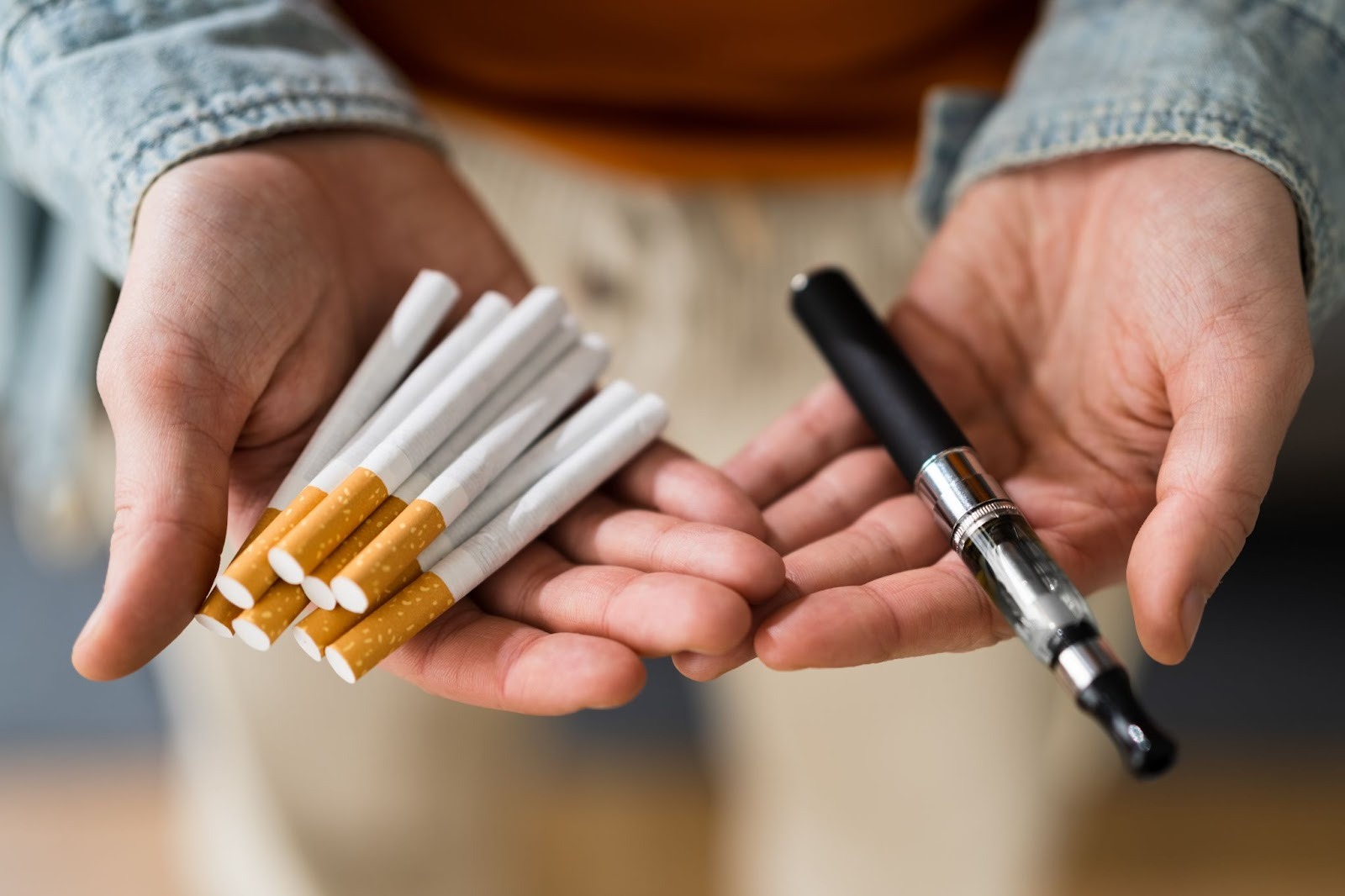
There is a pause, followed by a frown, and then a wistful, lingering glance at the packet of Marlboros still sitting on the counter.
Within forty-eight hours, the vape has been consigned to a bedroom drawer, buried beneath a pile of mismatched argyles. Sadly, the cigarettes are now firmly back in rotation, but the device was not faulty, and the liquid was not a poor flavor choice. The problem, as is so often the case, was expectation.
The issue is that cigarettes are very good at being cigarettes, and twenty years of smoking has a way of firmly calibrating the senses. The heat, the harshness, the familiar scorch at the back of the throat – smokers have learned to interpret these as satisfaction.
A vape, however competent, does not deliver that same punch. It delivers something else: it is cleaner, cooler, and immensely satisfying, yet fundamentally different. The reason many smokers abandon vapes so early is that different registers as inadequate in some way.
Muscle Memory
Cigarettes deliver nicotine through combustion, a vehicle that the body has spent years learning to associate with relief. Vaping delivers nicotine through vapor, which is rather like expecting a decent cup of tea to satisfy a hardcore coffee addiction. Similar amounts of caffeine are there, but the experience is not quite the same.
Many first-time vapers often realize that vaping does not work the way they expected. The draw feels wrong, the inhale is off, and even holding the thing requires a minor renegotiation with muscle memory developed through twenty years of holding the more slender cigarette.
It would be far more convenient if decades of neurological conditioning could be undone by a single purchase. Unfortunately, it can’t. New vapers using starter kits should prepare themselves for that, but in most cases, they don’t.
What Starter Kits Are Actually For
The term starter kit implies something temporary, and that is precisely the point, because these are not devices designed to replicate the aforementioned Marlboro experience. They are merely devices that are designed to get you through the first week of quitting smoking without reaching for the cigarettes. Of the various smoking cessation options available, vaping is by far your best shot.
UK retailers stock vape starter kits designed to be simple, reliable, and forgiving. With no variable wattage and no rebuildable coils, starter kits are mercifully free of features that require a YouTube tutorial just to get puffing. Instead, you have a device that works when you need it to, which turns out to be the only thing that matters when you are three days into withdrawal.
The British approach treats starter kits as the beginning of a new process rather than a finished, immediate, permanent solution. The American approach, by stark contrast, tends to treat them as products that either work or do not, and when the first puff fails to deliver instant satisfaction like extra-strength Camels do, the product is blamed rather than the expectation.
Two Very Different Framings
In the UK, vaping is positioned as harm reduction. The NHS even recommends it. Pharmacies stock it. Vape shops employ people who will actually talk you through the adjustment period, rather than looking up from their Candy Crush saga and gesturing at a shelf. In the UK, the message is abundantly clear: this will feel different from a cigarette, the first few days are difficult, but stick with it, and you will learn to enjoy it.
In the US, vaping arrived as a consumer product first and a public health tool second (if ever at all). The framing was transactional, suggesting that if you buy a vape, you will stop smoking. When it did not work immediately, the conclusion was that vaping itself was flawed, rather than the framing around it.
On both sides of the Atlantic, the hardware is largely the same, but the context is entirely different. One country prepared its smokers for an adjustment, while the other sold them a product and hoped for the best.
A Week of Patience
You won’t find this mentioned in the advertising, but the first vape is almost never the revelation people hope for. To anyone who is hoping for a precise replication of a cigarette, it may feel wrong and taste unfamiliar. More than that, the whole ritual associated with smoking is skewed.
But according to every smoker who has successfully made the switch, this is only temporary.
Most ex-smokers will tell you that vaping started to feel like enough after a few days, sometimes a week. The ones who gave up often did so on day one, convinced the technology had failed them. It had not. Their expectations had simply arrived twenty years too late.
The cigarette took years to hook you. All the vape asks for is a week of patience. Stick with it, and you may discover that the Marlboro wasn’t irreplaceable after all; it was simply very good at convincing you it was.




Leave a Reply