
There was something genuinely magical about going out to eat in the 1980s and ’90s. The 1980s were a golden era for casual dining, fast food, and family restaurants. From roadside chains to local favorites, these eateries weren’t just places to grab a meal – they were social hubs, birthday destinations, and stops on family road trips that created lasting memories. The suburban boom brought restaurant chains to nearly every highway exit and strip mall in America, and families had their regular spots, their special-occasion spots, and the places they begged their parents to visit on a Friday night.
Many of those beloved names are gone now, victims of overexpansion, shifting tastes, corporate mismanagement, or just plain bad timing. While some of these chains managed to evolve or survive in smaller numbers, many iconic names vanished as consumer tastes shifted, competition increased, and corporate struggles took their toll. From classic burger joints to family-style steakhouses and whimsical themed experiences, each closure left fans longing for the flavors and memories that modern dining can’t fully replace. Here are six of the most missed.
Chi-Chi’s
Chi-Chi’s Restaurant was first launched in 1975 in Minneapolis, an area lacking in Mexican food options at the time. The founders were Max McGee, former wide receiver for the Green Bay Packers, and restaurateur Marno McDermott. The duo identified a demand for Mexican cuisine as the latest food trend and jumped on it. The chain became famous for its festive atmosphere, enormous margaritas, and Tex-Mex fare that felt both fun and approachable. During the restaurant’s heyday, Chi-Chi’s expanded to more than 200 locations nationwide.
The chain’s story ended in one of the most dramatic fashions in American restaurant history. The final blow for Chi-Chi’s came when cases of hepatitis A in the Pittsburgh area were traced back to a Chi-Chi’s location at the Beaver Valley Mall in Monaca, Pennsylvania. The contagious virus was later tied to green onions served at the restaurant. It would go on to become the largest hepatitis A outbreak in U.S. history, claiming 660 victims and resulting in four deaths. In 2004, the chain closed its remaining 65 restaurants, which were acquired by Outback Steakhouse for $42.5 million. Remarkably, the brand staged a revival when Chi-Chi’s Mexican restaurant chain began its return in October 2025, opening its first location in Minnesota, the very state where it all began.
Kenny Rogers Roasters
When Kenny Rogers Roasters first opened in the early 1990s, it seemed like the perfect recipe for success. The country music legend teamed up with former Kentucky Fried Chicken CEO John Y. Brown Jr. to create a healthier alternative to fried chicken, built around wood-fired rotisserie meals. The first location launched in Coral Springs, Florida in 1991, and within just a few years, the chain had expanded rapidly across the United States and around the world. By the mid-’90s, Kenny Rogers Roasters had more than 350 restaurants, becoming a recognizable name in malls and shopping centers.
The restaurant was so ubiquitous, it even became the focus of a famous 1996 Seinfeld episode, where the residents of Jerry Seinfeld’s apartment building are alternately tortured and excited by a Kenny Rogers Roasters that opens on their block. Despite that pop culture peak, the chain couldn’t survive the competition. Kenny Rogers Roasters faced stiff competition from chains like Boston Market, which was expanding aggressively with a very similar concept. Even KFC introduced its own rotisserie line called Rotisserie Gold, making the market crowded. The company entered Chapter 11 bankruptcy in March 1998 and was bought by Nathan’s Famous, Inc. for $1.25 million. The last Kenny Rogers Roasters operating in North America was located in the Ontario Mills mall in Ontario, California and closed on December 31, 2011. The brand lives on today – in Asia, where it still operates hundreds of locations.
Bennigan’s
Known for its Monte Cristo sandwich and Irish pub-inspired atmosphere, Bennigan’s became one of the defining casual dining chains of the 1980s and ’90s. Debuting in 1976 as part of the Steak and Ale family, Bennigan’s blended casual Irish-pub fixtures with American comfort food. Its Monte Cristo – turkey, ham, and cheese deep-fried in batter – became a rite of passage for many ’80s teens. For families across the country, it was the kind of place where you ended up after a school play or a Little League game, with a Coke in hand and a plate of appetizers on the way.
In 2008, with the Great Recession afoot, Bennigan’s buckled under the pressure of rising costs and falling consumer spending. Its parent company filed for Chapter 7 bankruptcy protection and immediately closed its 150 corporate-owned locations. More than 100 franchisee-owned locations held on at the time. Analysts said Bennigan’s failed to distinguish itself from other casual bar players, including T.G.I. Fridays and Ruby Tuesday, and couldn’t muster loyalty. Though it was an Irish-themed restaurant, its menu was similar to competitors: steak, tempura shrimp and Southwestern-style appetizers. A small-scale comeback has since been underway, with a handful of U.S. locations now operating again under new ownership.
Steak and Ale
The dimly lit chain was born in 1966 in Dallas, founded by restaurant sensation Norman Brinker, who later developed the red-hot Chili’s restaurant chain. Steak and Ale peaked in 1992 with 157 restaurants – though by the 1980s, the chain had grown to 280 locations across the country. Steak and Ale was a casual steakhouse that offered a rustic, yet approachable dining experience. Patrons loved its steak, ribs and all-you-can-eat salad bar. Unlike fancier steakhouses, Steak and Ale emphasized affordability without sacrificing flavor, making it a popular choice for family dinners and social gatherings. It was one of the first chains to make a proper steakhouse dinner feel accessible to the average family.
In 2008, squeezed by rising operating costs and shrinking consumer spending thanks to the Great Recession, corporate Steak and Ale locations shuttered – along with sister restaurant Bennigan’s – after its parent company filed for Chapter 7 bankruptcy protection. Steak and Ale shuttered the remaining 58 locations at the time of the bankruptcy filing. Nostalgia for the brand has never faded. A Facebook group titled “Steak and Ale’s Comeback” has grown to nearly 55,000 followers, and on July 8, 2024, the first new Steak and Ale in 16 years opened in the Wyndham Nicollet Inn in Burnsville, Minnesota.
ShowBiz Pizza Place
ShowBiz Pizza Place opened in 1980 and quickly became a kid’s paradise by combining pizza, arcade games, and the animatronic Rock-a-Fire Explosion band. Before many kids knew Chuck E. Cheese, they knew ShowBiz Pizza Place and its animatronic Rock-afire Explosion band. The arcade-and-pizza concept became wildly popular during the 1980s family entertainment boom. For ’80s kids, a ShowBiz birthday party was the highest possible social honor – a noisy, glorious afternoon of bad pizza, better tokens, and slightly terrifying singing animals.
In the early 1990s, ShowBiz Pizza merged with Chuck E. Cheese’s Pizza Time Theatre, and the two chains gradually consolidated under the Chuck E. Cheese brand. The animatronic shows were phased out or rebranded, and the unique characters disappeared, leaving only the Chuck E. Cheese mascot. Fans of the original ShowBiz locations still remember the whimsical entertainment, large arcade selection and fun pizza parties that felt far more immersive than today’s Chuck E. Cheese experience. Corporate mergers, costly technology upkeep and growing competition eventually pushed the brand into bankruptcy protection and eventual consolidation, leaving the Rock-afire Explosion band as nothing more than a YouTube rabbit hole for nostalgic adults.
Howard Johnson’s
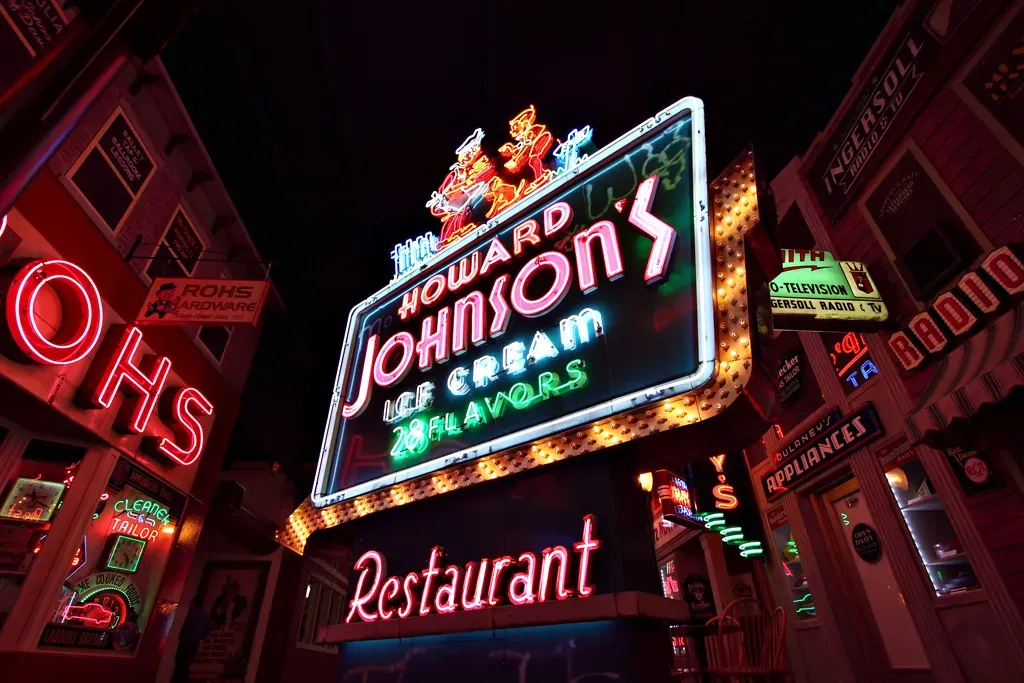
Known for orange roofs and 28 flavors of ice cream, Howard Johnson’s once operated the largest restaurant chain in America. During the ’80s, locations attached to motor lodges served clam strips, frankfurters, and coffee to families crisscrossing the interstate system. The brand was essentially the backdrop to an entire generation of road trips – those unmistakable orange-roofed buildings appearing like a beacon after hours on the highway, promising a familiar meal and a scoop of ice cream at the end of it.
The brand’s fall was painfully slow rather than sudden. Corporate buyouts and changing travel habits hastened a steep decline, and the last U.S. restaurant in Lake George, New York, closed in 2022. What had once been the country’s largest restaurant empire – bigger than McDonald’s and Burger King combined at its mid-century peak – simply couldn’t adapt. Changing times and tastes of aging boomers helped spirit away many of those establishments. “Every day boomers are leaving the market,” noted one Cornell University professor of Food and Beverage Management. “Even if chains can still appeal to that demographic, it is shrinking.” Howard Johnson’s is perhaps the most poignant example of how completely a cultural institution can vanish in a single lifetime.
A Dining Era That Won’t Come Back
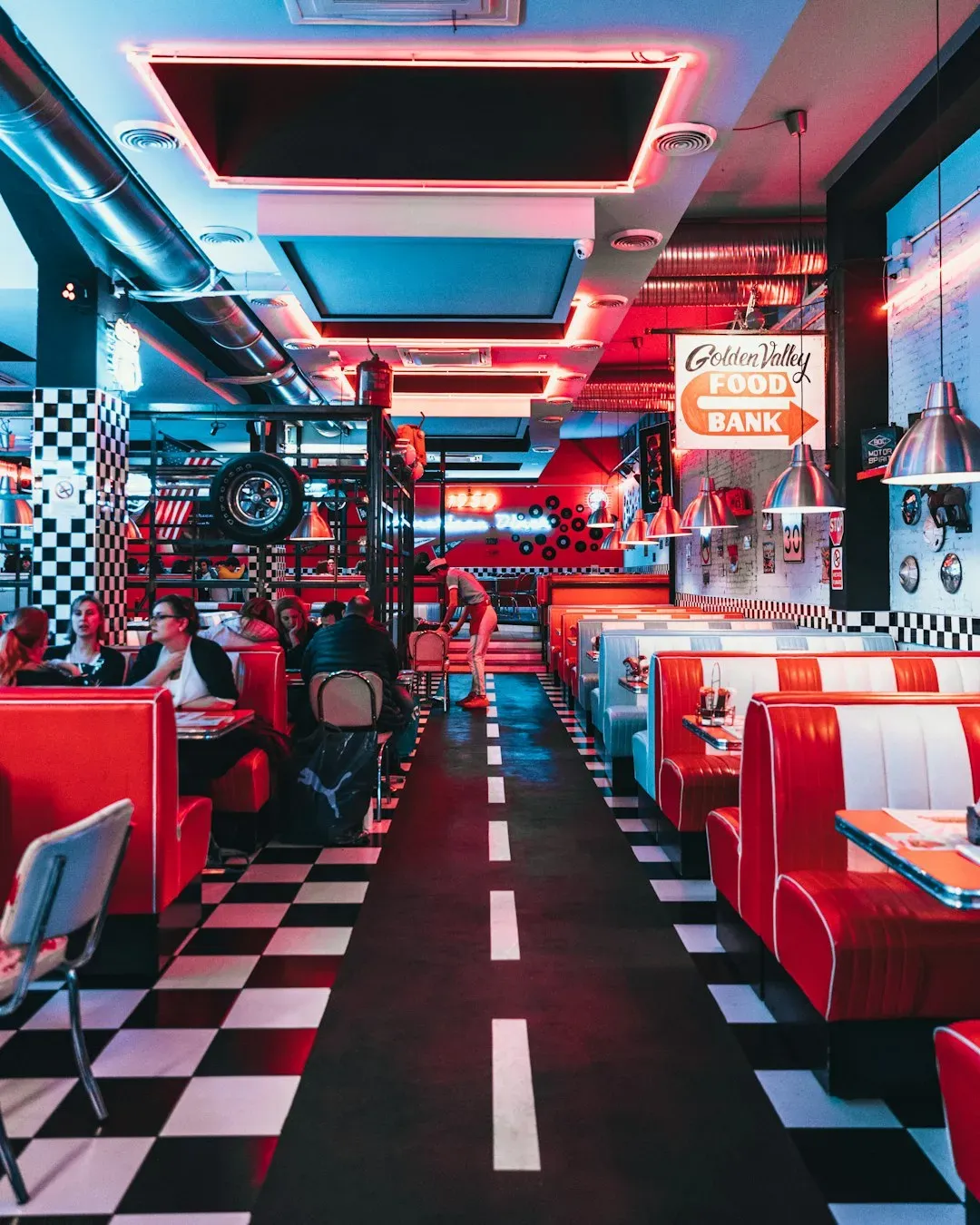
What made all six of these chains so memorable wasn’t just the food. It was the era they represented. Across America, families piled into oversized booths beneath neon signs, salad bars stretched across dining rooms and themed restaurant concepts became destinations all their own. Casual dining exploded during the decade as chains raced to expand into growing suburbs, malls and highway exits, all while competing to offer bigger menus, louder branding and more over-the-top experiences. These restaurants were woven into the rhythm of ordinary family life in a way that feels hard to replicate today.
Some of these chains are now attempting to claw their way back – Chi-Chi’s reopened in Minnesota in 2025, Steak and Ale cracked the door open in 2024, and Bennigan’s has a small but active footprint once more. Whether those revivals can capture the magic of the originals is a genuine open question. Many of the chains that thrived during this decade offered unique menus, playful atmospheres, and experiences that today’s dining scene rarely replicates. For fans who grew up in the ’80s, these restaurants hold a special place in their hearts, representing comfort, fun and nostalgia all on a plate. Some things, it turns out, are less about the menu and more about the moment in time – and that part you simply can’t franchise.


Leave a Reply