
Teaching food chains and food webs is much easier when children can see and physically build the connections between plants and animals. A forest ecosystem is especially useful for introducing these concepts because children are often familiar with woodland animals such as owls, birds, squirrels, caterpillars, and other forest creatures.
These Forest Food Chain Activities give children hands-on opportunities to cut, paste, sequence, draw, and label while learning how energy moves through an ecosystem.
What Is a Forest Food Chain?
A food chain shows how energy passes from one living thing to another.
For younger students, starting with a simple visual food chain can make this concept much easier to understand. Children can begin with plants or leaves and then follow the chain through the animals that depend on one another for food.
Instead of simply memorizing vocabulary, students can arrange pictures in the correct sequence and visually see how each part of the food chain is connected.
Learning About Producers and Consumers
Food chain activities are also a great opportunity to introduce producers and consumers.
Plants are producers because they make their own food using energy from the sun. Animals are consumers because they get energy by eating plants or other animals.
As students build their forest food chains, encourage them to identify which organism is the producer and which organisms are consumers.
You can also ask questions such as:
- Where does this food chain begin?
- Which organism is the producer?
- Which animals are consumers?
- What does each animal eat?
- What might happen if one organism disappeared?
- Can an animal belong to more than one food chain?
These questions help children think about the relationships between organisms rather than simply memorizing the order of a food chain.
Moving From Food Chains to Food Webs
Once children understand a basic food chain, they can move on to forest food webs.
A food web is more complex because it shows how multiple food chains are connected within an ecosystem. One animal may eat several different foods, while another organism may provide food for several different animals.
Using pictures and arrows allows students to visually explore these connections.
Hands-On Forest Food Chain Activities
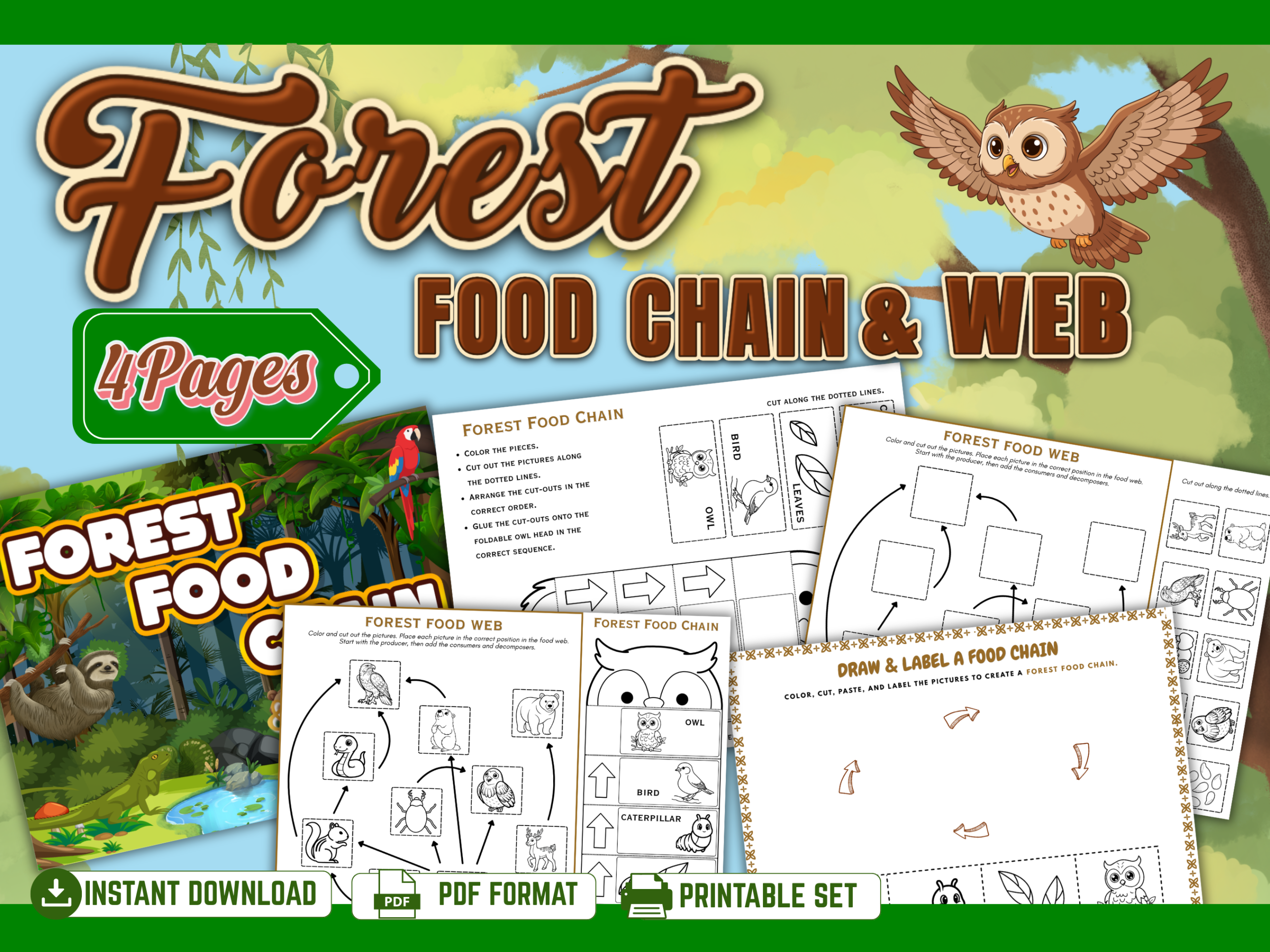
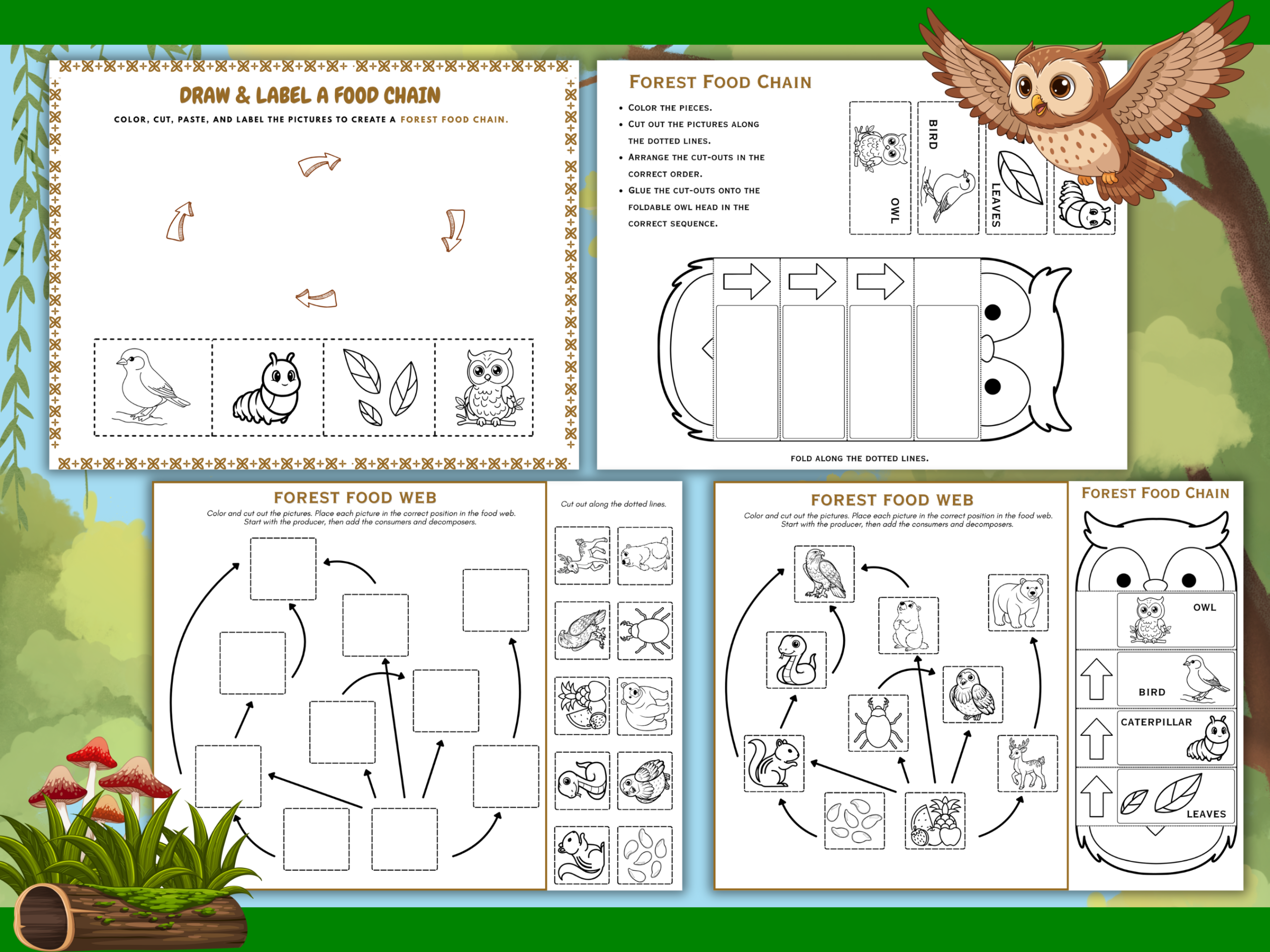
This printable Forest Food Chain & Food Web set includes four activity pages designed to reinforce these concepts in different ways.
Students can construct a food chain using cut-and-paste pieces, complete an interactive owl food chain activity, explore the relationships between organisms in a larger forest food web, and draw and label their own food chain.
These different activities provide repeated practice without having students complete the exact same type of worksheet each time.
Use the Activities in Your Ecosystem Unit
These printable food chain activities can easily be added to a larger ecosystems, habitats, or forest animals unit.
Teachers can introduce the concept as a whole class and then use the worksheets for independent practice or science centers. They can also work well for small groups, homeschool science lessons, early finishers, review activities, or supplemental science practice.
Because students are cutting, arranging, coloring, labeling, and pasting, the activities provide a hands-on alternative to traditional question-and-answer worksheets.
Help Students Understand How Ecosystems Are Connected
Understanding a simple food chain gives children a foundation for understanding the more complicated relationships found within an ecosystem.
Starting with a basic forest food chain and gradually moving into a forest food web allows students to see that plants and animals don’t exist independently—they are connected in many different ways.
These Forest Food Chain & Food Web Activities give children a visual, interactive way to practice these important science concepts while learning about producers, consumers, energy flow, and forest ecosystems.
Leave a Reply