
It’s Written Into Federal Aviation Regulations
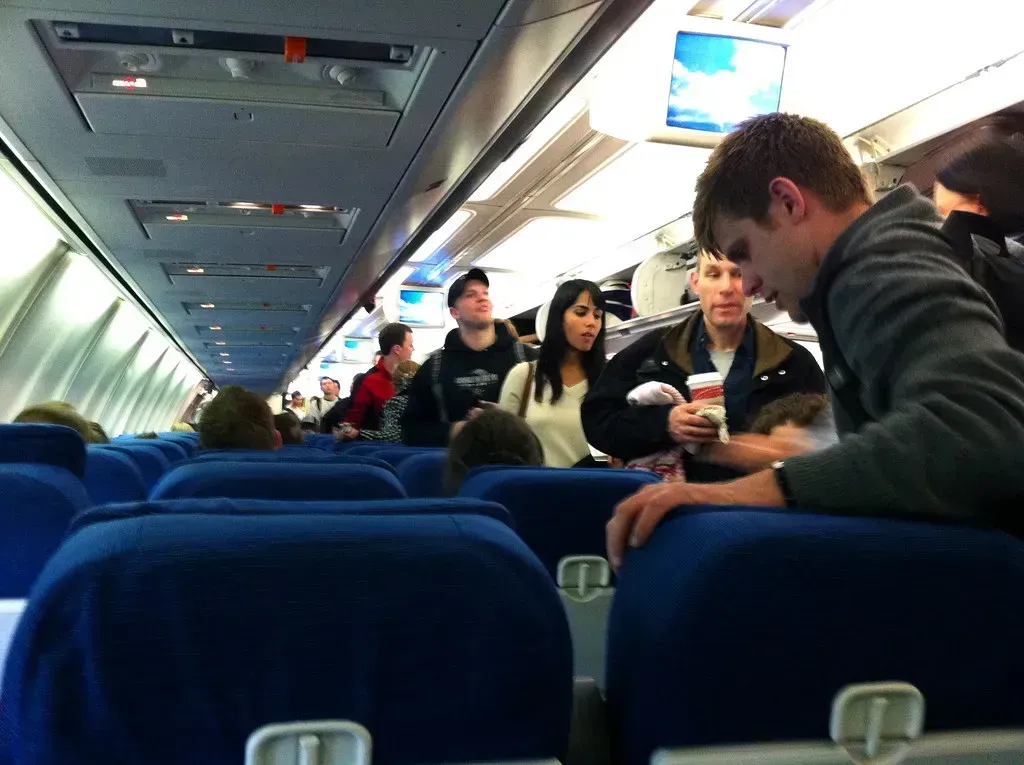
The requirement isn’t some vague industry custom. Under United States aviation law, specifically during passenger boarding, when more than one flight attendant is required, certificate holders may reduce the number of required flight attendants by one, provided the flight attendant that leaves the aircraft remains within the immediate vicinity of the door through which passengers are boarding. That single regulatory detail tells you how seriously the FAA treats crew positioning during this window.
The rule also requires that the flight attendant who steps off only conducts safety duties related to the flight being boarded, that the engines are shut down, and that at least one floor level exit remains open for passenger egress. In other words, even the exception to full crew presence comes wrapped in strict conditions. Sitting down casually simply isn’t part of the equation.
Historically, Every Attendant Had to Stay Aboard
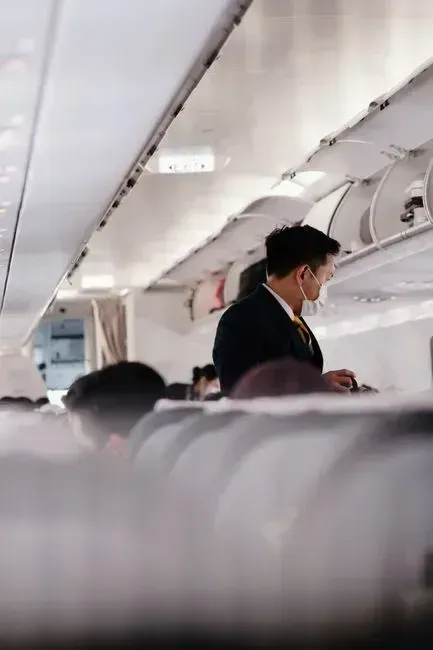
Before 2010, the rule was even stricter. During passenger boarding and deplaning, all flight attendants were required to be on board the airplane, full stop. There was no flexibility, no stepping onto the jet bridge, nothing.
That changed only after the FAA reviewed advances in aircraft design and ground procedures. The FAA determined that revisions to the existing regulations could be made as a result of recent safety enhancements to airplane equipment and procedures. Even then, the change only allowed limited movement near the door, not a break from active duty.
Crew Members Must Be Positioned Near the Exits
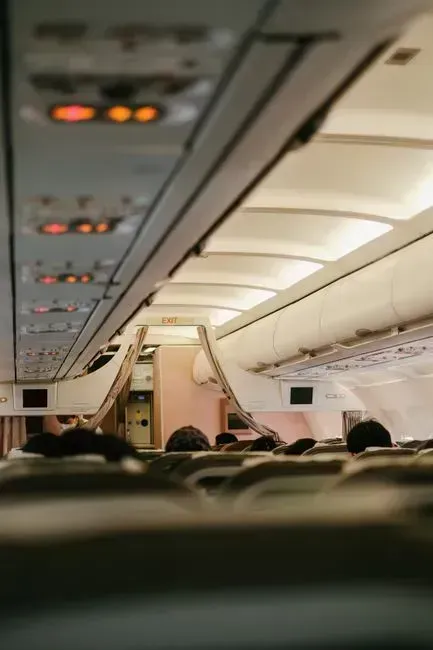
Positioning isn’t random during boarding either. If more than one flight attendant is on the airplane during passenger boarding or deplaning, they must be evenly distributed throughout the cabin, in the vicinity of the floor level exits, to provide the most effective assistance in the event of an emergency. That spacing only works if everyone is upright, alert, and visible.
A seated crew member tucked away in a galley jump seat can’t monitor an exit route the same way someone standing near it can. The logic is straightforward: emergencies during boarding, while rare, tend to happen fast, and a flight attendant already on their feet near an exit has a head start that a seated one simply doesn’t.
Boarding Time Still Counts as Active Duty
Some travelers assume boarding is a lull, a quiet stretch before the real work starts. Regulators disagree. The time spent by any crewmember conducting passenger boarding or deplaning duties is considered duty time. That’s not a throwaway clause. It legally classifies boarding as part of the job, not a break from it. Framing it that way changes how airlines train staff to behave during those minutes. Standing isn’t just a posture choice, it’s the physical expression of being on duty. A crew member who sat down mid-boarding would essentially be checked out during a period the FAA has explicitly defined as active work.
That Friendly Greeting Doubles as a Security Screen
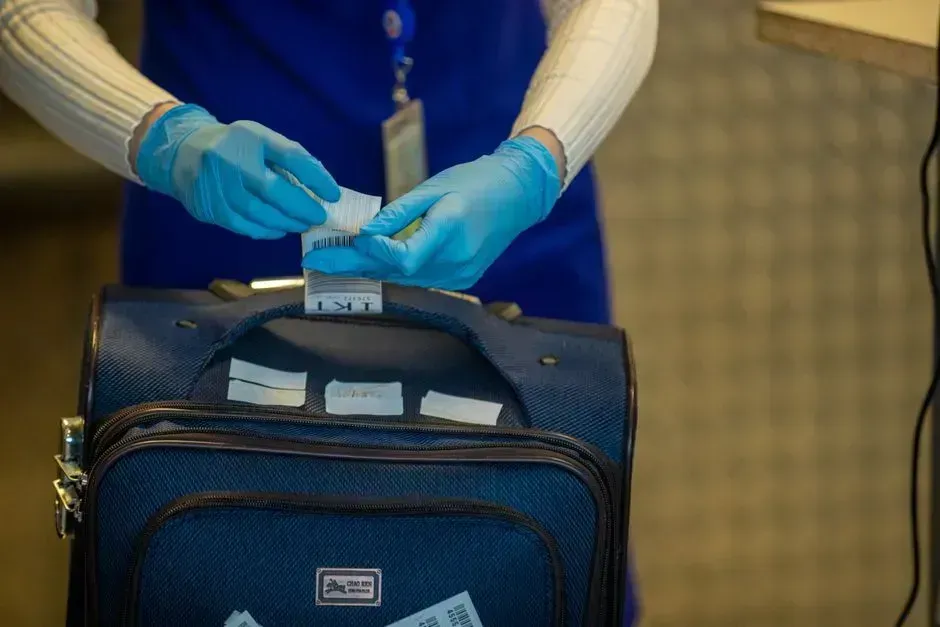
The smile at the door does more than make you feel welcome. According to aviation industry sources, that brief moment of eye contact is doing real work behind the scenes. Greeting passengers at the door is described as the first line of defense in identifying threats that could be brought onto the aircraft.
Every passenger who steps through that doorway gets a quick, almost invisible evaluation. Flight attendants actually conduct quick evaluations of passengers to ensure safety and security as they board, watching for anything that seems off, whether that’s behavior, body language, or something about how a passenger is carrying themselves. None of that scanning works nearly as well from a seated position with a limited sightline.
Standing Keeps Crew Ready for Sudden Incidents
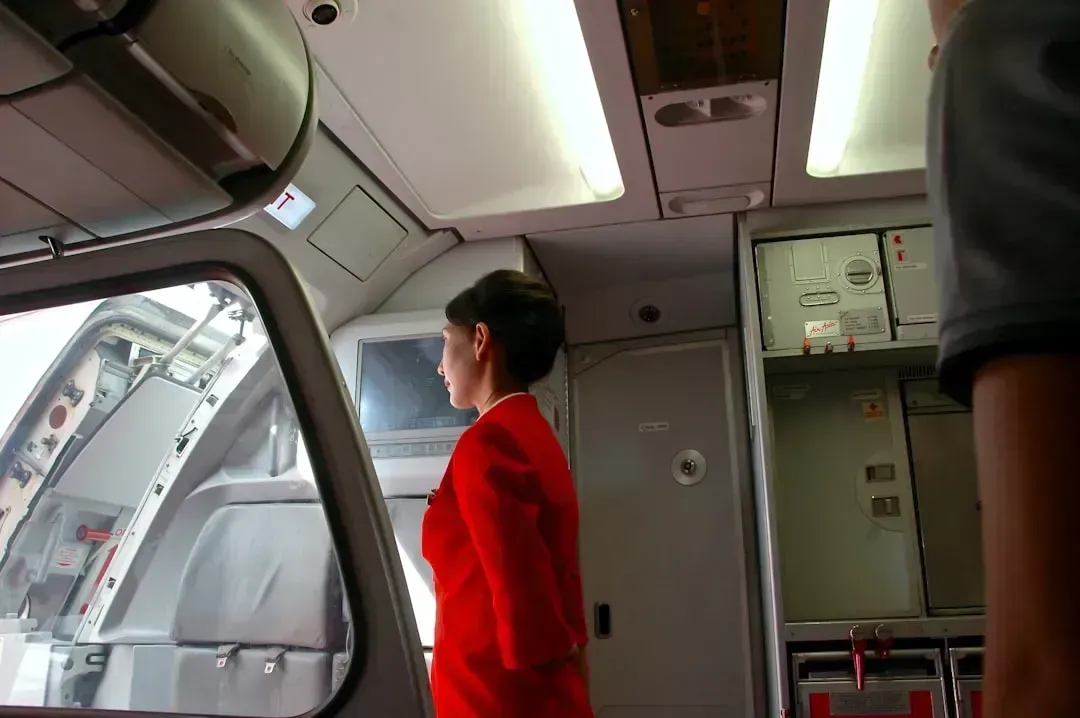
Boarding brings a lot of foot traffic through a narrow, cluttered space, and that alone creates risk. A standing attendant can react instantly if a bag falls from an overhead bin, a passenger has a medical episode, or someone becomes disruptive before the doors even close.
This ties back to the underlying purpose of the job itself. The primary job of flight attendants is to keep passengers safe, ensuring that everyone follows security regulations and that the flight deck is secure. Sitting down during a period when dozens of strangers are moving past the flight deck runs counter to that core responsibility.
Emergency Equipment Checks Happen Right Before Boarding
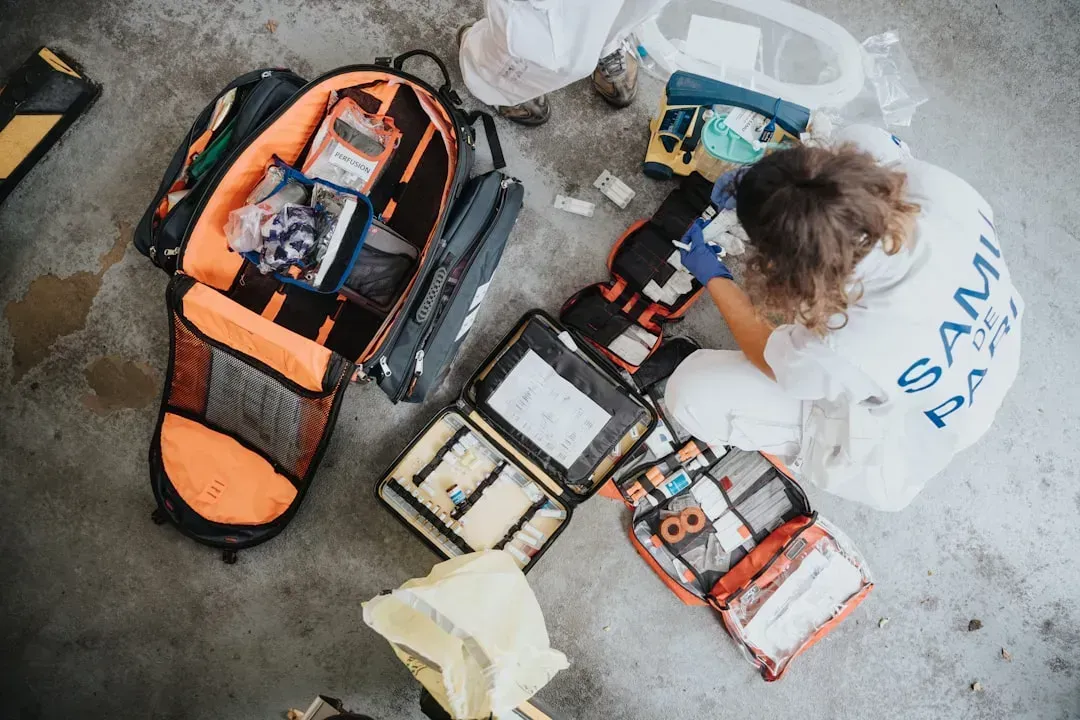
What happens right before passengers step on board also explains why crew members stay upright once boarding begins. Before passengers board, flight attendants check the cabin to make sure emergency items like the defibrillator and first aid kit are on board and in good working order. They also verify other safety systems function properly.
They also test equipment like emergency lights and the public address system before the first passenger even reaches the door. That preparation flows directly into boarding, when crew members remain alert and positioned in case anything from that checklist becomes relevant sooner than expected.
The Job Description Never Really Includes Idle Time
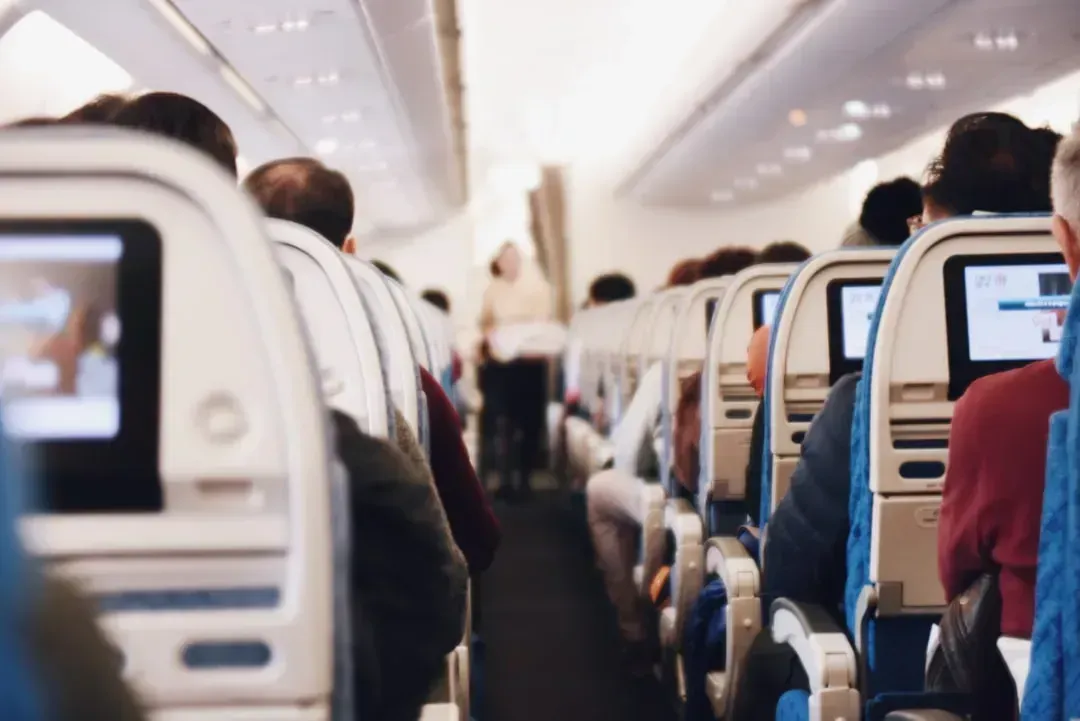
It’s easy to see flight attendants as customer service staff first and safety personnel second, but that framing has it backwards. Passengers are often under the assumption that flight attendants are purely there for customer service and to provide meals and drinks during a flight, but this could not be further from the truth. They are highly trained as safety professionals to act in any given emergency situation.
Once you view the role through that lens, the standing requirement during boarding makes far more sense. Their role is to provide safety and comfort for passengers on board the aircraft, with safety being the priority. Comfort, including their own comfort of sitting down, has to wait.
Physical Demands of the Job Extend Well Beyond Boarding
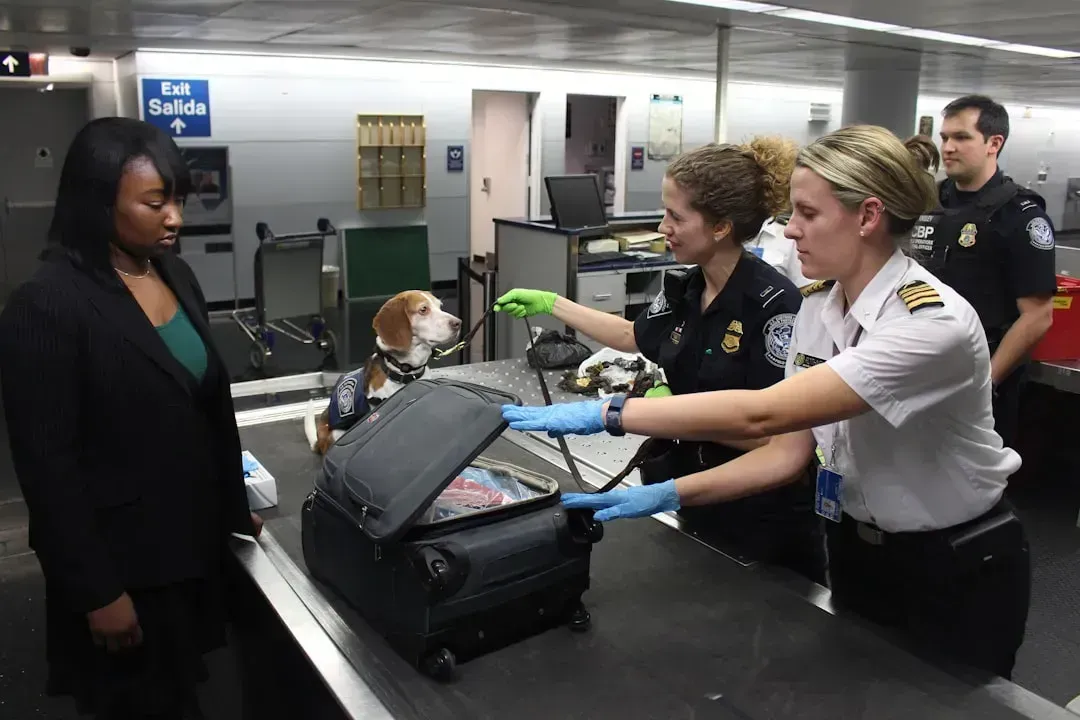
Standing during boarding is just one slice of a much longer physically demanding stretch. The job can be physically demanding, requiring standing for long periods, lifting luggage, and navigating cramped spaces. Multiply that across multiple flights in a single day, and the hours on their feet add up quickly.
The physical demands are taxing due to long periods of standing or walking through aisles while carrying heavy items like beverage carts throughout the rest of the flight as well. Boarding is simply the opening chapter of a shift built around remaining mobile and alert rather than seated.
Airlines Reinforce the Rule Through Internal Training
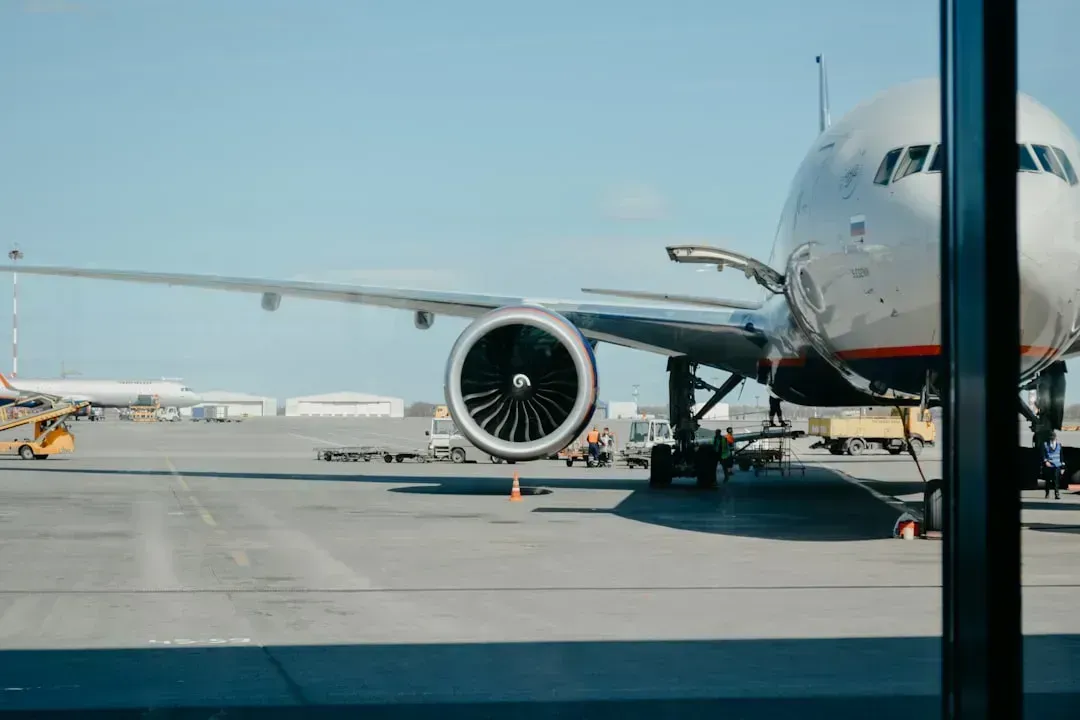
Beyond federal law, airlines bake this expectation into their own operating procedures and training programs. Industry training resources have pointed out that cabin crew are required to stand at the entrances during boarding as a matter of policy, not personal preference. According to the AAG Institute for Aviation Training, they have to be stood there at the entrances while passengers are boarding.
That reinforcement matters because it turns a federal minimum into a consistent, company wide practice across different aircraft types and routes. Whether it’s a short regional hop or a long international flight, the expectation at the door stays the same, standing, watching, and ready to respond.
Final Thoughts
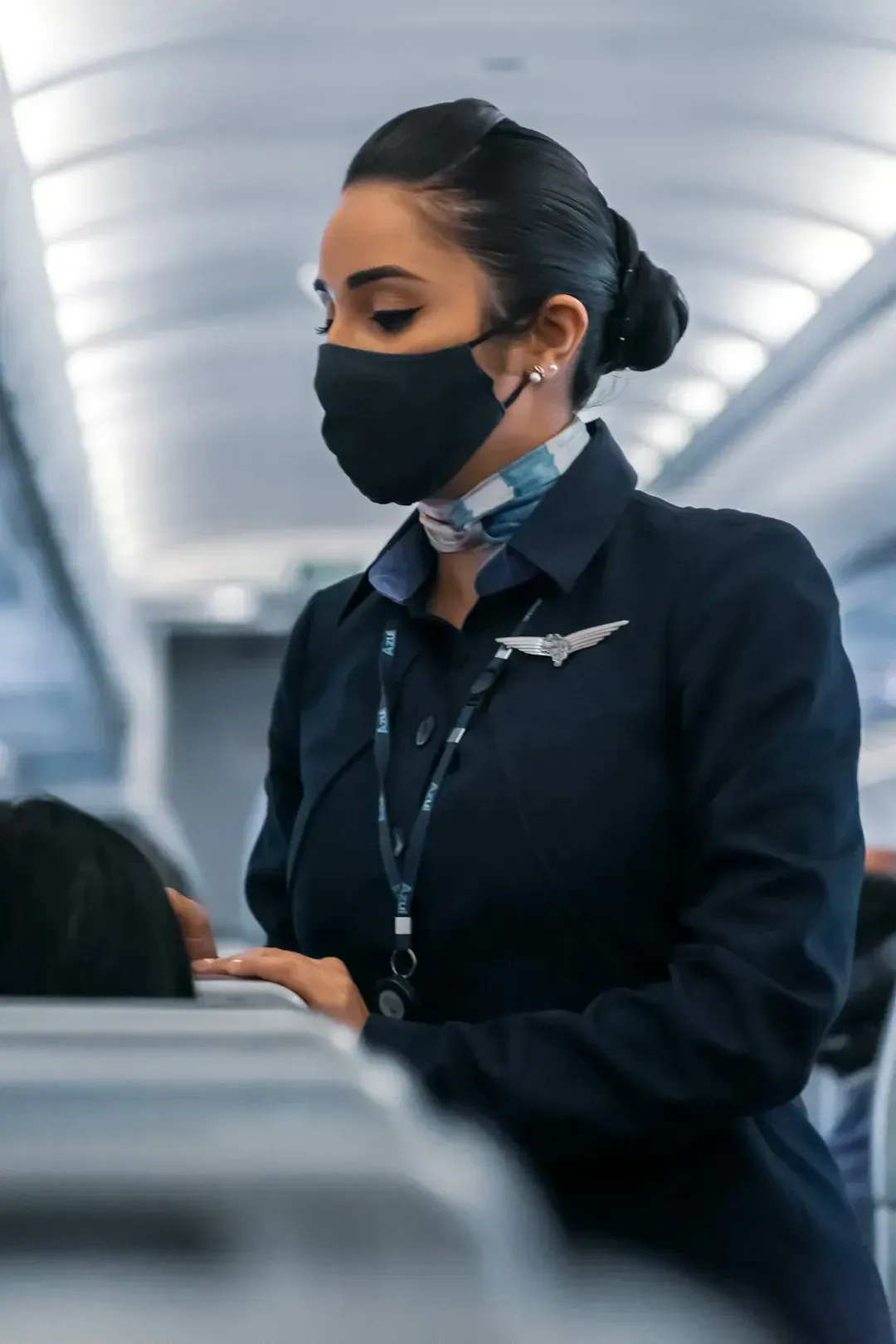
None of this means flight attendants enjoy standing through every single boarding process, especially on long, delayed, or chaotic days. It simply means the position is functional, not decorative. Federal rules, airline training, and basic emergency logic all point the same direction: someone needs to be upright, watching, and ready near that door until the aircraft is sealed and moving.
Next time you step onto a plane and catch that quick, practiced smile at the threshold, it’s worth remembering there’s more happening in that instant than a simple hello. It’s a safety check disguised as hospitality, and it only works if the person doing it stays on their feet.



Leave a Reply