
1. Treating every local landmark like a photo prop

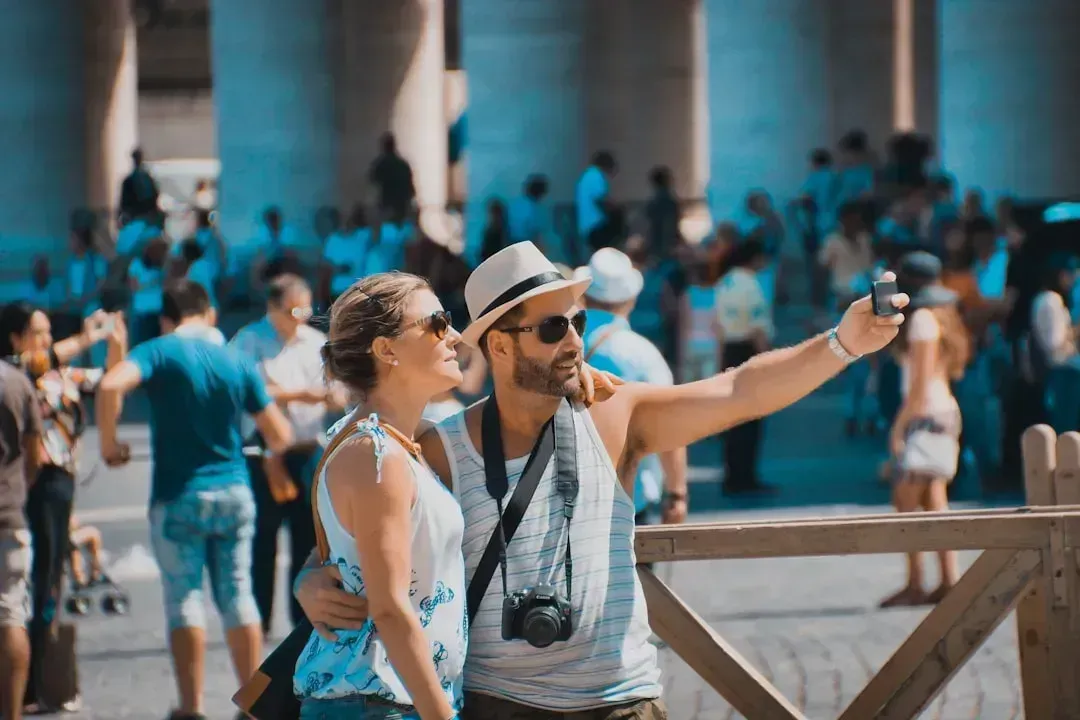
Standing on centuries old monuments, climbing over protective barriers, or posing in ways that disrupt religious or cultural sites has become a recurring complaint from residents in cities like Rome and Kyoto. In 2024, officials at Japan’s Fushimi Inari shrine and parts of Kyoto’s Gion district introduced fines and restricted access after repeated incidents of tourists blocking narrow streets for photos or trespassing into private geisha districts. Locals generally understand curiosity about their surroundings, but they draw a hard line when visitors treat sacred or historic spaces as backdrops rather than places with meaning.
The frustration isn’t really about photography itself. It’s about the assumption that a good shot matters more than the space or the people who live around it. Venice, for example, has fined tourists for sitting on church steps or wading into canals for selfies, treating the city’s fragile infrastructure as something disposable for content.
2. Refusing to learn even basic local phrases

Nobody expects fluency, but locals in France, Japan, and much of Latin America have repeatedly said that tourists who don’t even attempt “hello,” “please,” or “thank you” in the local language come across as entitled. A 2023 survey by Booking.com found that a large share of travelers admitted feeling embarrassed by their own lack of effort with language while abroad, yet many still don’t bother learning basic phrases before a trip. In Paris specifically, surveys of hospitality workers have long shown that a simple bonjour before switching to English changes the entire tone of an interaction.
This isn’t really about linguistic ability. It’s about signaling respect before asking someone in their own country to accommodate you. Locals notice the difference between a tourist who tries and stumbles versus one who assumes English will simply work everywhere, and the second group tends to get less patience and warmth in return.
3. Ignoring dress codes at religious or cultural sites

Temples in Thailand, mosques in Morocco, and churches across Italy all have posted dress requirements, yet visitors showing up in swimwear or short shorts remains a persistent issue. Bali’s local government tightened tourist regulations in 2023 after repeated incidents of visitors disregarding sacred site etiquette, including proper dress at temples like Besakih. These aren’t arbitrary rules invented to inconvenience travelers; they reflect genuine religious and cultural values that predate tourism by centuries.
Locals in these regions have said the disregard feels less like an honest mistake and more like a lack of basic research before arrival. A five minute search online typically reveals what’s expected at any given site. When tourists skip that step entirely, it reads as indifference toward the culture they’re supposedly there to experience.
4. Being loud and inconsiderate in residential neighborhoods

Short term rentals have pushed tourists into genuine residential streets in cities like Barcelona, Lisbon, and Amsterdam, and noise complaints from actual residents have risen alongside the growth of platforms like Airbnb. Barcelona’s city council has pursued efforts to phase out short term tourist rental licenses by 2028, citing years of complaints about disruptive late night behavior in otherwise quiet neighborhoods. Locals living above or beside these rentals often deal with loud groups, luggage wheeling at odd hours, and general disregard for the fact that people actually live there year round.
The core issue is that vacation mode doesn’t always translate into vacation location. A neighborhood isn’t a resort, and residents who wake up early for work don’t appreciate being treated like background noise in someone else’s holiday. This particular friction has become one of the most cited reasons for anti tourism sentiment across southern Europe in recent years.
5. Haggling aggressively where it isn’t culturally appropriate
Bargaining is expected and even welcomed in certain markets across Morocco, Egypt, or parts of Southeast Asia, but tourists often apply the same aggressive haggling instinct in places where prices are fixed or where the practice simply isn’t customary. Vendors in cities like Marrakech have described feeling disrespected when visitors haggle over what amounts to a small amount of money that matters far more to the seller than the buyer. The confusion often stems from travel blogs and guides that oversimplify haggling as a universal skill rather than a context specific custom.
Locals distinguish clearly between playful, expected negotiation and visitors who treat every transaction as a personal challenge to win. The latter approach, especially when done over genuinely small sums, tends to leave a sour impression that outlasts the purchase itself. Understanding when bargaining is welcome and when it isn’t requires a bit of homework that many travelers simply skip.
6. Leaving trash or damaging natural landmarks

Popular hiking trails, beaches, and national parks across destinations like Hawaii, Iceland, and Thailand have all reported increased litter and environmental damage tied directly to tourism growth. Thailand famously closed Maya Bay, the beach made globally known by a 2000 film, for several years starting in 2018 to allow coral reefs and marine ecosystems to recover from tourist related damage. Iceland has similarly had to rope off moss covered lava fields after visitors repeatedly walked across fragile terrain that takes decades to regrow.
Locals who depend on these natural resources for both livelihood and identity see careless behavior as a direct threat rather than a minor inconvenience. It isn’t just about aesthetics; damaged coral, trampled vegetation, and littered trails have measurable ecological consequences that outlast any single vacation. The pattern of extraction without care is exactly what fuels resentment in destinations already struggling with overtourism.
7. Comparing everything unfavorably to home

Loudly complaining that food, infrastructure, or customs aren’t “like back home” is a habit locals across nearly every popular destination have flagged as exhausting. Hospitality workers in destinations from Mexico to Vietnam have described overhearing tourists criticize local food safety standards, traffic patterns, or service speed as though the destination should have anticipated their exact expectations. This kind of comparison strips away the entire point of traveling somewhere different in the first place.
Locals generally don’t expect visitors to love everything, but constant negative comparison in public spaces, especially loudly and within earshot of staff, comes across as dismissive of an entire culture’s way of doing things. There’s a meaningful difference between noting a genuine difference and complaining as though it’s a personal inconvenience. The former shows curiosity; the latter shows a lack of it entirely.
8. Overtipping or undertipping without understanding local norms

Tipping culture varies dramatically by country, and tourists who either wildly overtip based on American norms or refuse to tip at all in places where it’s expected create confusion and occasional resentment among service workers. In Japan, where tipping is generally not practiced and can even be seen as awkward or slightly insulting, American tourists insisting on leaving cash have created uncomfortable situations for restaurant staff unsure how to respond. Meanwhile in countries like the United States itself, visitors unfamiliar with the norm of tipping servers a substantial percentage have drawn frustration from workers who rely on those tips as part of their actual income.
The disconnect usually comes from applying one country’s rules universally rather than checking local expectations beforehand. A quick search before any trip reveals whether tipping is standard, optional, or actively discouraged in a given destination. Getting it wrong in either direction, whether through overcorrection or complete disregard, signals the same underlying issue: not doing the basic research that respectful travel requires.
None of these habits require a personality overhaul to fix, just a bit more attention before and during a trip. Reading up on local customs, dress codes, and tipping norms ahead of time takes very little effort compared to the goodwill it builds once you arrive. The travelers who get the warmest receptions abroad tend to be the ones who show up curious rather than certain, and who treat someone else’s home with the same care they’d want shown in their own.


Leave a Reply