
1. Portugal

Portugal has become something close to the default answer whenever the topic of retiring abroad comes up. Portugal consistently ranks among the best places to retire in the world, and safety is one of the main reasons why, ranking seventh in the 2025 Global Peace Index. The country’s D7 visa remains the primary route for retirees, and it’s notably accessible by European standards.
Retiring in Portugal is easy through the D7 Visa, which requires a minimum passive income of €920 per month, matched to Portugal’s 2026 minimum wage, along with at least €11,040 in savings on a Portuguese bank account. The tax perks that once made Portugal a magnet for retirees have shrunk somewhat, since the NHR regime’s door has closed, with Portugal stopping new applicants at the end of 2023 and the final transition window shutting in early 2025. Even so, Portugal’s universal healthcare system is among the best and is available to all legal residents, which keeps it near the top of most rankings.
2. Mexico

Proximity matters more than people expect once they actually make the move, and Mexico wins on that front by a wide margin. Mexico benefits American retirees through its closer proximity to the U.S. than other countries further afield, along with a lower cost of living than in the U.S., which is a big draw. Flights home are short and cheap, and time zones barely shift.
The numbers back up the appeal. The cost for a single person per month, not including rent, is $637 in Mexico, compared to $1,166 in the U.S. on average. Puerto Vallarta in particular has become a favorite, with Puerto Vallarta ranking third on Live and Invest Overseas’s 2026 list, where a retiree’s estimated monthly budget runs roughly $3,305. Mexico’s Temporary Resident Visa also allows renewable stays of up to four years, which gives retirees room to settle in without rushing paperwork.
3. Panama

Panama has quietly built one of the most retiree-friendly systems in the hemisphere, and it shows in the numbers. The Pensionado visa reportedly has a 97% approval rate, and almost 2,000 were granted in 2024. That kind of consistency gives people real confidence before they commit to a move.
The financial bar is also refreshingly low compared to other countries. To qualify, retirees need a monthly pension of at least $1,000 USD, or $750 USD with property ownership worth $100,000. Boquete, a mountain town popular with expats, currently holds the top spot in the 2026 rankings, since it is the No. 1 spot in the 2026 Live and Invest Overseas list of the best places in the world to retire abroad, perhaps the world’s best known expat haven. Beyond the visa itself, Panama sweetens the deal with practical perks, including no import tax on household goods brought into the country, and no import tax for a new car up to once every two years.
4. Costa Rica

Costa Rica’s appeal has always rested on a certain philosophy of living rather than just numbers on a spreadsheet. The country embodies the Pura Vida lifestyle, offering a laid-back atmosphere amid lush biodiversity, and retirees benefit from affordable healthcare through the public Caja system, which pairs well with private options. That dual healthcare structure gives newcomers flexibility that’s harder to find elsewhere.
Costa Rica still ranks highly among global retirement indexes, though it’s no longer the bargain it once was. Costa Rica has long been favored for its natural beauty and stable democracy, but it has become increasingly expensive, ranking third in International Living’s 2026 index behind Panama and Greece. It still maintains an edge in certain areas that matter to retirees, since Costa Rica maintains advantages in environmental protection and overall safety.
5. Spain

Spain draws a different kind of retiree, often someone looking for city life, culture, and a slower rhythm without leaving Europe entirely. Madrid alone has over 25% of the US population there, making it a top choice for expat communities. That concentration makes it easier to find familiar faces and English-language services.
Qualifying financially isn’t as steep as some assume. The Spanish non-lucrative visa financial requirements sit at roughly €2,400 per month for a single applicant, or about €36,000 per year, plus around €9,000 extra per dependent. Popular retiree bases include Valencia and the Costa del Sol, though inflation has hit Spain hard, particularly in Madrid, Barcelona, and Málaga, and locals in tourist hotspots have grown resentful of investor-driven rent increases. It’s a reminder that retiring somewhere popular comes with its own social dynamics worth being mindful of.
6. Ecuador

Ecuador rarely gets the same headline attention as Portugal or Mexico, yet it has quietly built a loyal following among budget-conscious retirees. Part of the appeal is structural: the country uses the US dollar as its official currency, which removes a layer of financial complexity that trips people up elsewhere. Some 10,000 American expats, many of them retirees, already call Ecuador home, making it easier for newcomers to find their community there.
The visa math is straightforward, even if it adjusts slightly each year. Ecuador’s retirement visa requirements for 2026 call for roughly $1,446 per month in pension income, an FBI background check, two years of health insurance, and a valid passport, with no age minimum and processing taking eight to sixteen weeks. Cuenca has become the unofficial capital of American retirees in Ecuador, prized for its colonial architecture and mild mountain climate.
7. Belize
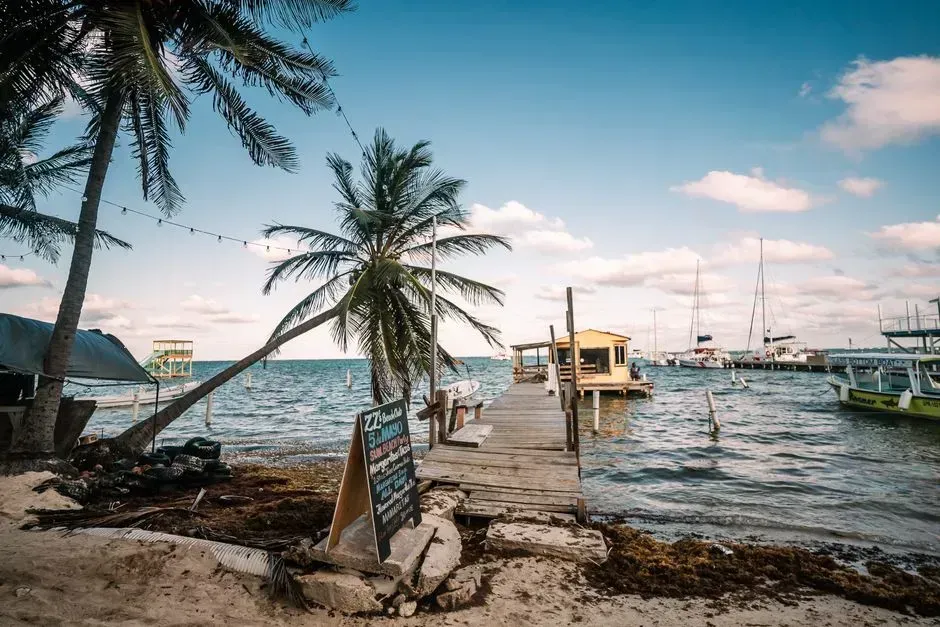
Belize offers something rare in Central America: English as the official language, which removes one of the biggest hurdles retirees face elsewhere in the region. Its Qualified Retired Persons program, often shortened to QRP, was built specifically to attract people in this exact life stage. Under the program, the Belize Tourism Board grants resident visas to individuals aged 45 or older who prove a foreign source pension or annuity of at least USD 2,000 per month.
The tax treatment is a major draw for people with US-based retirement income. The benefits include a permanent exemption from all taxes in Belize, covering estate taxes, income taxes, capital gains taxes, and most import taxes. Time commitments are also lighter than in most countries, since qualified members can maintain their status while enjoying all the QRP benefits even by spending as little as a month a year in the country.
8. Colombia

Colombia has spent the last decade rebuilding its international reputation, and retirees have taken notice. Cities like Medellín built a name for themselves among the broader digital nomad and retiree crowd for a mild, spring-like climate that barely changes across the year, paired with a lower cost of living than most of Western Europe or North America. The country’s residency visa for people with steady pension income has become a common pathway, generally requiring proof of a monthly pension roughly comparable to other Latin American programs.
What sets Colombia apart from some of its neighbors is the sheer variety packed into one country, from Caribbean coastline to Andean cities to Amazon-adjacent towns. Retirees who want more than a single fixed lifestyle often find that appealing, since they can shift climates and scenery without leaving the country or restarting the paperwork. Healthcare in major cities is generally regarded as good and affordable relative to US costs, though quality varies more sharply outside urban centers than in some other countries on this list.
9. Malaysia

Malaysia sits a bit further off the beaten path for American retirees, but its Malaysia My Second Home program, known as MM2H, has drawn a steady stream of interest for years. Malaysia’s MM2H Program provides a 10-year renewable visa for retirees meeting specific financial criteria and health requirements. That long renewal window is unusual and gives retirees a level of stability that shorter annual visas can’t match.
Tax treatment is another selling point that keeps coming up in comparisons with other Southeast Asian options. Malaysia’s tax exemptions for foreign-sourced income can provide significant tax advantages for properly structured retirement plans. Kuala Lumpur and Penang tend to attract the largest concentrations of American retirees, drawn by modern medical facilities and a lower overall cost of living than most Western capitals.
10. Thailand

Thailand’s retiree community has grown steadily, particularly on islands and coastal cities where the lifestyle draw is obvious. Retirees increasingly select Thai destinations for the combination of tropical lifestyle, modern healthcare infrastructure, and established expatriate community, with particular interest from North American nationals. Phuket has become one of the more visible hubs for this kind of relocation.
The visa framework has its own distinct name and structure compared to other countries on this list. Thailand calls it a Non-Immigrant O-A visa, and despite different names across countries, all retirement visas share a common logic: prove you have enough income or savings to support yourself, and the host country grants long-term residence. Bangkok’s hospitals, several accredited internationally, are frequently cited as a major reason retirees feel comfortable committing to Thailand long term.
11. Greece

Greece has climbed the rankings quickly over the past couple of years, partly by circumstance and partly by design. Mexico, Panama and Costa Rica benefit from proximity to the US, but Greece also has one of the most affordable golden visa programs among European retirement destinations. Its rise has been helped along by changes elsewhere on the continent.
Both Greece and Portugal have benefitted from the fact that Spain closed its golden visa program earlier in 2025, redirecting interest toward Athens, Crete, and the islands. Investment thresholds vary by location, since Greece’s golden visa program starts at an investment of about $300,000 for property in areas of lower housing pressure, rising up to $930,000 for properties in sought-after areas such as Mykonos or Santorini. Crete in particular has emerged as a favorite among retirees who want island living without the premium price tag attached to the more famous Cycladic destinations. Each of these countries offers a different trade-off between cost, climate, paperwork, and community, and none of them is a universal fit. What they share is a track record of actually welcoming Americans who show up with a pension check and a willingness to adapt, rather than treating retirees as a passing curiosity. For anyone weighing the decision, the visa requirements and cost figures above are a reasonable starting point, though it’s worth double-checking current thresholds directly with each country’s immigration authority before making any firm plans, since these programs tend to shift from one year to the next.





Leave a Reply