
Somewhere between what we’re told as children and what we casually accept as adults, a lot of misinformation quietly takes root. Common misconceptions are viewpoints or factoids that are often accepted as true but which are actually false, and they generally arise from conventional wisdom, stereotypes, superstitions, or the popularization of pseudoscience. The tricky part is that many of these myths feel plausible. They match our intuition, they’ve been repeated endlessly, and nobody around us ever seemed to question them.
The good news is that researchers have been quietly dismantling these beliefs for decades. What’s surprising isn’t that the myths existed – it’s how stubbornly they persist even after being debunked. Here are eleven of the most enduring ones, explained and set straight.
1. Napoleon Bonaparte Was Exceptionally Short

This one has survived for over two centuries, spawned a psychological concept, and become a punchline in cartoons, films, and everyday conversation. The problem? It was largely invented. The myth of Napoleon’s short stature primarily stems from British propaganda during the Napoleonic Wars. The British depicted him as a small, petty man to diminish his imposing image, and cartoons of the time often exaggerated his small size to make him appear less threatening and more comical.
The confusion is further compounded by the difference in measuring units used at the time. Napoleon’s recorded height is 5 feet 2 inches in French units, but the French inch of that era was slightly longer than the British inch. In modern international units, he was actually around 5 feet 7 inches tall, which was quite average for a Frenchman of his time. Many English speakers also heard Napoleon’s nickname “Le Petit Caporal” and widely misinterpreted “petite” to mean “short” – it was actually a term of endearment.
2. You Only Use 10% of Your Brain
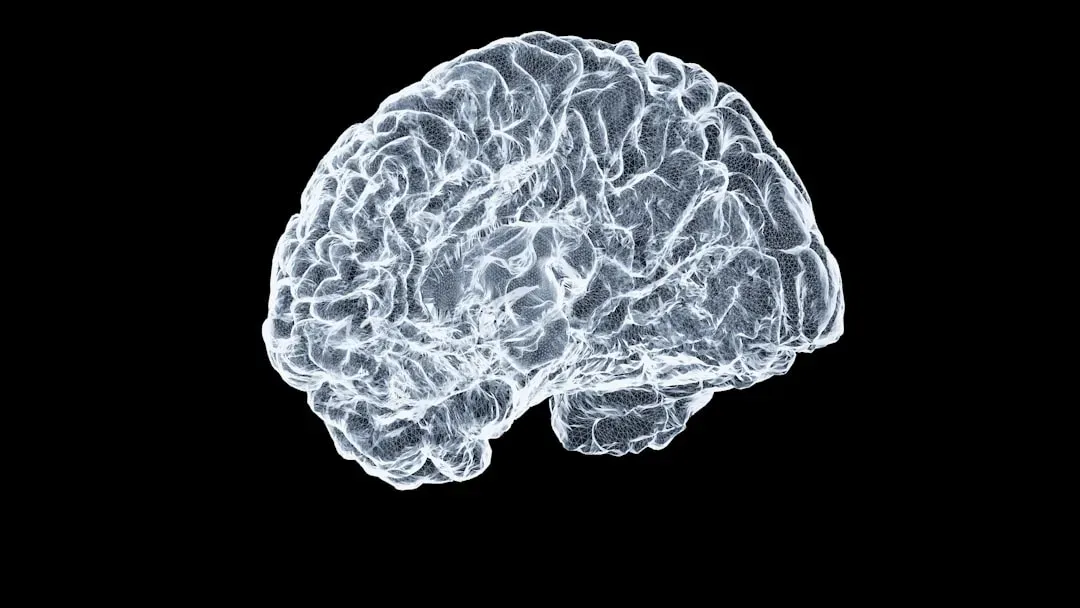
This myth is so persistent that it literally became the plot of a major Hollywood film. Many people believe that humans only use 10 percent of their brains. However, that’s nothing but a myth. Neurologists have confirmed that humans use virtually every part of the brain, and most of the brain is active almost all the time. The idea that a vast reservoir of untapped mental potential sits dormant inside your skull is a fiction.
The myth that humans only use 10% of their brains is pervasive, despite being debunked by neuroscientists. The origin of this myth is murky, but it gained popularity in the early 20th century. Brain scans show that we use all parts of our brains, although not necessarily all at the same time. Different areas are active depending on what we’re doing. There’s no hidden 90% waiting to be unlocked.
3. Sugar Makes Kids Hyperactive

Ask any parent and they’ll likely swear by this one. Birthday cake goes in, chaos follows. The truth, though, is far less dramatic. Parents everywhere blame sugar for wild behavior after birthday parties or Halloween, but controlled studies found no link between sugar consumption and increased hyperactivity in children. What’s really happening is more psychological than physiological.
Expecting sugar to change your child’s behavior can influence how you interpret what you see. In a study where parents were told their child had received a sugary drink or a placebo, those parents who expected hyperactivity perceived this effect – even when their child had only had the sugar-free placebo. The myth of sugar-induced hyperactivity can be traced to a handful of studies conducted in the 1970s and early 1980s, focused on the Feingold Diet as a treatment for what we now call ADHD. The science moved on. The myth didn’t.
4. Lightning Never Strikes the Same Place Twice

It’s a saying most people have used without thinking too hard about it. As a metaphor, it’s poetic enough. As a fact about how electricity works, it’s completely wrong. The idea that lightning doesn’t strike the same place twice is a popular misconception. Lightning strikes are too frequent to not strike the same place on Earth multiple times, with studies showing that around 500 to 1,000 lightning strikes happen globally every second.
The Empire State Building was once used as a lightning laboratory because the building is struck with lightning around 100 times a year. That’s not a place that got unlucky once. The way lightning works actually supports the idea of multiple strikes. With negative charge collecting in the clouds and positive charge collecting on the ground, lightning naturally follows the path of least resistance – which is often the same elevated structure, again and again.
5. The Great Wall of China Is Visible from Space

This “fact” has appeared in textbooks, trivia nights, and casual conversation for generations. It sounds impressive, and the wall certainly is massive. The problem is that being long doesn’t mean being wide enough to see from orbit. It’s pretty hard to pick out the Great Wall of China from any space-based locale. In low-Earth orbit, it’s next to impossible to see with the naked eye. Even with a fairly hefty camera lens, it’s still challenging to tell if you’re looking at the Great Wall or not.
It’s all about color. The Great Wall of China is nearly the same color as the area surrounding it, so it’s difficult to distinguish the wall from its surroundings. In 2004, astronaut Leroy Chiao was determined to get a picture of the wall from space. With the aid of his camera’s lenses, he was able to capture the first photograph of it – but only with equipment, not the naked eye. Meanwhile, cities, airports, and major highways are far easier to spot.
6. Swallowed Gum Stays in Your Stomach for Seven Years

Generations of children were terrified by this one, usually delivered by a parent or older sibling with the confidence of a medical professional. It has a kernel of truth – gum base does resist digestion – but the conclusion is wildly overstated. The human digestive system actually moves gum through the gastrointestinal tract at the same pace as other swallowed food items. While the synthetic base of the gum resists breakdown by stomach acids, the body simply excretes the intact mass within a few days.
Gum does not stay in your digestive system for seven years. The myth persists partly because it’s vivid and easy to remember – exactly the kind of story that sticks around. Swallowing a large wad of gum repeatedly could potentially cause a blockage in young children, but for adults, it simply passes. No drama. No seven-year wait.
7. Shaving Makes Hair Grow Back Thicker and Darker

This belief has convinced countless people to avoid shaving certain areas out of fear that they’ll end up with coarser, more visible hair. It feels logical – but the physiology simply doesn’t support it. Many people have been warned against shaving their arm hair, with the reasoning that it would grow back thicker. Shaving your hair doesn’t make it change in color, rate of growth, or thickness, as confirmed by the Mayo Clinic.
Shaving only cuts the hair at the surface of the skin; it doesn’t affect the hair follicle itself. The reason it might seem thicker is because the newly grown hair hasn’t been tapered by natural wear and tear yet. It’s blunt, not thicker. The hair follicle below the skin is completely unchanged by whatever happens at the surface. What grows back is no different from what was there before – it just has a flat edge instead of a tapered one.
8. Goldfish Have a Three-Second Memory

The idea that goldfish are so forgetful they can’t even remember their last lap around the bowl has become cultural shorthand for short-term memory. It’s also entirely made up. The idea that goldfish can only remember things for three seconds is a myth. Some research even indicates goldfish could have a memory span of up to five months long. That’s not the behavior of an animal with zero retention.
Goldfish have gotten a bad reputation over the years. Recent studies have shown that goldfish can actually remember things for months, and can even be trained to do tricks. They can learn to associate certain signals with feeding times, navigate mazes, and respond to training consistently. The three-second myth probably stuck because it conveniently explains why they seem content swimming in circles – but the real reason is simply their environment, not their memory.
9. Ostriches Bury Their Heads in the Sand When Scared

If ostriches actually did this, they’d be among the most poorly adapted animals in existence. Burying your head when threatened is about as effective a survival strategy as closing your eyes and hoping for the best. Ostriches do not stick their heads in the sand to hide from enemies or to sleep. The misconception’s origins are uncertain but it was probably popularized by Pliny the Elder, who wrote that ostriches imagine, when they have thrust their head and neck into a bush, that their whole body is concealed.
Contrary to the popular myth, ostriches don’t stick their heads into the ground when they feel threatened. What they do is dig holes in the ground to bury and turn their eggs, and they occasionally lower their heads to the ground to listen for predators – a behavior that, from a distance, might look like head-burying. It’s an observational misread that became a cultural certainty through centuries of repetition.
10. Cracking Your Knuckles Causes Arthritis

Parents have issued this warning to fidgety children for decades. The sound is undeniably unpleasant to bystanders, and it’s easy to imagine that something loud and physical must be doing damage. Cracking your knuckles has no correlation to arthritis in those joints. Several studies that aimed to find a link between the two found no substantial evidence of any correlation. However, those who excessively cracked their knuckles did have slightly weaker grip strength later in life.
Knuckle cracking is actually a bubble being formed and popped by the liquid that surrounds the knuckle joints. It causes no trauma to these areas that would accelerate the onset of inflammation, which is what arthritis actually is. The sound is strange, the habit is annoying to others, and the grip-strength finding is worth noting – but arthritis? Not the culprit here.
11. Chameleons Change Color to Camouflage Themselves

The image of a chameleon seamlessly blending into a leaf or a branch is deeply embedded in popular culture. It’s used as a metaphor for adaptability, stealth, and disguise. The actual science behind color-changing is considerably more interesting than camouflage. All those changing colors, unlike what many people believe, usually don’t have a thing to do with blending into surroundings. It hinges on the particular species, of course, but chameleons are usually pretty well camouflaged to begin with. If they need to visually merge into the background, they can just stick with their normal coloration.
Chameleon color-changing is typically triggered by physical, physiological, and emotional changes. If they’re feeling angry, afraid, or combative, they’ll change colors using their chromatophores. They’ll also change colors as a way of communicating and to signal aggression toward a competitor. In other words, the color-changing is closer to a mood display than a disguise. The camouflage myth endures because it makes for a better story – but nature, as usual, is more fascinating than the simplified version.
What all eleven of these myths share is a kind of narrative convenience. They’re easy to remember, satisfying to repeat, and almost never questioned once they’ve settled into the background of everyday knowledge. The more interesting question is what other “facts” are sitting unchallenged in the same mental filing cabinet – waiting for someone to actually look them up.




Leave a Reply