
A first couples therapy session usually feels more important to the two people in the room than it does routine to the therapist. Partners tend to arrive with a story, a grievance, or a quiet hope that someone neutral will finally settle the question of who is right.
Therapists see this room many times a year, and certain patterns show up again and again. What follows isn’t a checklist for diagnosing your own relationship. It’s a look at the kinds of details trained professionals commonly pay attention to, drawing on well-established relationship research rather than headline statistics.
Who Walks In First and How They Sit

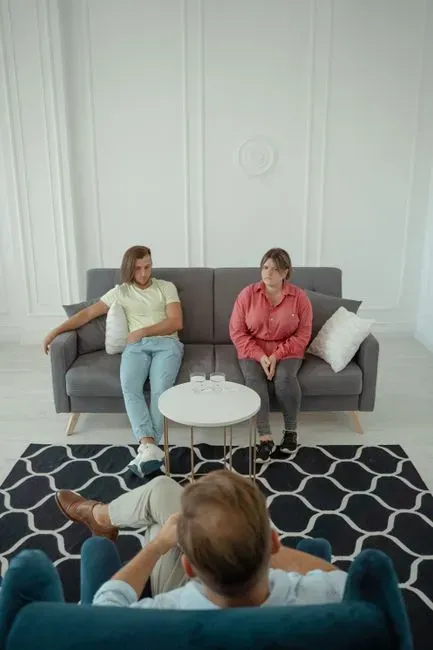
Therapists often notice small physical choices before anyone speaks. Who enters first, which seat each person picks, and how much space sits between them can hint at comfort levels or tension. A couple perched at opposite ends of a sofa tells a different story from one sitting close but staring straight ahead.
None of this is a verdict, though. Posture can reflect nerves as easily as distance, and good clinicians treat these observations as questions to explore, not conclusions to announce.
Whose Idea It Was to Come

It matters a great deal who made the appointment. In many couples, one partner is more motivated and the other is attending reluctantly, sometimes after an ultimatum. Therapists usually sense this within minutes.
Mixed motivation is common and workable. Still, the therapist will want to understand each person’s reason for being there, because a partner who feels dragged in needs a different kind of welcome than one who is eager to start.
The Tone of the Opening Story

How each person describes the problem often reveals as much as the problem itself. Some people begin with a specific recent event, while others open with a long list of past failings. Therapists listen for whether the language is blaming, curious, tired, or hopeful.
Research from the Gottman Institute, built on decades of observing couples, has long suggested that a harsh startup to a difficult conversation predicts how it will end. A first session gives a therapist a live example of that startup.
Criticism and Contempt

Among the interaction patterns Gottman’s work highlights, contempt is considered especially corrosive. It shows up as sarcasm, eye rolling, mockery, or a tone of superiority. Plain criticism, aimed at a partner’s character instead of a specific behavior, is a close relative.
A therapist who spots these early isn’t judging anyone. They’re noting which habits will need to soften first, since contempt tends to make every other conversation harder.
The Demand and Withdraw Dance

One of the most widely studied patterns in couples research is demand and withdraw. One partner pursues, raises issues, and pushes for answers, while the other goes quiet or leaves the conversation. Each often believes the other started it.
In the room, this can look like one person speaking at length while the other stares at the floor. Therapists tend to name the cycle gently, because seeing it as a shared loop is often a relief compared with seeing it as one person’s flaw.
How Much Each Person Interrupts

Turn taking says a lot. When one partner repeatedly cuts in, corrects details, or finishes the other’s sentences, it signals that listening has become difficult. Therapists often set a simple ground rule early so each person can finish a thought.
How the couple reacts to that rule is informative too. Some relax with the structure, while others find it surprisingly hard to wait their turn.
Signs of Defensiveness

Defensiveness usually arrives as a counterattack or an excuse. A partner hears a complaint and responds with their own complaint, or explains why none of it was their fault. It feels natural in the moment and rarely helps.
Therapists watch for it because it blocks repair. When people feel they must protect themselves, they stop hearing what the other is trying to say.
Emotional Flooding and Shutting Down

Some partners become physically overwhelmed during conflict, with a racing heart, tense jaw, or a sudden urge to leave. Gottman’s research describes this as flooding, and it makes calm problem solving close to impossible. A therapist may notice a person go blank or monosyllabic mid-session.
When that happens, a good clinician slows things down. Taking a pause isn’t avoidance here, it’s a way to bring people back to a state where they can actually talk.
Whether There Are Moments of Warmth

Therapists look for the good as carefully as the bad. A shared laugh, a soft glance, or a partner reaching for a tissue for the other can show that affection hasn’t disappeared. These moments matter for the outlook.
Research on couples consistently finds that positive interactions help buffer conflict. Seeing them in a first session, even briefly, gives the therapist something solid to build on.
What Each Person Wants to Change in the Other

Most couples arrive with a clear list of what the partner should do differently. The imbalance is telling: one person may focus entirely on the other’s behavior and have little to say about their own. Therapists notice who can name a personal contribution.
That willingness is a useful sign. It doesn’t mean someone is at fault, only that they can see the relationship as a system with two participants.
Issues Behind the Stated Problem

The reason couples give for coming isn’t always the real one. An argument about chores may carry questions about respect, and a complaint about money may involve security or control. Therapists listen for the feeling underneath the topic.
Emotionally focused therapy, a well-researched approach, rests on the idea that conflicts often reflect unmet attachment needs. Naming that deeper layer can change how a couple understands their fights.
Communication Around Sex and Intimacy
Intimacy concerns frequently sit just beneath the surface in a first session, and couples often hesitate to raise them. A therapist may notice when a topic is carefully skirted or when one partner glances away at a mention of closeness.
Rather than pressing, most clinicians create room to return to it later. Comfort talking about intimacy tends to grow with trust, and the first meeting is mainly about building that trust.
Outside Stressors Pressing In

Relationships don’t exist in a vacuum. Job loss, caring for children or aging parents, health problems, and financial strain often shape the tension a couple feels. Therapists ask about these early because stress can look like relationship failure.
Sometimes the real task is helping partners see that they are struggling alongside each other, not against each other. That shift alone can lower the temperature in the room.
Signs of Safety Concerns

Responsible therapists screen for safety from the start. Fear of a partner, controlling behavior, or intimidation changes the whole approach, because standard couples work can be unsafe when abuse is present. Clinicians may arrange a separate conversation to check in privately.
The National Domestic Violence Hotline in the United States offers confidential support for anyone worried about this. Therapists treat these signs as a priority above any communication exercise.
Substance Use, Affairs, and Other Big Secrets

Heavy drinking, drug use, or infidelity often come up in the first hour, sometimes in a rush and sometimes hinted at. A therapist notes how the couple handles disclosure, including whether it’s met with anger, shame, or silence.
These issues may need specific treatment alongside couples work. Early honesty, even when uncomfortable, usually gives the therapist a clearer map of what’s ahead.
Whether They Believe Change Is Possible

Finally, therapists gauge hope. Some couples arrive convinced it’s too late, while others are cautiously optimistic. That outlook shapes how fully each person will engage.
Hope doesn’t need to be high, only present. Many people begin therapy ambivalent, and a small sense that things could improve is often enough to start the work.
Couples therapy research, including studies of approaches such as emotionally focused therapy and Gottman method therapy, generally supports that many couples report improvement when they commit to the process. A first session is where that process begins.

Leave a Reply