
United Arab Emirates

Few places on earth depend on foreign residents the way the UAE does. Expatriates in the United Arab Emirates represent about 89% of the population, while Emiratis constitute roughly 11% of the total population, making the UAE home to the world’s highest percentage of expatriates after the Vatican City. The UAE is home to over 200 nationalities. That density of foreign workers, students, and professionals is not an accident but the result of decades of deliberate policy.
Money helps explain the pull. The UAE continues to attract expats with zero income tax and high salaries. International surveys back this up too, since the United Arab Emirates ranks third, thanks to its tax-free income, modern infrastructure, and vibrant international lifestyle, offering both professional opportunities and a high standard of living. Add a stable currency and a genuinely international social scene, and it is easy to see why so many people keep arriving.
United Kingdom

The UK has functioned as a magnet for foreign residents for so long that it barely registers as unusual anymore. Europe remains one of the most popular regions for American expats, with countries such as the United Kingdom, Germany, Spain, France, and Italy all hosting large U.S.-born populations. In 2024, the United Kingdom hosted approximately 243,570 American expats. That number covers just one nationality among dozens that call Britain home.
Quality of life surveys consistently place the country near the top for a reason. The United Kingdom ranks second on the list in one major HSBC study of expat destinations, and learning new skills, work/life balance, education, and work culture were among the reasons that the U.K. ranked towards the top of the list. London alone hosts finance, tech, and media hubs that keep pulling in new arrivals every year, while smaller cities offer a gentler, cheaper version of the same opportunity.
Germany

Germany’s expat appeal is built on something fairly simple: a strong job market paired with a genuine need for foreign labor. Countries with labor shortages, such as Germany, Canada, and Australia, actively recruit skilled foreign workers. That demand shows up in the numbers too, since Germany reached 152,501 American expats in 2024 alone, without counting the far larger populations from Turkey, Eastern Europe, and beyond.
Survey data tends to back up Germany’s reputation as a place where careers genuinely progress. According to the latest study, Germany is the best country for expats. This nation stands out for career progression, work/life balance, work culture, and job security. Engineering, healthcare, and IT sectors in particular keep opening doors for foreign applicants who might struggle elsewhere.
Mexico

Mexico has quietly become one of the most popular relocation choices in the world, and not just for Americans. Mexico is the number one expat destination for happiness, with 90 percent of expats satisfied with their quality of life according to recent survey data. That kind of satisfaction rate is hard to find anywhere else on this list.
The scale of the migration backs up the sentiment. Together, Mexico and Canada accounted for more than one-third of all American expats in 2024. Mexico has become especially popular among retirees, remote workers, and Americans seeking lower living costs, with cities like Mérida, San Miguel de Allende, and Mexico City drawing steady streams of new arrivals every year.
Singapore
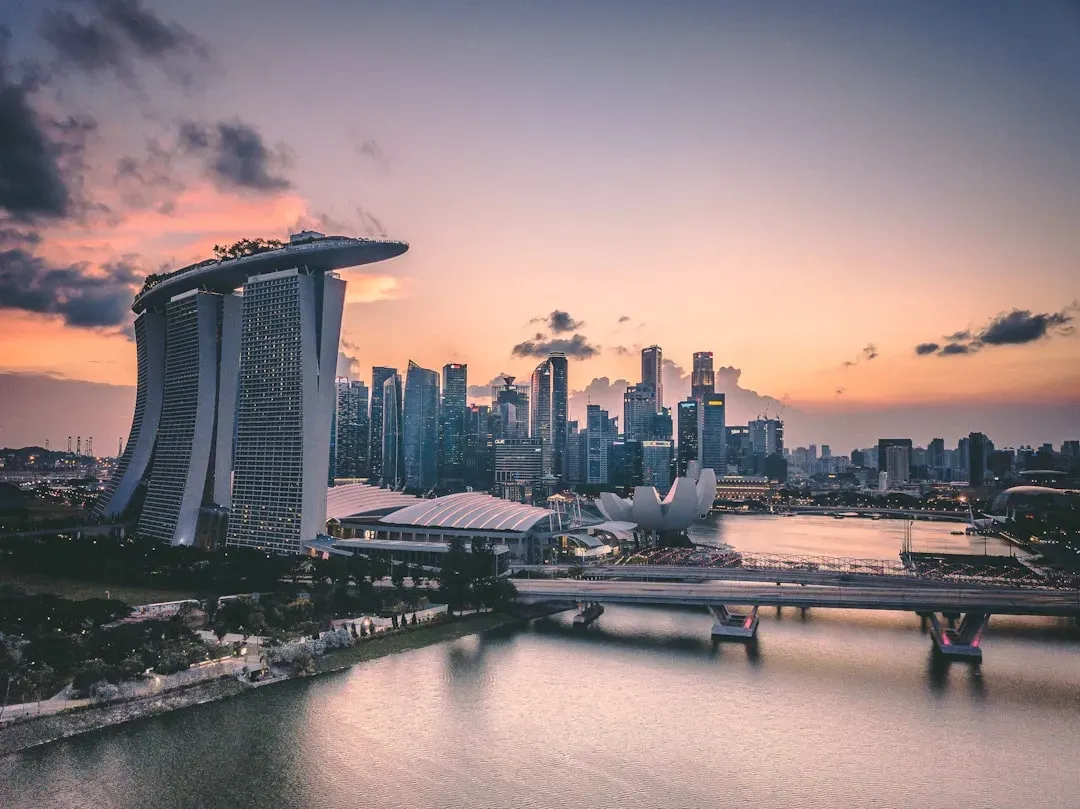
Singapore’s expat population is smaller in raw numbers than some of its rivals, but its share of the country’s total population is striking. As of June 2025, Singapore had a total population of 6.11 million. The remaining 1.91 million are non-residents, meaning close to a third of everyone living in the country arrived from somewhere else for work.
The city state has built its entire economic model around attracting global talent in finance and technology. Singapore and Hong Kong are major hubs for finance, business, and innovation, and the government structures its visa system to match. The monthly qualifying salary for an Employment Pass is 5,600 Singapore dollars for applicants at age 23, rising with age, a threshold designed to keep the incoming professional class highly skilled and well compensated.
Qatar
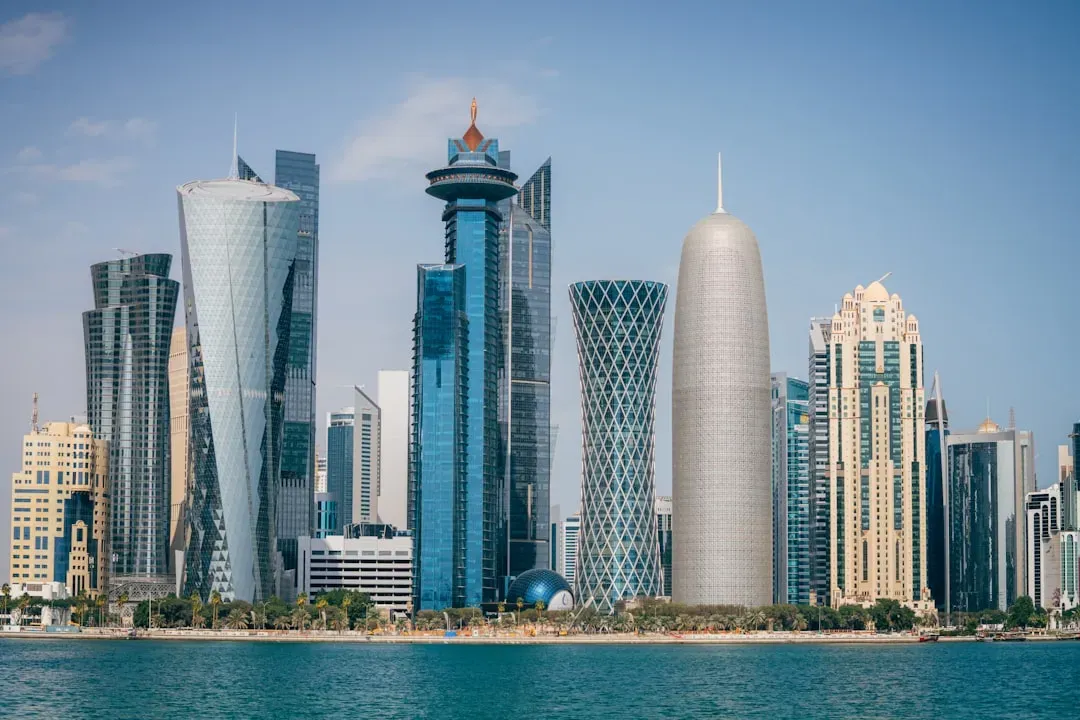
Qatar hosts one of the largest expatriate populations on the planet relative to its size, yet almost none of those residents will ever become citizens. Despite expatriates comprising 88.4% of the population, the pathway to Qatari citizenship remains virtually closed. Those looking to apply for citizenship must have lived legally in Qatar for at least 25 years without leaving the country for more than two consecutive months.
Even meeting that extraordinary residency bar guarantees nothing. Qatar naturalizes no more than approximately 50 foreign-born people per year and grants permanent residency to a mere 100 expatriates every year. And for the rare few who do succeed, the reward is limited, since recent policy changes have created a two-tier citizenship system where naturalized citizens cannot vote or hold elected office, effectively creating permanent second-class status.
Kuwait

Kuwait has spent the past two years tightening rules that were already among the strictest in the Gulf. The December 2024 amendments through Decree 116/2024 eliminated the marriage pathway for foreign women and ended automatic eligibility for wives of naturalized citizens. The policy shift did not stop at closing new pathways, either, since Kuwait has revoked over 42,000 citizenships between 2024 and 2025 in a massive denaturalization campaign reversing earlier political naturalizations from the 1980s.
The baseline requirements were already daunting before those changes arrived. The standard requirements remain daunting: 20 years for non-Arabs versus 15 years for Arab nationals, with mandatory Arabic proficiency and Islamic faith. Even successful applicants find that citizenship comes with strings attached, since naturalized citizens cannot vote for 30 years after obtaining citizenship, and apostasy from Islam results in automatic citizenship loss.
Switzerland

Switzerland’s reputation for order and precision extends directly into its citizenship process. Switzerland enforces a 10-year residency requirement, making it one of Europe’s toughest systems. That timeline alone would discourage plenty of applicants, but the language and cultural bar sits just as high.
Passing the residency clock is only the first hurdle. Applicants must demonstrate integration into Swiss society, including strong knowledge of local customs and fluency in at least one national language, whether German, French, Italian, or Romansh. Perhaps the biggest surprise for outsiders is how local the final decision really is, because local municipalities hold significant decision-making power and can deny applications even if federal requirements are met.
Japan

Japan’s naturalization timeline looks reasonable on paper compared with the Gulf states, but the practical barriers run deep. Japan requires five consecutive years of residency before a citizenship application. That five-year mark is deceptively short, since the process afterward is anything but simple.
Applicants face a thorough vetting process that goes well beyond a language test. Applicants must renounce their previous nationality, pass background checks, show financial stability, and demonstrate Japanese language proficiency. The end result is a system where, as one recent analysis put it, despite the relatively short residency requirement, strict cultural and legal standards make naturalisation highly challenging.
Liechtenstein

Liechtenstein is tiny, wealthy, and famously reluctant to expand its citizen rolls. Liechtenstein requires one of the longest residency periods, 30 years, before an applicant is eligible for citizenship. Few countries anywhere in the world demand that much patience from a hopeful applicant.
Marriage offers a shortcut, though not an easy one. Marriage to a Liechtenstein citizen may shorten the process to about five years, but approval also depends on acceptance by the local community, which may vote on each application. On top of that, German language proficiency is essential, and dual citizenship is not permitted, which forces applicants to fully commit before they even know the outcome.
China

China’s economic rise has not translated into an open door for foreign nationals hoping to settle permanently. Despite being the world’s second-largest economy, China maintains one of the lowest naturalization rates globally. Historical census data illustrates just how rare the outcome is, since the 2010 census recorded only 1,448 naturalized citizens among 1.34 billion people, a rate of roughly 0.0001 percent.
The legal pathways that exist are narrow by design. China does not permit dual citizenship and grants naturalisation only in extremely limited circumstances, usually to those of Chinese descent, spouses of Chinese citizens, or individuals working in strategic sectors. Even for those who technically qualify, the naturalisation process is slow, opaque, and approvals are rare.
Saudi Arabia

Saudi Arabia rounds out this list with requirements that blend residency length, religion, and language into one demanding package. Saudi Arabia mandates at least 10 years continuous residence, Arabic language proficiency, and impeccable character references before citizenship consideration. Saudi Arabia does not allow dual citizenship and requires all citizens to be Muslim, a combination that rules out most long-term foreign workers from ever qualifying.
Even meeting every stated requirement is no guarantee of success. Applicants must renounce previous nationality, and the Ministry of Interior maintains absolute discretion over approval decisions. The bar for personal history is equally unforgiving, since criminal history automatically disqualifies applications regardless of residency duration met.
Looking at these two lists side by side says something about how nations think of their own identity. The countries with the most expats tend to see foreign workers and residents as an asset worth investing in, whether through visas, tax breaks, or simple openness. The countries that keep the gates nearly shut are usually protecting something specific, be it cultural cohesion, resource wealth, or the value of a passport that stays scarce on purpose. For anyone weighing a move abroad, the real lesson is to separate the question of living somewhere from the question of ever truly belonging there, because in a surprising number of countries, those two things are not the same journey at all.



Leave a Reply