
Long before you settle onto the couch and start explaining why you booked the session, your therapist has already started reading the room. Not in a mystical way, but in the trained, almost automatic way clinicians pick up on posture, spacing, timing, and tone. Most won’t say this out loud in the first fifteen minutes, partly because it would sound presumptuous and partly because first impressions are just that, impressions, not diagnoses. Still, these early observations often shape the roadmap for the entire course of treatment.
What follows are nine things couples therapists commonly notice within the opening minutes of a session, based on published clinical guidance and research on nonverbal communication in relationships. None of these signs are destiny. They’re simply data points a skilled therapist quietly files away while you’re still taking off your coat.
1. Who Walks Through the Door First

It sounds almost too small to matter, but the order in which partners enter a room, sit down, or start talking can hint at the relationship’s underlying rhythm. Some therapists have noted that when one half of a couple walks in front of the other, it generally gives a negative message, since one person going ahead can suggest they’re in a rush or that the other person isn’t as important as whatever they’re moving toward. That said, context matters enormously here.
Not every instance of one partner leading the way is a red flag. In fact, letting someone go first, whether into a room or a line, can also be a sign of respect and caring. A therapist won’t jump to conclusions from a single doorway moment, but they will keep watching to see if a pattern of one partner consistently deferring, or dominating, shows up again later in the session.
2. How Much Physical Space Sits Between You

Where you choose to sit, whether shoulder to shoulder, angled toward each other, or on opposite ends of the couch, gets noticed almost immediately. Clinicians view this as part of a broader read on nonverbal signals. As one therapy blog puts it, in couples therapy, body language is often one of the first things observed, because it tells the truth of how two people relate, support, and respond to each other.
Distance isn’t always about affection or its absence. Sometimes it reflects comfort with public displays of closeness, cultural norms, or simply how the furniture is arranged that day. Even so, therapists tend to watch whether that spacing shifts once the conversation gets harder, since couples who lean away from each other during conflict are showing something different than couples who instinctively lean in.
3. Crossed Arms, Fidgeting, and Other Defensive Postures

Body language experts widely agree that certain physical habits carry emotional weight, even if they’re not conscious choices. According to reporting on what therapists notice in session, posture, gestures, and facial expressions can reveal a client’s current emotional state, comfort level, and openness to the process, with crossed arms potentially indicating defensiveness or anxiety and constant fidgeting suggesting nervousness.
A good therapist won’t read a single crossed-arm moment as proof of anything specific. Still, they’ll notice if one partner consistently guards their body while the other stays open, or if fidgeting spikes the moment a particular topic comes up. These micro-reactions often surface issues faster than words do, especially in the early sessions when people are still choosing their language carefully.
4. Who Talks First, and Who Talks the Most

Within the first few exchanges, therapists start tracking conversational balance. One partner monopolizing the narrative, interrupting, or answering questions clearly directed at the other tells a therapist something about the couple’s communication hierarchy. This connects to broader observations about engagement, since a client’s level of cooperation and willingness to engage offers a snapshot of their commitment to the process, and people often put up barriers even after reaching out for help unprompted.
In couples work specifically, this imbalance is common enough that clinicians expect it. Resistance or hesitancy can be indicative of fear, mistrust, or unresolved traumas, and this can be especially significant in couples therapy, where there is often a member of the couple who is more reluctant to engage. Therapists usually make a mental note to gently draw out the quieter partner rather than let the imbalance continue unchecked.
5. The First Signs of Criticism Versus Complaint
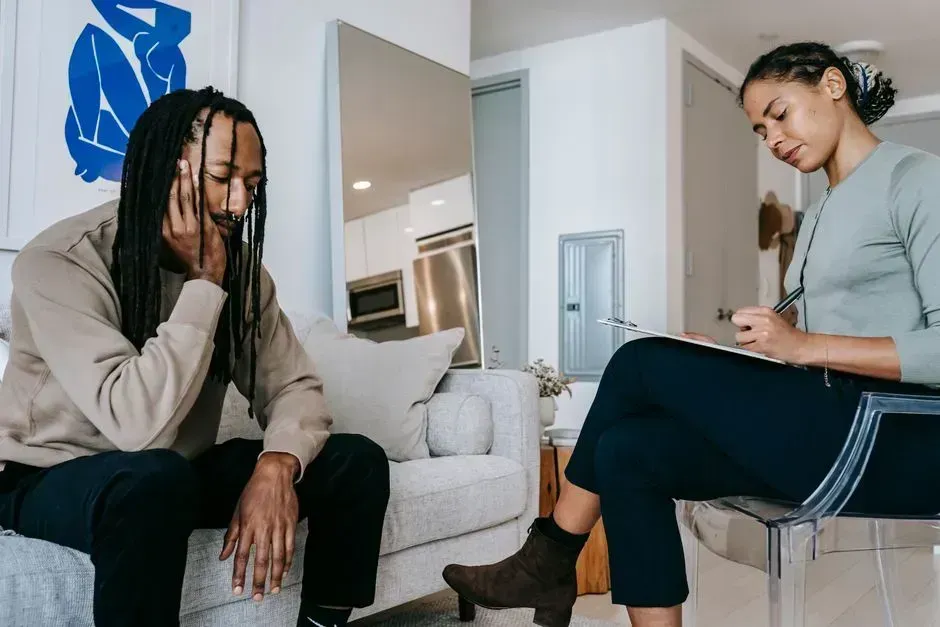
There’s a meaningful difference between voicing a specific frustration and attacking someone’s character, and therapists are trained to catch that distinction almost instantly. This distinction comes directly from decades of relationship research. As one summary explains, criticism occurs when a partner attacks the other’s character, beliefs, personality, appearance, or actions, using absolute or superlative statements rather than simply voicing how they feel or think.
A phrase like “you never listen” lands very differently in a therapist’s ear than “I felt unheard yesterday.” The former often gets flagged early because it tends to escalate conflict rather than resolve it. Clinicians trained in Gottman-style methods listen for this pattern specifically because it’s one of the most reliable warning signs they track throughout treatment.
6. Traces of Contempt: Eye-Rolls, Sarcasm, and Mockery

If criticism is a yellow flag, contempt is closer to a red one, and therapists notice it fast. Sarcastic tone, eye-rolling, or mocking comments toward a partner rarely go unnoticed, largely because of what the research says about their significance. Contempt is considered the most destructive of the so-called Four Horsemen and the single greatest predictor of divorce, communicating disgust and superiority through behaviors like eye-rolling, mocking, sneering, and name-calling.
The statistics behind this are striking enough that most therapists take it seriously the moment they see it. According to Gottman’s research from 1994, contempt is the number one predictor of divorce within the first six years of marriage. A therapist spotting even a flicker of contempt in an early session will often prioritize addressing it before diving into whatever topic the couple originally booked the appointment for.
7. Whether Explanations Turn Into Excuses

Defensiveness has a very particular sound, and therapists tune into it quickly. It typically shows up as flipping blame back onto the other partner or refusing to acknowledge any responsibility, even for small things. Clinical literature describes this pattern plainly: defensiveness occurs when a partner denies responsibility when communicating to or about the other.
This one can be tricky to catch because it often masquerades as simply explaining oneself. A therapist listening closely will notice if every comment from one partner triggers a justification from the other rather than curiosity or acknowledgment. Left unaddressed, this pattern tends to keep couples stuck in circular arguments that never actually resolve anything.
8. Emotional Shutdown or Withdrawal Mid-Conversation

Stonewalling is quieter than the other patterns, but it’s just as noticeable to a trained eye. It shows up as a partner going silent, turning away, or seeming to check out entirely during a difficult exchange. This withdrawal is described in relationship research as emotional and physical withdrawal from interaction, and it’s considered one of the four communication patterns most predictive of relationship strain.
Therapists watch for stonewalling especially closely because it can be mistaken for calmness when it’s actually disengagement. A partner who goes quiet, avoids eye contact, and physically angles their body away isn’t necessarily staying composed; they may be flooded and shutting down. Recognizing the difference early helps a therapist decide whether to slow the conversation down before it escalates further.
9. Mismatches Between Words and Body Language

Perhaps the most telling thing a therapist notices isn’t any single behavior but the gap between what someone says and how their body reacts while saying it. This incongruence is considered one of the most useful clinical signals available. As one detailed breakdown of therapeutic observation puts it, a mismatch between words and body language is one of the most clinically useful things a therapist can notice, such as a client saying they’re totally over something while their voice tightens and their hands clench in their lap.
It’s worth noting that therapists are also trained not to over-interpret these signals in isolation. Experts caution that a client crossing their arms, avoiding eye contact, or sitting farther away does not automatically indicate a specific emotion, and these behaviors should always be considered within the context of the client’s history, culture, personality, and the therapeutic relationship. Still, when words and body language visibly clash, it usually becomes the thread a good therapist decides to pull on first.
None of these nine observations exist to catch you off guard or diagnose your relationship within the first five minutes. Therapists rely on them because relationships reveal themselves in patterns, not single moments, and these small cues simply help a clinician know where to look first. If you recognize a few of these signs in your own relationship, that’s not necessarily bad news; it’s just information, the same kind a good therapist would use to help you build something steadier. Awareness, as it turns out, is often the first real step toward change.




Leave a Reply