
There’s a version of childhood that many people in their thirties, forties, and beyond remember with real warmth. Long summer days outside with no one watching. Car rides where seatbelts were optional. Dinners where no one asked about feelings. It felt normal, even freeing – because it was normal, for that era.
The trouble is that “normal for that era” and “safe” are two very different things. As research in child development, neuroscience, and pediatric medicine has advanced, many practices that entire generations accepted without question have been quietly reclassified as harmful. This isn’t about blame. Most parents of the past acted on the best information available to them. Still, looking back honestly matters, because understanding where guidance changed helps explain why today’s parenting looks so different from the one many of us experienced.
1. Putting Babies to Sleep on Their Stomachs

For much of the twentieth century, placing infants face-down to sleep was standard medical advice. The thinking was that belly-sleeping prevented babies from choking on spit-up. It seemed logical. It was also, as research eventually revealed, dangerously wrong. Researchers conducted studies showing that sleeping on the stomach increases the risk of Sudden Infant Death Syndrome (SIDS) in infants – and prior to that work, experts had relied largely on overseas findings to make the back-sleeping recommendation.
The Safe to Sleep campaign, then called Back to Sleep, launched in 1994 with the core recommendation that all healthy babies be placed on their backs to sleep. Led by the National Institute of Child Health and Human Development and collaborating organizations, the campaign was later expanded and renamed in 2012 to address not only SIDS but also other sleep-related infant deaths. Since its launch, the incidence of SIDS has declined by more than half. That’s not a small footnote – that’s one of the most significant child safety wins in recent history, and it came from reconsidering something generations of parents had done without a second thought.
2. Smoking Around Children Without a Second Thought

In the 1980s, smoking was practically a lifestyle. Parents smoked in the house, in the car, at the dinner table – often with children sitting right next to them. Ashtrays were household staples, and the idea of secondhand smoke being dangerous wasn’t widely discussed. This wasn’t considered neglect; it was Tuesday evening after dinner.
The CDC now warns that secondhand smoke exposure in children increases risks of asthma, respiratory infections, and sudden infant death syndrome (SIDS). Decades of research connected secondhand smoke exposure to asthma, ear infections, and respiratory illness in children, with thirdhand smoke – the residue left on seats, clothes, and walls – adding another layer of concern, especially for babies and toddlers. What was once a quirk of adult life in the home is now understood to be a meaningful health hazard for every child in the room.
3. Casual Car Safety – or the Lack of It
Car safety in the 1980s was practically nonexistent compared to today. Many parents let kids ride in the front seat as soon as they were out of a baby carrier, and seat belts were often ignored completely. Some children rode in cars without any restraints at all, bouncing around in the backseat. Riding in the open bed of a pickup truck on a summer evening was seen as fun, not reckless.
Modern injury data made that habit indefensible. Ejection risk, rollover fatalities, and impact trauma are dramatically higher when passengers are unrestrained or riding in cargo areas. Today, car seat laws are much stricter. Rear-facing seats are recommended for much longer, booster seats are used well into elementary school, and seat belts are non-negotiable – what was once considered normal is now seen as incredibly unsafe. Letting a child stand in the backseat to see out the window, a genuine memory for many adults, would now prompt alarm from any pediatrician or traffic officer.
4. Spanking as Standard Discipline
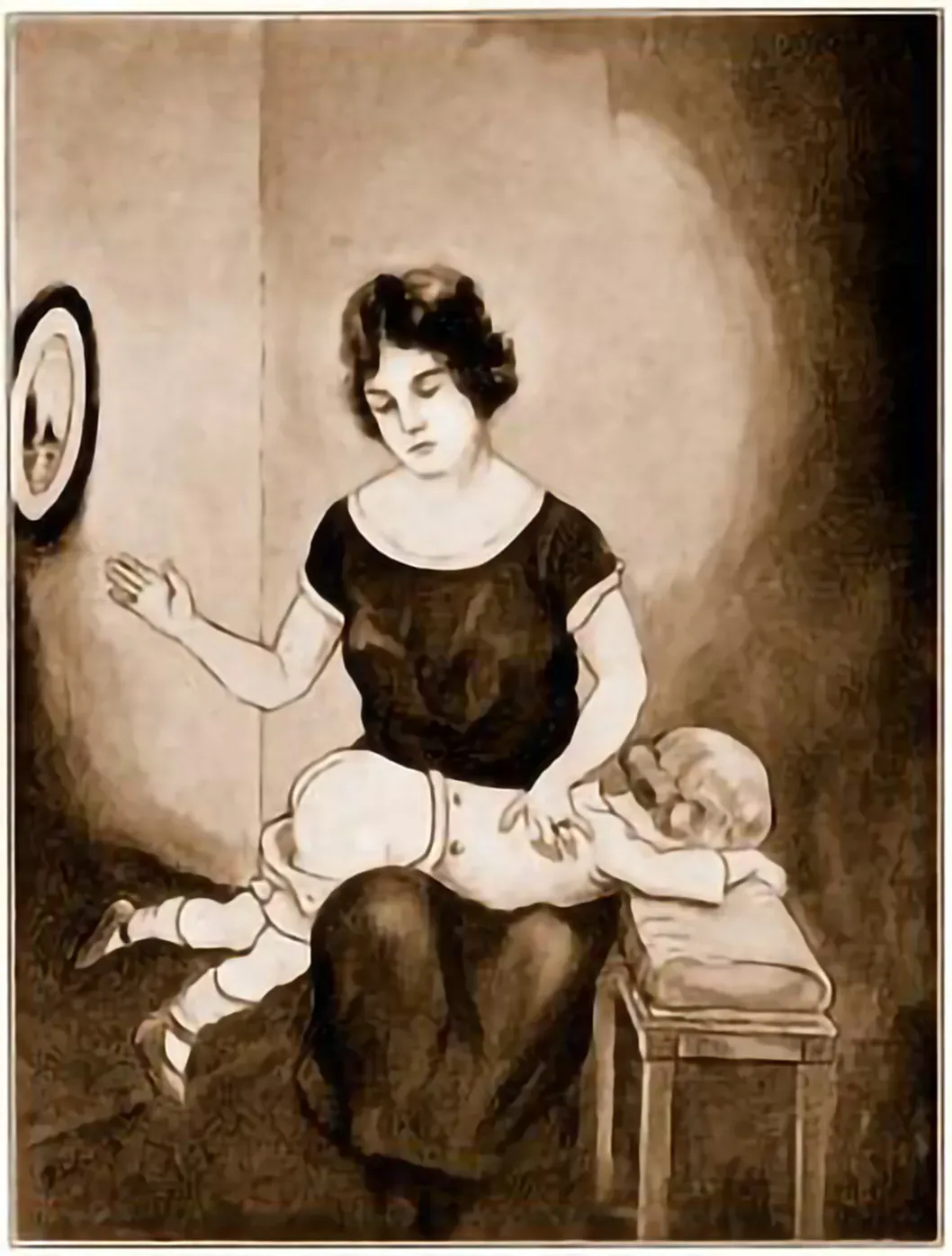
Spanking and physical punishment were widely accepted disciplinary tools in the 1980s, often recommended by parenting books and reinforced by school policies. The approach was rooted in obedience-based models that prioritized immediate compliance over emotional understanding, and at the time, limited research examined long-term psychological effects. Most parents who spanked genuinely believed they were teaching their children right from wrong.
Research has since underscored the negative effects of spanking on children’s social-emotional development, self-regulation, and cognitive development, and newer findings show that spanking alters children’s brain response in ways similar to severe maltreatment and increases perception of threats. A study published in the Journal of Family Psychology examined five decades of research involving over 160,000 children – the most complete analysis to date of outcomes associated with spanking. No studies have shown positive long-term benefits from spanking. That’s a fairly decisive verdict after half a century of data.
5. Telling Children to Suppress Their Emotions

Children were routinely told to suppress emotions with phrases like “stop crying” or “toughen up.” Emotional restraint was viewed as maturity, and adults frequently minimized feelings to encourage resilience. This approach reflected generational attitudes shaped by post-war stoicism and a limited understanding of child psychology. It felt like preparation for a hard world. In many households, it was simply what being a good parent looked like.
Over time, research demonstrated that emotional dismissal can impair a child’s ability to identify and regulate feelings. Children raised without emotional validation often struggle with communication, empathy, and mental health later in life. Today’s parenting guidance emphasizes emotional literacy, teaching children to name, process, and manage feelings safely. The shift isn’t about raising fragile kids – it’s about recognizing that emotions ignored in childhood don’t disappear. They tend to resurface later, often in less manageable ways.
6. Leaving Children Alone in Parked Cars

Popping into a shop for ten minutes while the kids waited in the car was a practical shortcut that most parents of the 1970s and 1980s used without hesitation. The kids were in the shade. The windows were cracked. It would only take a moment. That attitude has changed dramatically because modern research on heatstroke, abduction risk, and accidental injury is impossible to ignore. According to pediatric safety experts, the temperature inside a parked car can rise fast enough to become deadly even on mild days, and children are particularly vulnerable because their bodies heat up more quickly than adults.
Today, laws in many states specifically address leaving children unattended in vehicles, and prosecutors have not hesitated to file neglect or endangerment charges when the outcome is serious. Even where statutes are vague, a passerby who sees a child alone in a car is likely to call police first and ask questions later. The margin of safety that previous generations assumed simply wasn’t there, and the consequences of a short errand going wrong are now far better understood.
7. Complete Freedom with No Way to Reach Them

The 1980s were peak free-range childhood. Kids biked across town, explored construction sites, cut through woods, and stayed gone until the streetlights came on. Dropping a group of children off at the mall, arcade, or roller rink was considered completely normal. Parents would set a pickup time, hand over a few dollars, and trust that their kids wouldn’t get into trouble – there were no cell phones, no GPS tracking, just a mutual agreement to meet at the food court when it was time to go.
Today’s legal and social climate views unsupervised young children through a very different lens. What was once seen as resilience may now be interpreted as neglect, particularly if a child is very young, crossing busy roads, or wandering near commercial areas. Several modern cases have drawn national attention after parents were investigated simply for allowing children to walk alone. This shift is not just about fear – it also reflects denser traffic, less community familiarity, and stronger reporting expectations from schools, neighbors, and mandatory reporters. The informal safety net of neighbors who knew every child on the block has largely dissolved, and that changes the calculation in real, practical ways.
None of this is a verdict on the parents who raised us. Most of them were doing what their own parents did, what their doctors suggested, what the culture around them reinforced. What it does show is how much the science of childhood has grown in a relatively short span of time. Practices once seen as sensible, even caring, have been revised in light of evidence. That’s how understanding is supposed to work – and every generation of parents inherits both the knowledge and the responsibility to use it.




Leave a Reply