
Teaching children about farm food chains is a fun way to introduce food chains, food webs, producers, consumers, and the way energy moves through an ecosystem. Farms contain plants and animals children already recognize, making them an excellent setting for exploring these important science concepts.
These Farm Food Chain Activities give students a hands-on way to learn. Instead of only reading about food chains, children can cut, paste, sequence, draw, and label the different parts of a farm ecosystem.
What Is a Farm Food Chain?
A food chain shows how energy moves from one organism to another.
The sun provides the energy plants need to grow. Plants and seeds can then provide food for animals, and those animals may become food for other animals.
Using familiar farm examples helps children visualize this process and understand that every part of a food chain is connected.
With a printable activity, students can physically arrange the different parts of a food chain in order, helping turn an abstract science concept into something they can see and manipulate.
Learning About Producers and Consumers
A farm ecosystem is also a useful way to introduce producers and consumers.
Plants are producers because they make their own food using energy from the sun. Animals are consumers because they obtain energy by eating plants or other animals.
As children complete a farm food chain, you can ask them questions such as:
• Where does the energy begin?
• Which organism is the producer?
• Which animals are consumers?
• What does each animal eat?
• Which animals could be part of more than one food chain?
• What would happen if one part of the food chain disappeared?
These questions encourage children to think about why the organisms are connected rather than simply memorizing their order.
From a Farm Food Chain to a Farm Food Web
After students understand a simple food chain, they can begin exploring a farm food web.
A food web demonstrates how several food chains are connected. An animal might eat more than one type of food, while a plant or animal might also provide food for several different consumers.
This makes a food web more complex than a single food chain.
A visual cut-and-paste food web activity lets students work through these connections and see how different organisms within a farm ecosystem depend on one another.
Hands-On Farm Food Chain Activities
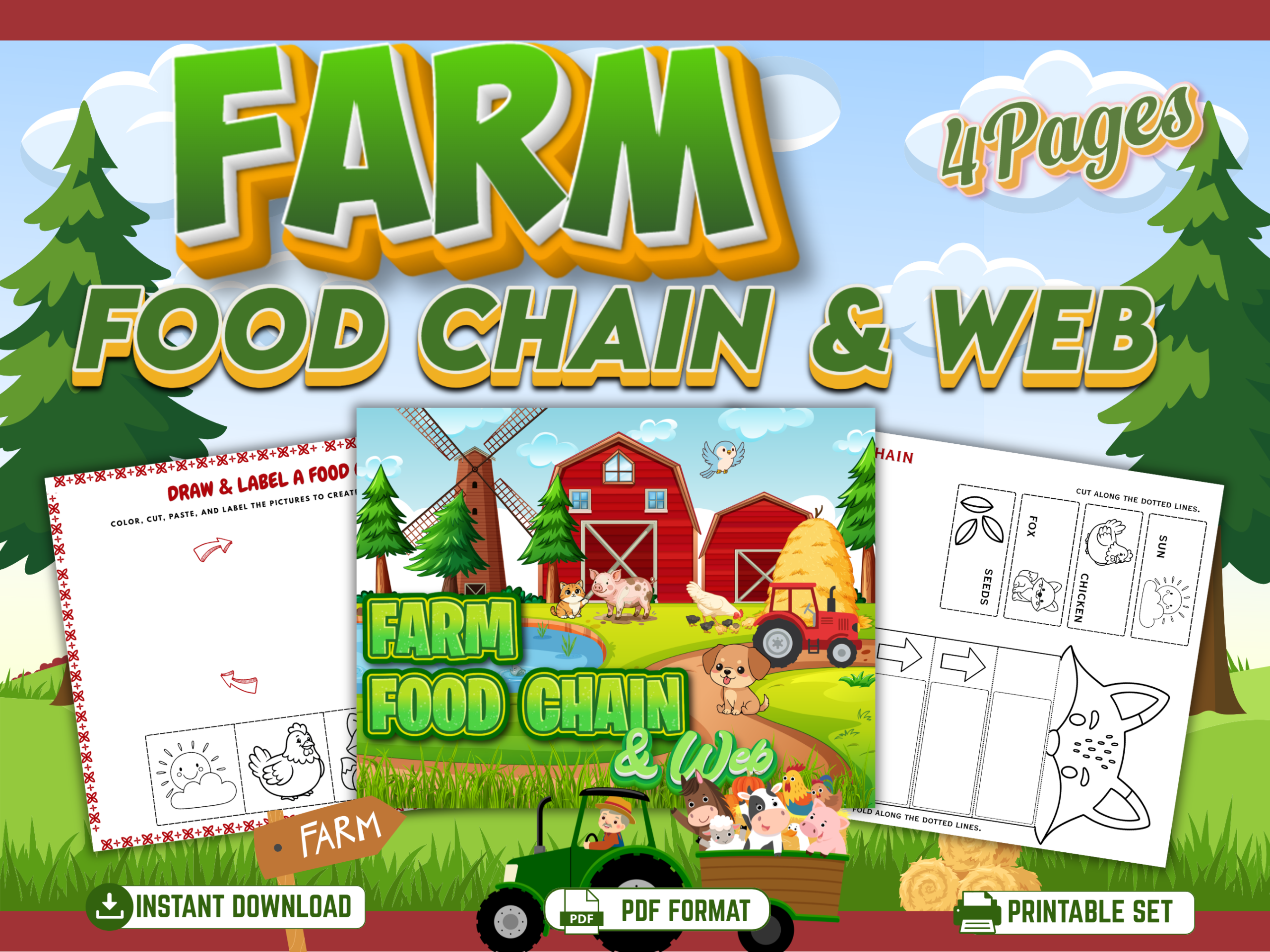
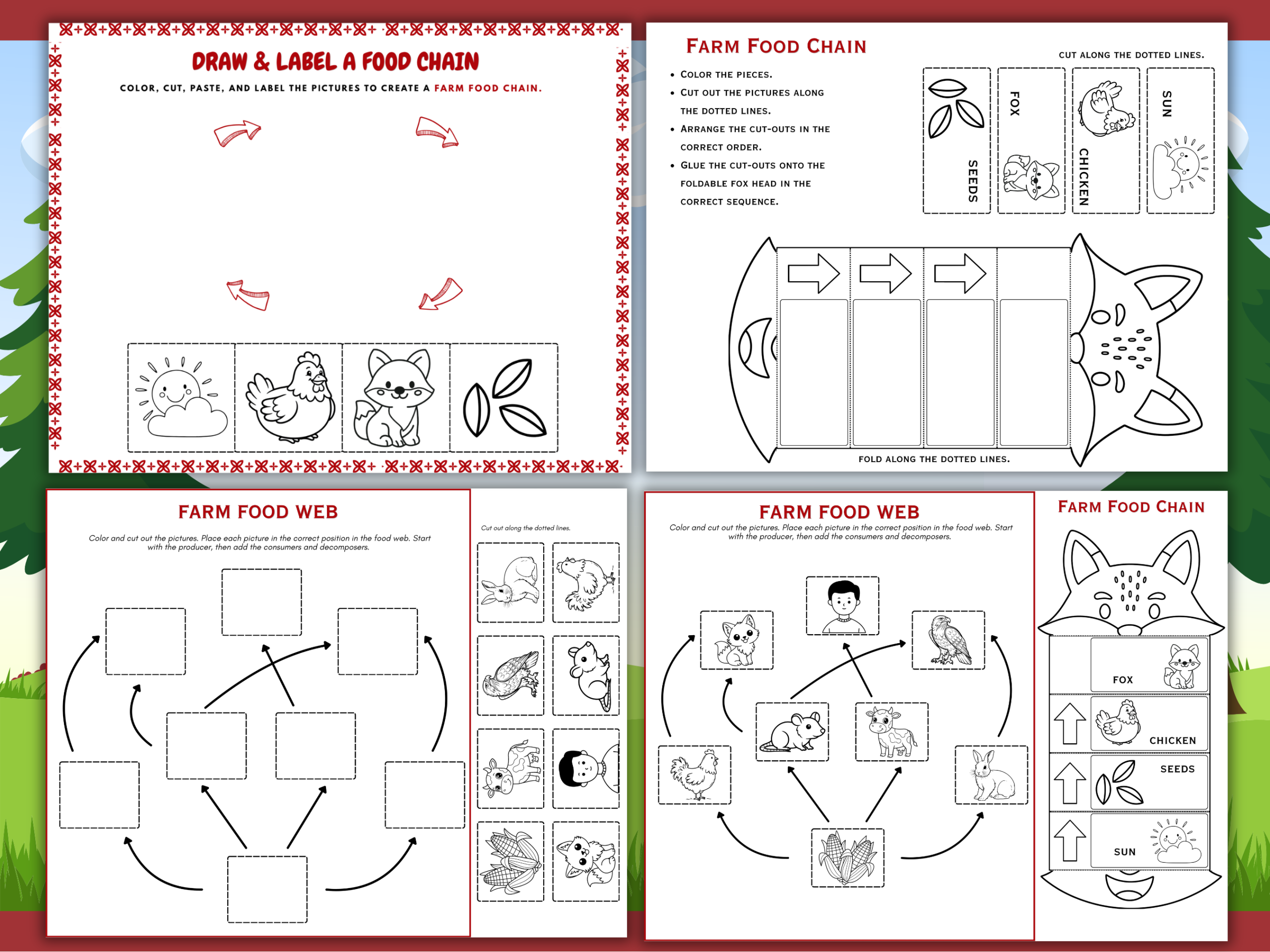
This printable set contains four activity pages covering food chains and food webs.
Students can complete a draw-and-label farm food chain, arrange the pieces of a food chain in the correct order, create an interactive foldable fox food chain, and work through a larger farm food web.
The activities incorporate coloring, cutting, pasting, sequencing, and labeling to provide multiple ways to practice the science concepts.
Make Food Chain Lessons Interactive
Hands-on activities can be especially helpful when teaching younger students about ecosystems.
Rather than only looking at a completed diagram, students can build the relationships themselves. As they decide where each plant or animal belongs, they’re practicing both science vocabulary and critical-thinking skills.
The activities can be used during a whole-class science lesson or added to a science center for independent practice.
They are also useful for homeschool lessons, small groups, science review, early finishers, farm units, and supplemental ecosystem activities.
Pair Food Chains With a Farm Unit
If you’re already teaching a farm theme, these activities offer an easy way to incorporate science.
Children can move beyond simply identifying farm animals and begin thinking about the roles plants and animals play within an ecosystem.
You can also pair the printables with books about farms, animals, habitats, plants, ecosystems, or where food comes from.
Explore Farm Ecosystems Through Hands-On Learning
Food chains help children understand that living things are connected.
By starting with familiar plants and animals, students can develop a foundation for understanding more complicated ecosystem relationships.
These Farm Food Chain & Food Web Activities combine science with coloring, cutting, sequencing, pasting, drawing, and labeling to create an engaging addition to your next food chain, ecosystem, or farm science lesson.

Leave a Reply