
What do tiny phytoplankton have to do with dolphins and other ocean animals? These Marine Food Chain Worksheets give children a hands-on way to explore that question while learning how living things are connected beneath the ocean’s surface.
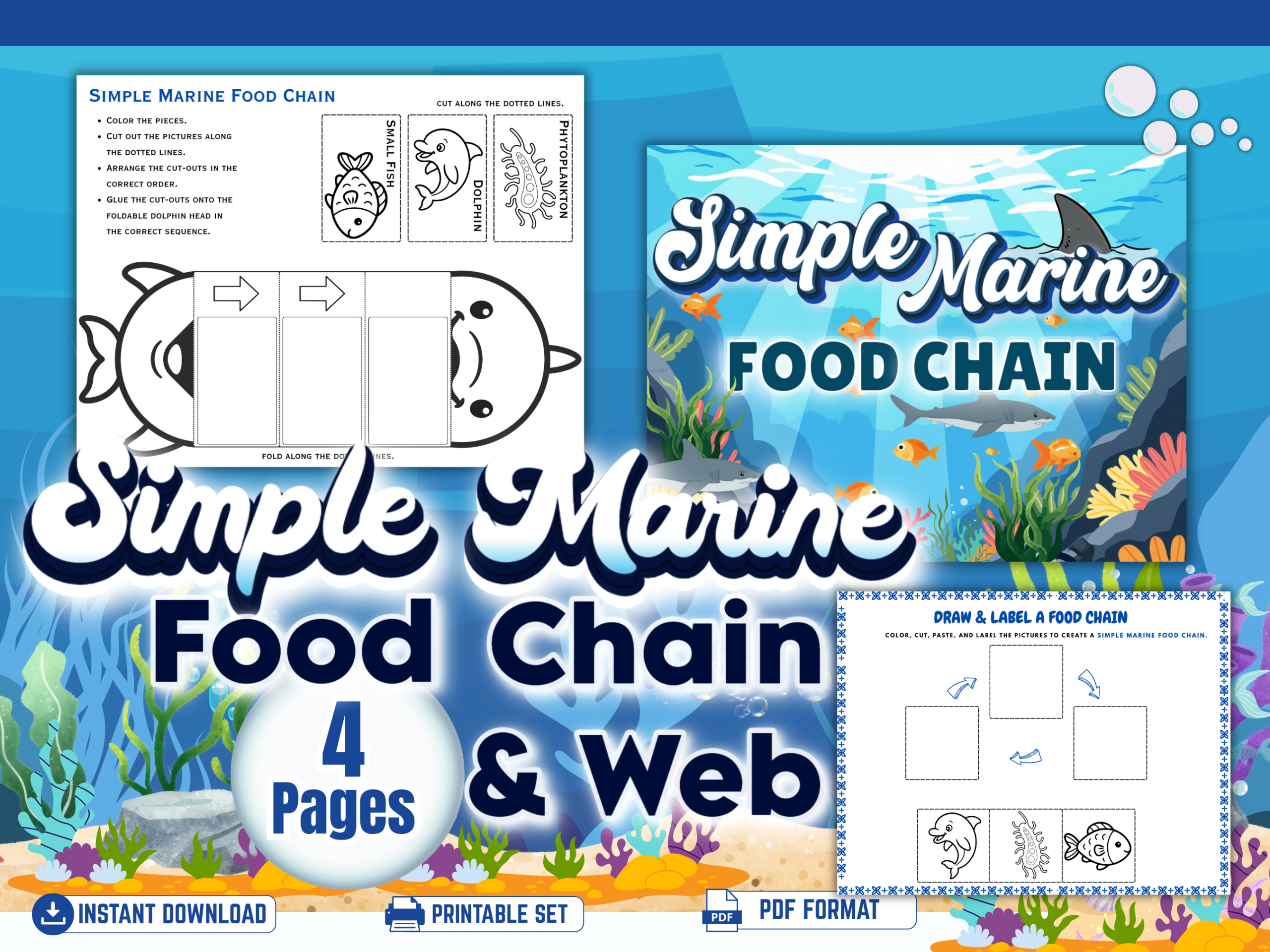
This four-page printable science set combines food chains, food webs, coloring, cutting, pasting, sequencing, and labeling for an interactive introduction to marine ecosystems.
? Explore a Simple Marine Food Chain
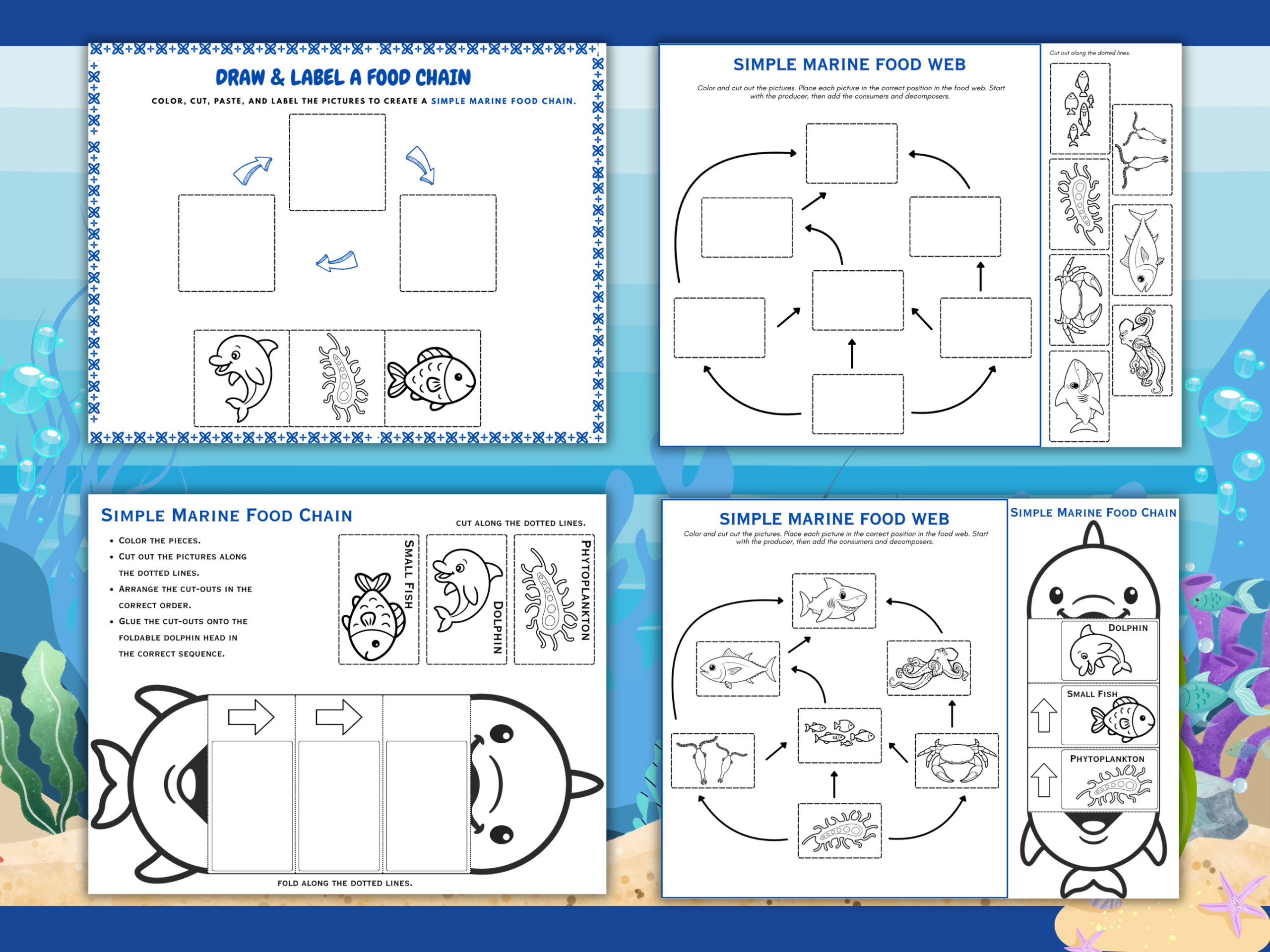
One activity introduces children to a simple marine food chain:
Phytoplankton → Small Fish → Dolphin
Children can color and cut out each organism, determine the correct sequence, and place the pieces into the foldable dolphin activity.
The simple sequence provides a visual way to discuss how energy moves through an ecosystem and introduce the roles of producers and consumers.
? Discover a Marine Food Web
A real ocean ecosystem is much more complicated than one simple food chain. Different animals may eat several types of organisms, creating interconnected relationships known as a food web.
The included Simple Marine Food Web activity features several types of ocean life, including phytoplankton, fish, crab, octopus, shark, and other marine organisms.
Children determine where the pieces belong and follow the arrows to explore how these organisms are connected.
? Hands-On Ocean Science
Instead of only looking at a finished food chain diagram, children get to participate in building one.
Students can color, cut, arrange, paste, sequence, and label the pieces. The Draw & Label a Food Chain page provides another opportunity for children to demonstrate what they’ve learned.
You can also use the activities to introduce vocabulary such as food chain, food web, producer, consumer, predator, prey, organism, and ecosystem.
? Add It to an Ocean or Marine Life Unit
These printable worksheets are a fun addition to lessons about ocean animals, marine habitats, ecosystems, food chains, food webs, or introductory marine biology.
They can be used for elementary classroom science, homeschool lessons, science centers, independent work, or supplemental learning at home.
Print the four pages, gather crayons, scissors, and glue, and let young learners discover how even the smallest marine organisms can play an important role in ocean life.

Leave a Reply