
Take your science lesson under the sea with these Ocean Food Chain Worksheets! This four-page printable activity set gives children a hands-on way to explore how plants and animals are connected within a marine ecosystem.
Instead of only reading about ocean ecosystems, children can color, cut, arrange, paste, and label marine organisms while creating their own food chains and food webs.
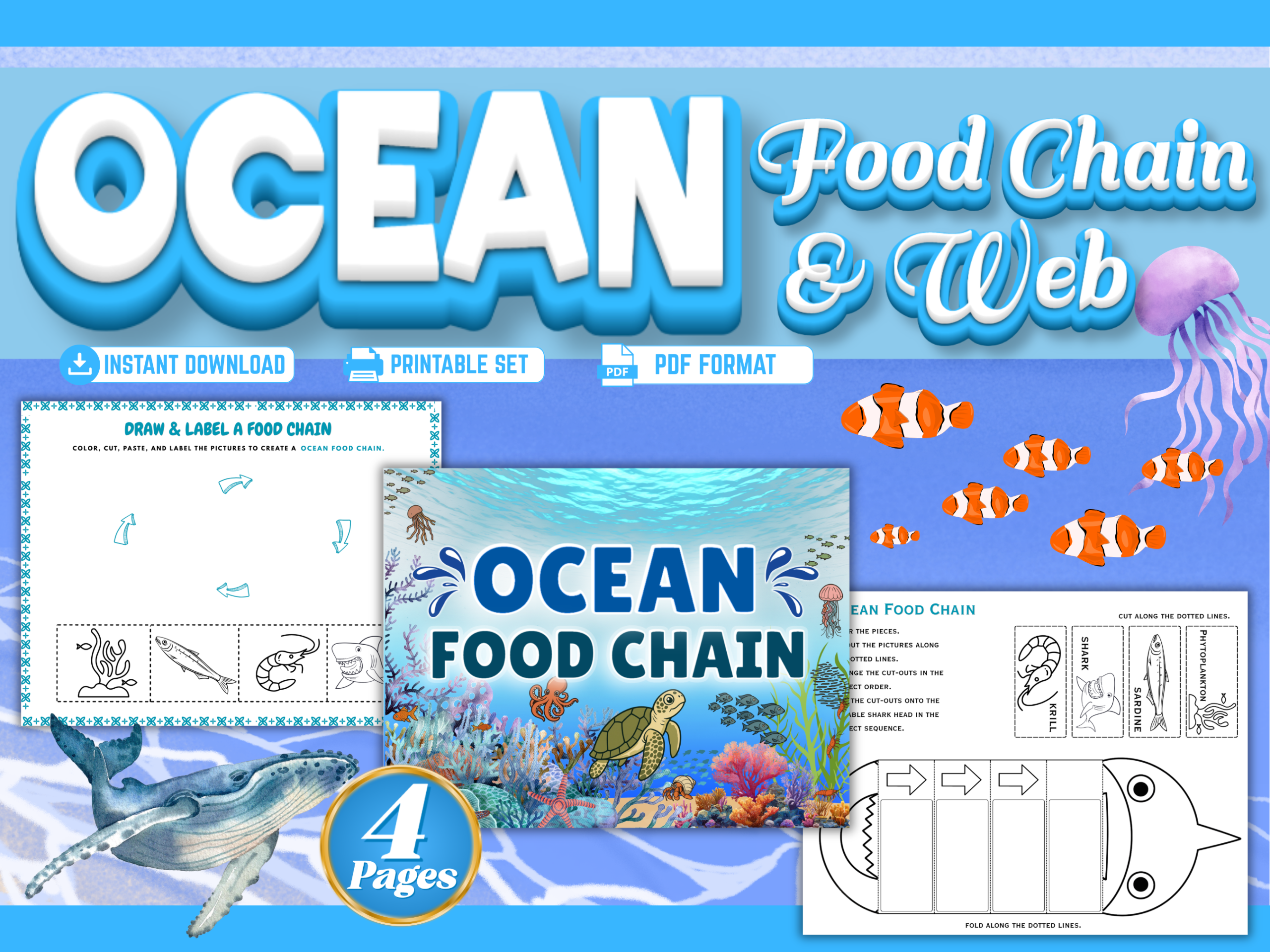
🌊 What Is an Ocean Food Chain?
An ocean food chain shows how energy moves from one organism to another. Even some of the ocean’s largest predators ultimately depend on tiny organisms at the beginning of the food chain.
One of the activities helps children work with a simple sequence:
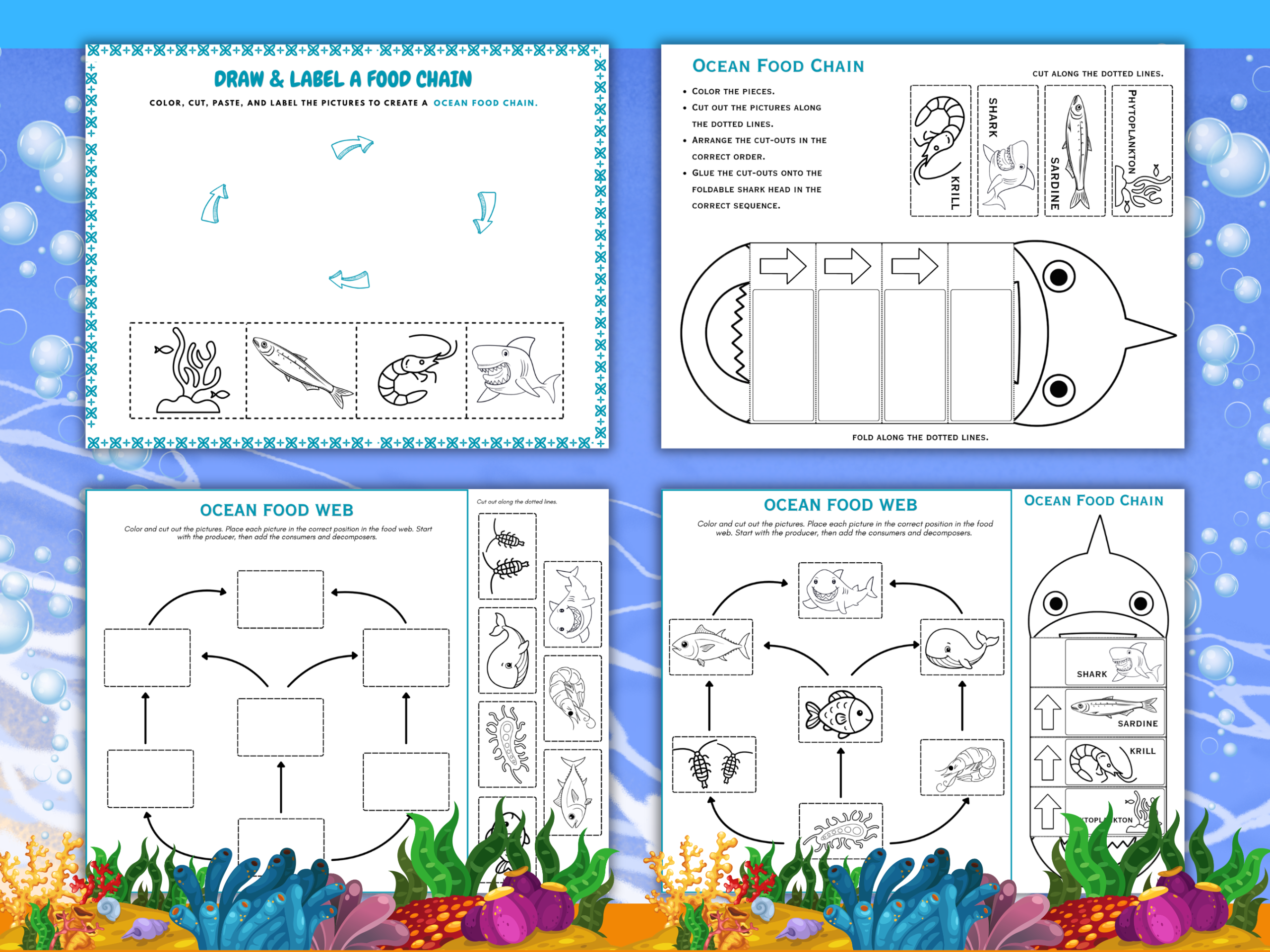
Phytoplankton → Krill → Sardine → Shark
Students can cut out the pieces, put them in the correct order, and add them to the foldable shark activity.
This provides a visual way to introduce concepts such as producers, consumers, predators, and prey.
🐠 From a Food Chain to a Food Web
Once children understand a basic food chain, they can explore how multiple feeding relationships connect to form an ocean food web.
The included food web activity features several types of marine life and encourages students to determine where each organism belongs. Following the arrows helps children see that ocean ecosystems are interconnected rather than made up of separate food chains.
🦈 Hands-On Ocean Science
The printable set combines science with coloring, cutting, sequencing, and pasting.
Children can identify different marine organisms, arrange them according to their roles in the ecosystem, and complete the Draw & Label a Food Chain activity to demonstrate what they’ve learned.
The hands-on format can be especially useful when introducing ecosystem concepts that may otherwise feel abstract to younger students.
🐋 Perfect for an Ocean or Marine Life Unit
These printable activities can be used as part of a larger ocean animals, marine biology, habitats, ecosystems, or under-the-sea unit.
They’re a great option for elementary classrooms, homeschool science, science centers, independent practice, or supplemental learning at home.
Simply print the pages and add crayons, scissors, and glue for an engaging activity that helps young learners discover the fascinating connections found beneath the ocean’s surface.
Leave a Reply