
Take your science lesson to the African grasslands with these Savannah Food Chain Worksheets. This four-page printable set provides a hands-on way for children to discover how plants and animals are connected within a savanna ecosystem.
Children can color, cut, arrange, paste, sequence, and label the pieces while learning about food chains, food webs, producers, consumers, predators, and prey.
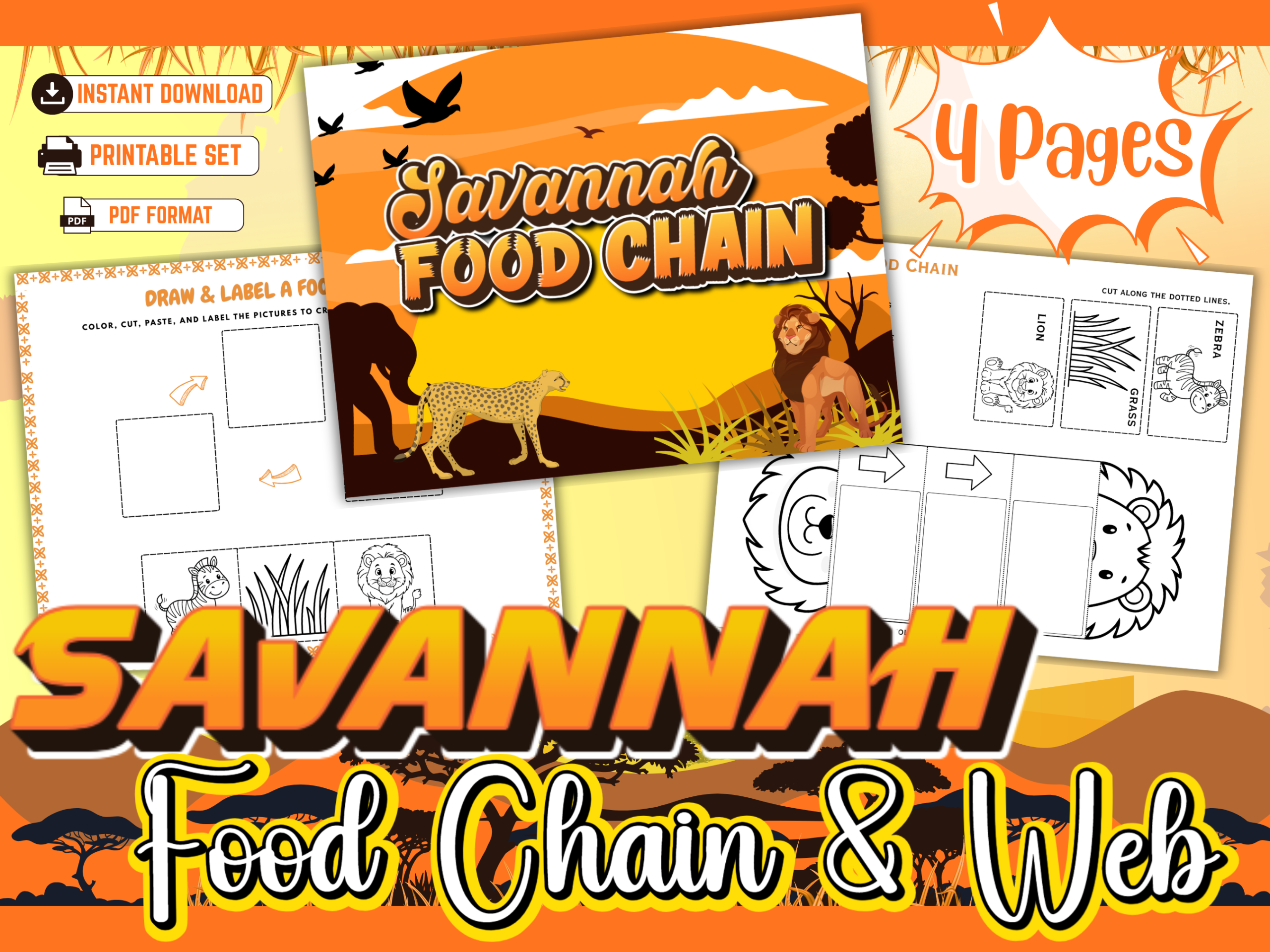
? Explore a Savannah Food Chain
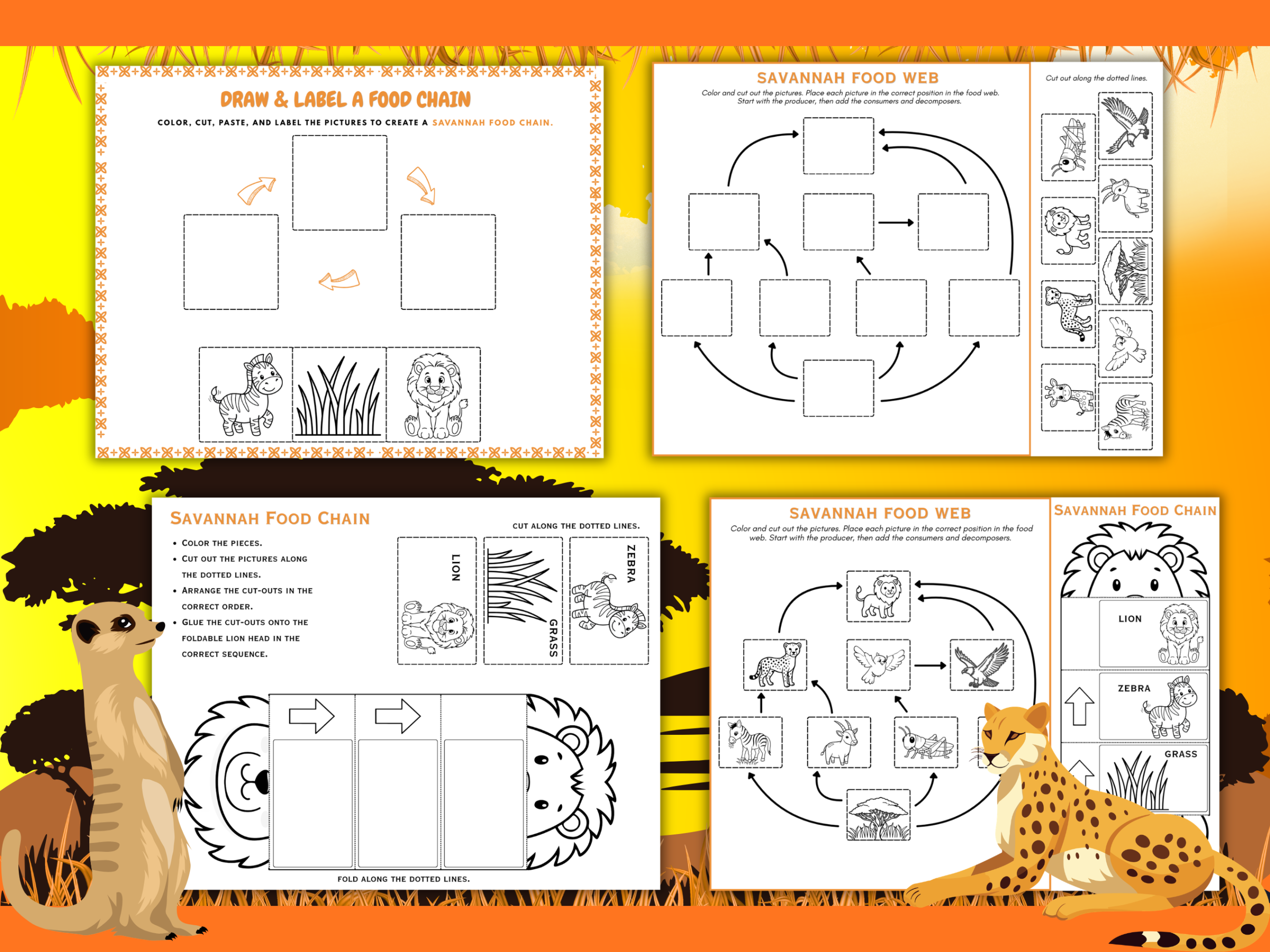
One of the activities introduces children to a simple food chain:
Grass → Zebra → Lion
This easy-to-follow sequence helps students see how energy can begin with a plant and then move through different consumers.
Children can color the pieces, cut them out, determine the correct sequence, and place them onto the foldable lion food chain activity.
? What Is a Savannah Food Web?
A food chain shows one pathway for energy, but a real savanna ecosystem is much more interconnected.
The included Savannah Food Web activity introduces additional animals and relationships. Children work with savanna wildlife such as lions, cheetahs, zebras, antelope, birds, grasshoppers, and other organisms.
Students can determine where each piece belongs and follow the arrows to see how multiple food chains connect to create a larger food web.
? Hands-On Ecosystem Learning
These worksheets encourage children to interact with their science lesson rather than simply study a completed diagram.
Students can color the animals, cut out the pieces, sequence organisms, build the food web, and complete the Draw & Label a Food Chain activity.
While working, you can introduce vocabulary such as ecosystem, producer, consumer, predator, prey, food chain, food web, habitat, and grassland.
? Great for African Animal and Habitat Lessons
These savanna ecosystem worksheets pair nicely with lessons about African animals, grasslands, habitats, ecosystems, and animal relationships.
Teachers can use them for science centers, classroom lessons, independent work, or supplemental activities. They’re also an easy addition to homeschool science and African animal studies.
Simply print the four pages and gather crayons, scissors, and glue for a hands-on activity that helps children discover how animals and plants depend on one another across the savanna.


Leave a Reply