
There are moments in music that stop you cold. Where a single guitarist steps forward, lets their fingers do the talking, and suddenly everything else falls away. It’s just you, the speaker, and six strings doing something that feels almost impossible to describe. Guitar solos, at their very best, are not just technical exercises. They’re emotional events.
Ranking them is, honestly, a fool’s errand. Ask a hundred guitarists and you’ll get a hundred different answers. Still, certain solos keep rising to the top of polls, debates, and reverent conversations at every level of the music world. These eight are the ones that refuse to be forgotten. Let’s dive in.
#8 – “All Along the Watchtower” – Jimi Hendrix (1968)
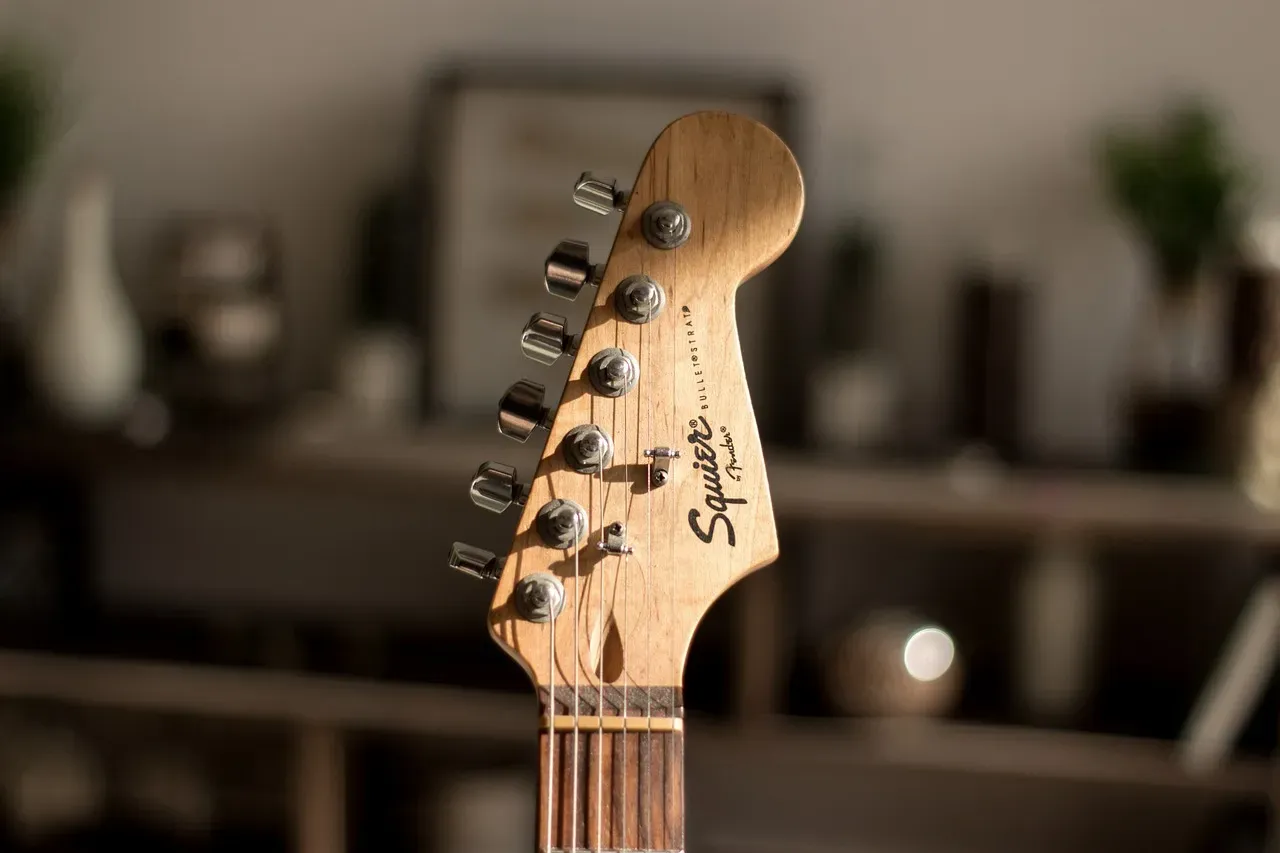
Let’s be real: this is technically a Bob Dylan song. But guitarists invariably refer to it as a Hendrix cover rather than a Bob Dylan original – proof of how completely Hendrix made it his own. That’s a staggering thing, when you think about it. He took someone else’s song and rewired its entire identity.
Hendrix’s solo here is explosive and psychedelic, fluid and innovative, and expressive with bends. It’s often ranked as one of the best solos ever for its creativity, intensity, and influence on rock guitar. The solo doesn’t just ornament the song. It becomes the song’s center of gravity entirely.
#7 – “Sultans of Swing” – Mark Knopfler / Dire Straits (1978)

Knopfler composed this pub-rock classic on a National steel guitar but thought it sounded “dull” – that is, until he picked up a Stratocaster. Using nary a hint of grit on a Fender Twin, he fingerpicks not one but two standout solos. The first features a lyrical section of elegant, Chet Atkins-style single-note and chordal bends that sigh and swoon with dreamy romanticism. The outro solo is the real attention-grabber, building to a dazzling set of spitfire 16th-note arpeggios, cleanly played, precise, and rousing every time you hear it.
In “Sultans of Swing,” Knopfler graces listeners with two awesome solos alongside tonnes of tasty licks. The first is a little more laid back, while the second offers a dramatic rounding off, making full use of his iconic fingerpicking technique and arpeggios. Honestly, the restraint in this solo is what makes it legendary. There’s no flash for the sake of flash. Every note earns its place.
#6 – “Free Bird” – Lynyrd Skynyrd / Allen Collins (1973)
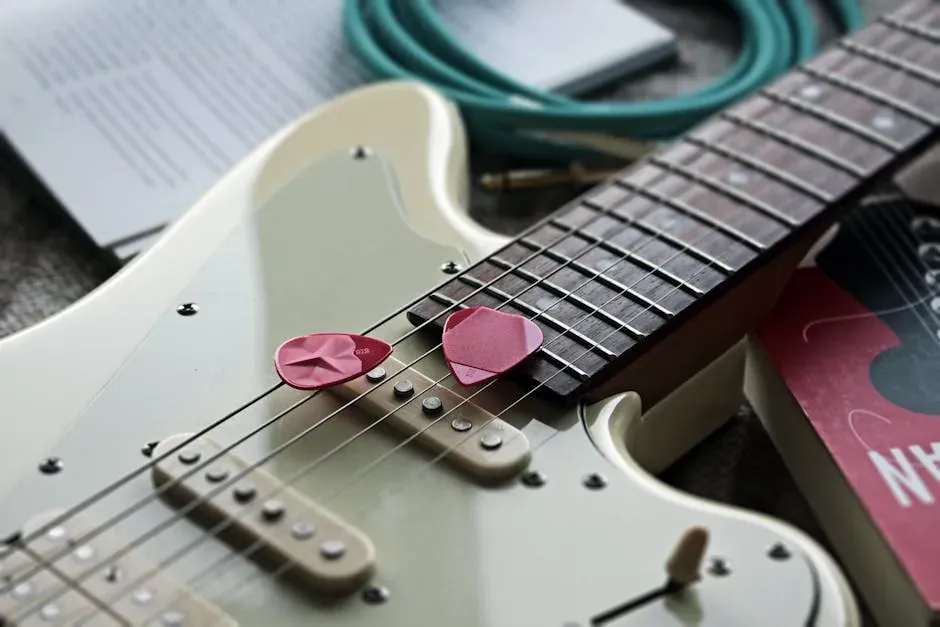
The “Free Bird” guitar solo clocks in at 143 bars, an extraordinarily long solo, and guitarist Allen Collins recorded both guitar parts. That alone deserves a moment of quiet appreciation. There’s a reason audiences have shouted “Play Free Bird!” at rock concerts for over five decades. It’s become a cultural punchline, sure. But the playing itself is absolutely no joke.
Most would cite the solo from “Free Bird,” but that’s three guitars, and Lynyrd Skynyrd worked on that tune for years playing bars before they got a record contract. The incredible work produced the song that turned most people on to this band through their history. The solo builds and builds like a freight train gaining speed downhill. It’s a piece of pure Southern rock architecture that has never really been equalled.
#5 – “Eruption” – Eddie Van Halen (1978)

One of the most mind-bending solos of all time, “Eruption” was only meant to be a warm-up, not a recorded song. Guitarist Eddie Van Halen said he arrived at the recording studio one day and started practicing his guitar, when the band’s producer heard it and asked him to record it. Think about that for a second. A casual warm-up routine became one of the most influential pieces of recorded guitar music in history.
Although one-handed tapping had been standard guitar technique, “Eruption” introduced two-handed tapping to the mainstream popular rock audience, and it was a popular soloing option throughout the entire 1980s. When this wildly innovative instrumental was released in 1978, it hit the rock guitar community like a hydrogen bomb. Two-handed tapping, gonzo whammy bar dips, artificial harmonics – with Van Halen’s masterly application of these and other techniques, “Eruption” made every other six-stringer look like a third-stringer. Guitar World magazine named it the greatest guitar solo ever in 2022, and its influence still echoes through every hard rock and metal solo that followed.
#4 – “Bohemian Rhapsody” – Brian May / Queen (1975)
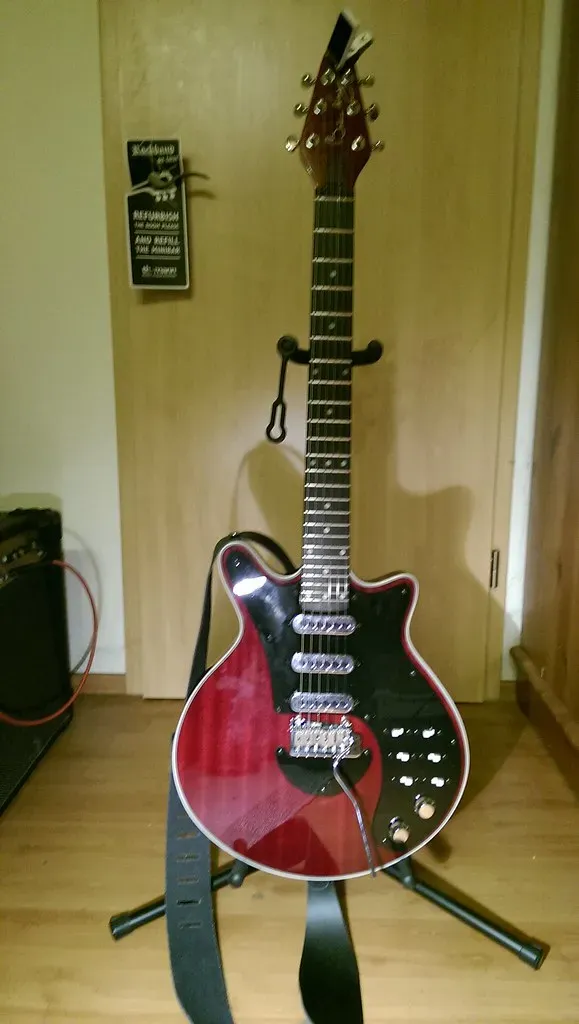
Queen’s “Bohemian Rhapsody” is one of the most iconic songs of all time, breaking out of the classic rock genre and making its mark on pop culture. The six-minute-long single broke barriers with its structure, but it’s Brian May’s guitar solos that bridge the parts of the song together. Without that solo, the operatic middle section and the hard rock climax would feel disconnected. May stitches the whole strange, brilliant thing together.
Brian May’s guitar solo in “Bohemian Rhapsody” is characterized by classical phrasing and rock virtuosity. Its melodic phrasing matches the song’s operatic interlude and delivers emotional impact. Praised for its accuracy, tone, and integration, the solo is a key component in one of rock’s most iconic masterpieces. May reportedly layered multiple guitar tracks to create that enormous, orchestra-like wall of sound. The result is something that sounds simultaneously intimate and completely colossal.
#3 – “Stairway to Heaven” – Jimmy Page / Led Zeppelin (1971)
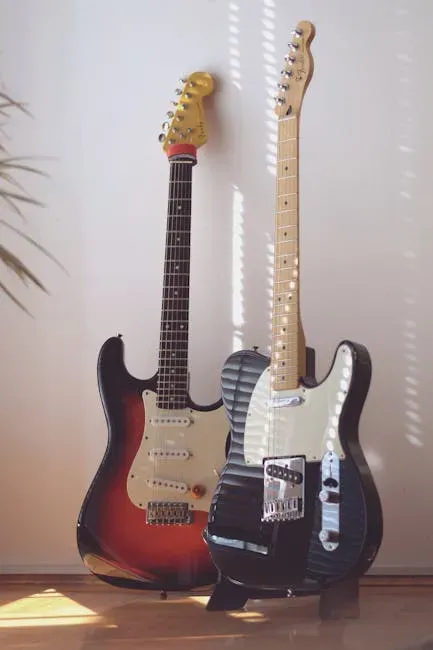
Led Zeppelin guitarist Jimmy Page used a telecaster, not his signature Les Paul, to play the solo for “Stairway to Heaven.” He played the same telecaster he used on the band’s first album, which Jeff Beck had given him when he played in The Yardbirds. His flowing solo on “Stairway” was ad-libbed in the studio during recording. Spontaneous genius. It’s hard not to feel a little envious.
Standing as one of the greatest songs of all time, let alone one of the greatest solos, “Stairway to Heaven” is often cited as the most played guitar song in music shops around the world. In the production of the track, Jimmy Page made use of three guitars, blending delicate fingerpicked parts with harder rock strumming, culminating in the legendary solo heard just over halfway through the song. The solo weaves tension and melody, climaxing the song with fluid runs and expressive phrasing. A blend of technique and musicality, it has become a benchmark for rock guitarists.
#2 – “Hotel California” – Don Felder & Joe Walsh / The Eagles (1977)
The title track from the Eagles’ fifth album, and without doubt the song the band will be most remembered for, “Hotel California” frequently tops greatest guitar solo polls. The solo begins at 4:20, forming an extended coda, over which guitarists Don Felder and Joe Walsh trade licks before joining together to play those iconic harmonized licks at 5:39. Two guitarists, one shared vision, and one of the most cinematically perfect endings a rock song has ever had.
Both guitars play an arpeggio of every chord, and the harmony is created by one of the guitars always playing one note lower down in the chord. For example, the notes of the Bm chord are B, D and F#, so if the higher guitar plays an F#, the lower guitar will play a D, and so on. It sounds simple in theory. In practice, in 1998, Guitarist magazine ranked “Hotel California”‘s guitar solo as the best of all time. Joe Walsh and Don Felder nailed the dual solo, bringing the song the edge it needed. The Grammy Record of the Year winner would be incomplete without the guitar work, which is arguably a major part of why the song is so iconic.
#1 – “Comfortably Numb” – David Gilmour / Pink Floyd (1979)

David Gilmour recorded his greatest moment during sessions for Pink Floyd’s The Wall in summer 1979. He listened to each take, compiled a chart, and constructed the final solo from the best bits of each performance. He played that second solo on a Fender Strat through a Big Muff delay pedal and a Yamaha rotating speaker cabinet. The sheer craft behind what sounds completely effortless is staggering.
The tone is legendary. Gilmour’s signal chain consisted of his iconic black Strat, then featuring a DiMarzio FS-1 bridge pickup, into a HiWatt DR103, with the essential EHX Ram’s Head Big Muff pedal. The FS-1’s fatness and the Big Muff’s smoothness leave no hint of the harsh treble that can plague Strats. With some extra help from an MXR Dyna Comp, Gilmour had so much sustain that he could hold notes as long as he wanted. In a poll of readers of Guitar World, Gilmour’s solo was rated the fourth-best guitar solo of all time, and the two guitar solos were also ranked as the greatest guitar solos of all time by Planet Rock listeners. The fact that it tops so many separate polls, run at different times and with different audiences, tells you everything.
I think what separates “Comfortably Numb” from every other entry on this list is the feeling that Gilmour isn’t just playing guitar. He seems to be reaching for something just beyond the edge of language itself. It’s the kind of solo that can make a grown adult pull over their car just to sit with it. What would you put at number one? Tell us in the comments.





Leave a Reply