
Florida condos and Arizona golf communities used to be the default answer to “where will you retire?” That answer is changing fast. A growing wave of American retirees is instead packing boxes for Panama City, San José, and small beach towns most people couldn’t find on a map a decade ago.
The shift shows up in visa applications, expat forums, and survey after survey asking older Americans where they’d rather spend their later years. What’s pulling them south isn’t a single factor, but a combination of costs, climate, and a sense that the traditional retirement playbook no longer adds up the way it used to.
The scale of the migration is bigger than most people realize

Pinning an exact number on how many Americans have relocated to Central America is genuinely difficult, since no single government agency tracks it in real time. The exact headcount of Americans building new lives in Central America is hard to pin down precisely, since no single agency tracks it in real time. Still, the broader trend lines are unmistakable once you start piecing together the available data.
Official data shows that about 712,000 Americans were receiving Social Security benefits abroad at the end of 2024, a 20% increase over the previous 13 years. Layer on top of that the fact that an estimated 2.2 million people left the United States in 2025, according to figures cited in a new briefing from Global Citizen Solutions’ Global Intelligence Unit, and interest in retiring abroad specifically, where a Harris Poll found that 26% of boomers and 35% of Gen Xers were considering moving abroad within the next two years, and the picture of a rapidly expanding retirement diaspora starts to make sense.
Panama’s pensionado program remains the gold standard
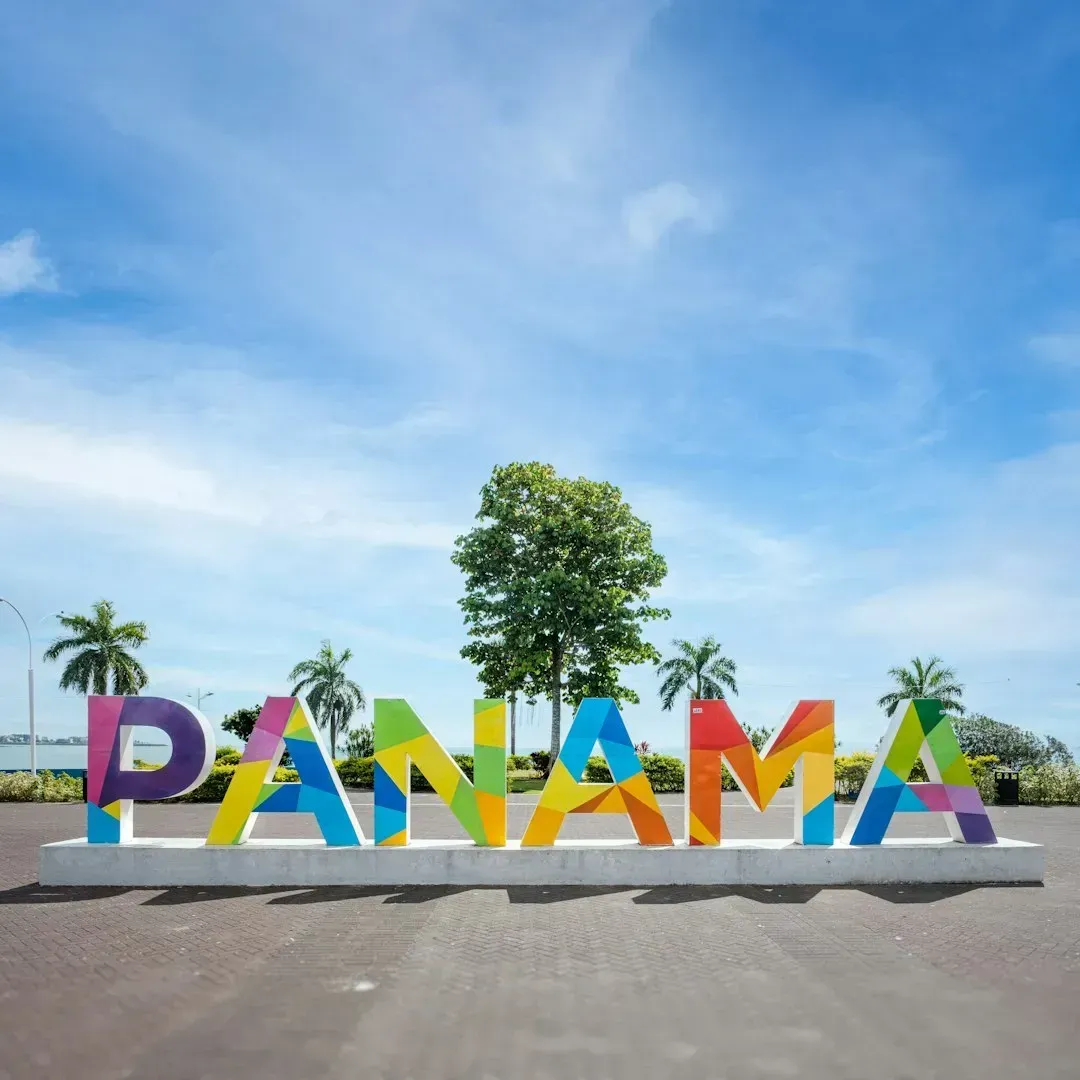
Panama has built its reputation on one of the friendliest retiree visa programs anywhere in the world. Panama offers one of the easiest routes to retirement relocation through the Pensionado Program, a retirement visa that is regularly rated among the best in the world. Applicants generally need a modest lifetime pension to qualify, and the benefits extend well beyond residency paperwork.
The financial appeal is hard to ignore. On average, Panama is 53% cheaper than the U.S., and for context, Costa Rica, another popular retirement destination in Central America, is 11.5% more expensive than Panama. On top of that, Panama doesn’t tax overseas retirement income, so savings can go even further. It’s little surprise that Live and Invest Overseas named the small mountain town of Boquete, Panama, as the number one retirement haven for Americans ready to enjoy their golden years surrounded by the great outdoors, while still having access to good-quality, affordable health care.
Costa Rica offers stability along with sunshine

Costa Rica has spent years as the region’s poster child for retirement, and the country backs up its reputation with real numbers. With approximately 70,000 Americans residing in Costa Rica, there is a well-established expat community spread across areas known for their social opportunities and support networks. The country’s Pensionado Visa follows a similar formula to Panama’s, requiring a modest lifetime pension for eligibility.
Safety and political stability weigh heavily in Costa Rica’s favor too. Costa Rica is known for its political stability and commitment to peace, having abolished its army in 1948, and the country ranks 59th on the Global Peace Index, outperforming many other nations, including the United States. That combination of an established support network and a genuinely peaceful environment is a big part of why Costa Rica keeps showing up at the top of retirement rankings year after year.
Belize gives English speakers a familiar landing spot

For retirees wary of a language barrier, Belize solves that problem outright. It’s a former British colony and the only English-speaking country in Central America, which makes it easier for American retirees to adjust. The country’s Qualified Retirement Program has become one of the more talked-about pathways in the region.
Recent changes have made the program even more accessible. As of 2024, Belize’s QRP has changed, and the age limit dropped to 40, while the qualifying revenue streams were expanded to include inheritance, investment income, and personal savings. Applicants generally need a qualifying monthly income, and in exchange they get residency along with a notably relaxed set of requirements compared to programs elsewhere in the world.
Healthcare costs are a major driver of the move

Medical expenses sit near the top of almost every list of reasons Americans give for looking abroad, and the math behind that concern is stark. The U.S. tops the list on health care costs, with per capita health care costs of $13,432, nearly 40% higher than Switzerland, which ranks as the second-most expensive developed country for health care costs. Against that backdrop, Central American healthcare systems look genuinely appealing rather than just cheap.
Panama illustrates the point well. The country ranks 62nd worldwide for healthcare in the 2025 CEOWORLD Health Care Index, and many doctors speak English and have been trained in the U.S., while facilities such as Hospital Punta Pacifica are considered among the best in Central America. Private coverage also tends to be a fraction of U.S. pricing, which matters enormously for retirees living on fixed incomes.
The cost of living gap is wider than many expect

Everyday expenses in Central America simply stretch further, and the data backs that up clearly. According to the Bureau of Labor Statistics, the average American aged 65 and above spends $5,007 a month to live. Compare that to Central American destinations, where the monthly cost of living is between 34 percent and 71 percent lower than the United States.
That gap shows up in the small stuff too, not just rent and healthcare. Food is generally cheaper in Central America, largely because they produce most of what they sell locally, and retirees get the added advantage of visiting local food markets where prices run well below supermarket rates. For someone on a fixed retirement income, those daily savings add up quickly over the course of a year.
Territorial tax systems sweeten the deal further

Taxes are another quiet reason the region keeps pulling retirees away from higher-cost U.S. states. Panama uses a territorial tax system, so foreign pensions, Social Security, and most income earned outside Panama generally fall outside Panamanian tax. Costa Rica follows a broadly similar approach, meaning retirees often owe little or nothing to their host government on income earned abroad.
That doesn’t mean retirees escape U.S. tax obligations entirely, though. US citizens and green card holders generally file an annual US return on worldwide income regardless of where they live. Most manage this through the foreign tax credit or income exclusions, but it’s a detail that catches new retirees off guard if they haven’t planned for it in advance.
Safety concerns vary sharply by country and neighborhood

Central America isn’t a monolith when it comes to safety, and retirees researching the region quickly learn that distinctions matter. Panama is one of the safest countries in Central America, ranking 84th out of 163 nations in the 2025 Global Peace Index, behind only Costa Rica and the Dominican Republic in the region. Costa Rica generally scores even better on these same measures.
Even in the safest countries, though, blanket statements can be misleading. The environment is generally considered stable and secure, and retiring in Panama involves no real dangers, although there are neighborhoods to avoid, and violent crime does occur. Most retirees who do their homework on specific towns and neighborhoods before moving report feeling just as safe, if not safer, than they did back home.
Proximity to the U.S. keeps family connections intact

One underrated advantage of Central America over more distant retirement havens is simply how close it is to home. Flights from Miami to San José take around 2 hours and 50 minutes, and from Los Angeles around 5 hours and 46 minutes. That’s a fraction of the travel time required to reach popular retirement spots in Europe or Southeast Asia.
That short hop matters more than it might seem for retirees with grandchildren or aging parents back in the States. Short flight times, familiar time zones, and cultural overlap make this region especially attractive for retirees who wish to stay connected to family without sacrificing lifestyle quality. Being able to fly home for a weekend, rather than planning a whole trip around jet lag, is a quiet but genuine selling point.
Traditional U.S. retirement spots are losing some of their shine

Part of this story isn’t just about what Central America offers, it’s about what’s changed back home. Rising costs have put real pressure on retirees who once assumed Florida or the Sun Belt would be affordable for life, and a Nationwide survey found that more than half of the retired Social Security recipients who responded were cutting discretionary spending due to rising living costs.
That financial squeeze is reshaping how older Americans think about where to spend their remaining working years and beyond. The percentage of people older than 55 who want to leave the country has more than quadrupled since 1974, to 17%, according to polling from Monmouth University and Gallup. It’s a modest slice of the overall retiree population, but the direction of that trend line, upward and steady, is exactly why Central America keeps gaining ground.
Final thoughts

None of this suggests retirement in the U.S. is disappearing as an option, and Central America certainly isn’t a fit for everyone. What it does suggest is that a meaningful and growing share of American retirees now see crossing a border as a reasonable answer to a fairly ordinary problem: making a fixed income cover a comfortable life.
Between the pensionado programs, the healthcare savings, and the short flight home, it’s not hard to understand why a country like Panama or Costa Rica has started to look less like an adventure and more like a practical plan.





Leave a Reply