
There’s a version of childhood that Boomer parents remember fondly, and a version that their grandchildren would find completely foreign. The gap isn’t just about technology or fashion – it runs deeper than that. It’s about emotional expectations, physical safety, how authority worked at home, and what it even meant to be a kid.
Growing up as a Baby Boomer came with experiences that many of today’s younger generations would find shocking or uncomfortable, shaped by stricter parenting, fewer safety regulations, and a cultural mindset that normalized challenges Gen Z would likely push back against. None of this means Boomer parents were careless or cruel. Most were doing exactly what their own parents had done. Still, the contrast with how Gen Z now understands childhood is striking in ways worth exploring honestly.
1. Sending Kids Outside With No Set Return Time

One of the defining features of Boomer childhoods was being told to “go outside and play” until the streetlights came on. Parents rarely monitored where their kids went or who they were with. It was an era of largely unsupervised independence that felt completely normal at the time.
Research has found that the average American child between the ages of six and seventeen now spends just seven minutes daily in unstructured outdoor play, representing roughly a fifty percent decline over twenty years. While some changes have improved children’s safety, they’ve eliminated opportunities for independence and self-directed learning, and Gen Z kids, raised with constant supervision and digital connectivity, inhabit a childhood experience nearly unrecognizable to their grandparents.
2. Using Physical Punishment as Standard Discipline

Physical discipline was widely accepted and rarely questioned. While many Boomers insist it was “just discipline,” Gen Z tends to view physical punishment as fear-based compliance, and today’s research-backed parenting emphasizes boundaries without physical force. The shift in how society understands this practice has been substantial.
Research has long underscored the negative effects of spanking on children’s social-emotional development, self-regulation, and cognitive development, with newer findings showing that spanking alters children’s brain response in ways similar to severe maltreatment and increases perception of threats. Notably, studies have found no positive outcomes associated with corporal punishment. For Gen Z, this isn’t a philosophical debate – it’s settled science.
3. Dismissing Children’s Emotions Outright

Phrases like “You’re fine,” “Stop crying,” or “I’ll give you something to cry about” were common. Boomers were often taught to toughen kids up for a hard world. Vulnerability was treated as a weakness to be corrected, not a feeling to be acknowledged.
Gen Z links this emotional dismissal to difficulty identifying feelings, suppressing emotions, or feeling unsafe expressing vulnerability later in life. Gen Z is growing up in a culture that prioritizes therapy, self-expression, and emotional awareness, and the lack of support that Boomers experienced would feel isolating to today’s youth. The idea that a child’s emotional world simply doesn’t matter is one Boomer-era assumption Gen Z has largely rejected.
4. Ruling With “Because I Said So”

Boomer parenting often relied on authority, not explanation. Rules didn’t come with context, and questioning them was seen as disrespect. This wasn’t unique to a handful of households – it was practically a cultural standard across the era.
Gen Z, raised with more emphasis on emotional validation, now describes this dynamic as silencing. Being shut down repeatedly can teach kids that their feelings or thoughts don’t matter, even if that was never the intention. Today’s parents tend to explain their reasoning, involve children in conversations, and treat even young kids as participants rather than subjects of household authority.
5. Enforcing Rigid Gender Roles at Home
Gender roles were deeply embedded in Boomer households. Boys were raised to be tough and unemotional, while girls were often steered toward domestic responsibilities. These roles shaped everything from chores to hobbies to career paths. A boy who loved dance or a girl who wanted to fix engines faced real social friction.
For many Boomer childhoods, gender roles were rigidly enforced. Boys were expected to be tough and independent, while girls were often raised to cook, clean, and prepare for marriage. Pursuing paths outside those roles was met with disapproval or ridicule. Gen Z, raised in a more progressive era, has embraced gender fluidity and equality, making the old household blueprint feel genuinely archaic.
6. Riding in Cars Without Seat Belts or Car Seats

Boomer childhoods often meant piling into the back of a station wagon without a single seatbelt in sight. Car seats for children were rare, and even when they existed, they were nowhere near today’s safety standards. Many kids sat on laps or bounced freely around the vehicle. It wasn’t neglect – it was simply the accepted norm.
This lack of safety measures would be unthinkable for Gen Z, who grew up strapped securely into high-tech car seats. For Boomers, it was simply the norm. The contrast points to something broader: Boomer-era childhood operated with a fundamentally different relationship to physical risk, one that today’s safety standards have largely dismantled.
7. Keeping Children Quiet Around Adults

Back then, kids often grew up under the rule that children should stay quiet when adults were around. Talking back, asking too many questions, or even joining in on adult conversations was seen as disrespectful. Many kids learned to sit silently at the dinner table while their parents carried the discussion.
This style of parenting reflected a larger cultural emphasis on hierarchy and obedience. Children weren’t treated as participants in family life so much as background characters. It was about respect, but respect meant silence. Modern parents are more likely to encourage their kids to share opinions and feelings, and dinnertime today might involve everyone – even a six-year-old – contributing stories, questions, or ideas.
8. Expecting Kids to Shoulder Heavy Household Labor
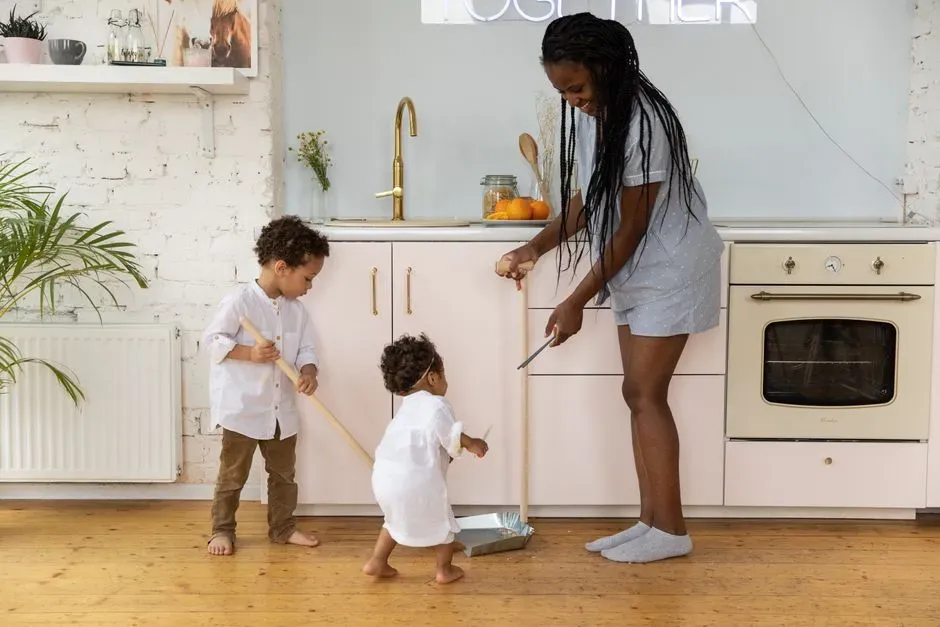
Boomer childhoods often required kids to contribute significantly to household labor. From mowing lawns to caring for younger siblings, responsibilities were non-negotiable. Parents expected children to pull their weight, often after long days at school. This wasn’t framed as optional or reward-based – it was simply what children did.
Roughly eighty-two percent of American adults said that as children they’d had regular chores, but only about twenty-eight percent said their own children did. That gap tells its own story. Boomers often took on significant household responsibilities, from mowing the lawn to washing dishes by hand, which instilled a strong work ethic but also consumed much of their free time. Gen Z tends to see childhood differently – as a time for development and exploration, not unpaid domestic service.
9. Offering No Real Talk About Mental Health

In Boomer childhoods, emotional struggles were rarely addressed openly. Mental health wasn’t part of the conversation, and kids were often told to “toughen up” or “stop crying.” Emotional resilience was valued over vulnerability. Therapy was viewed with suspicion, and admitting to psychological difficulty carried real stigma.
Boomers cannot fathom what it is like to choose to explore therapy over silence, or take a creative lower-paying job over a big paycheck. Gen Z came of age during a significant cultural shift around mental health awareness, and the idea of silently enduring inner struggles with no adult support feels not just outdated but actively harmful to them.
10. Locking In a Single Life Blueprint for Kids

Boomer parents often expected their children to follow the same life blueprint they did: college, marriage, career, kids. But younger generations are exploring alternative paths, and that can cause friction. The “When I was your age…” comparison just doesn’t apply anymore, as people are waiting longer to get married, find the right career, and have children, if at all.
Gen Z parents, who often grew up with more emotionally aware households but also came of age during a challenging post-COVID job market, are channeling those experiences into raising children who are practical, resilient, and future-ready. The rigid one-size-fits-all life path has given way to something considerably more open-ended, and Gen Z sees that flexibility as a feature, not a flaw.
11. Avoiding Any Honest Talk About Sex or Bodies

Many people say their parents relied on school programs, vague warnings, or religious rules instead of clear, factual conversations. In threads about Boomer parenting, people describe getting cryptic comments about “saving yourself” but no real information about consent, contraception, or LGBTQ identities. The subject was treated as either shameful or too dangerous to name directly.
By contrast, Millennials and Gen Z are more likely to see open, age-appropriate talks as essential safety tools. They want kids to understand their bodies, boundaries, and options long before they are in risky situations. When Boomer relatives push back on that approach, insisting that too much information will “encourage” sex, it creates a tug-of-war over who gets to shape the next generation’s values and health decisions.
12. Growing Up With Secondhand Smoke as a Daily Reality

Smoking was socially acceptable, and health awareness was minimal. Many Boomers grew up in households where smoking was the norm, with little understanding of the associated risks. Cigarettes at the dinner table, smoke-filled cars, and lit cigarettes in pediatricians’ waiting rooms were not unusual sights in that era.
The world has changed in other ways too, including greater safety awareness that has changed the way people parent. Gen Z has grown up with anti-smoking campaigns, school health education, and a cultural consensus that exposing children to tobacco smoke is genuinely harmful. The casual acceptance of secondhand smoke in Boomer households now reads as one of the starkest illustrations of just how different that world truly was. The distance between Boomer parenting and what Gen Z recognizes isn’t just generational preference. It reflects shifts in science, psychology, and cultural values that accumulated over decades. What feels like a gap in understanding between grandparents and grandchildren is, in many ways, the distance between two genuinely different worlds.





Leave a Reply