
Walk into almost any home and your brain has already formed an opinion before you’ve said hello. It takes a mere seven seconds to make a first impression, and people read visual and sensory cues far more than they process any verbal information. That reaction isn’t conscious or fair. It just happens, and it happens fast.
The entryway gives guests their first glimpse of your style when they walk in, but it’s also one of the easiest areas to mess up and overlook. Most homeowners pour energy into living rooms and kitchens while the entryway quietly signals things they never intended to say. Here are the seven mistakes that do the most damage.
1. Visible Clutter That Creates Instant Chaos
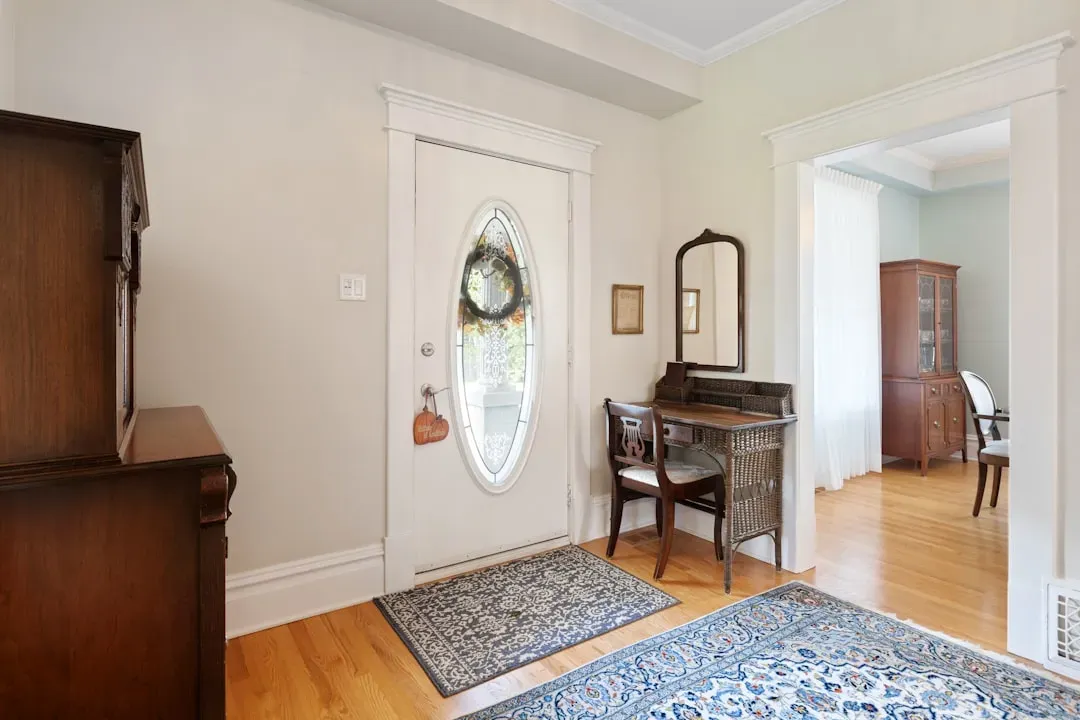
If the threshold feels cluttered and chaotic, many guests get an instant reaction of feeling like they “can’t breathe.” Entryway clutter may not tell the whole story of a home, but it can strongly steer that critical first impression. The brain processes disorder as a warning signal, not an aesthetic preference. It’s a nearly automatic response.
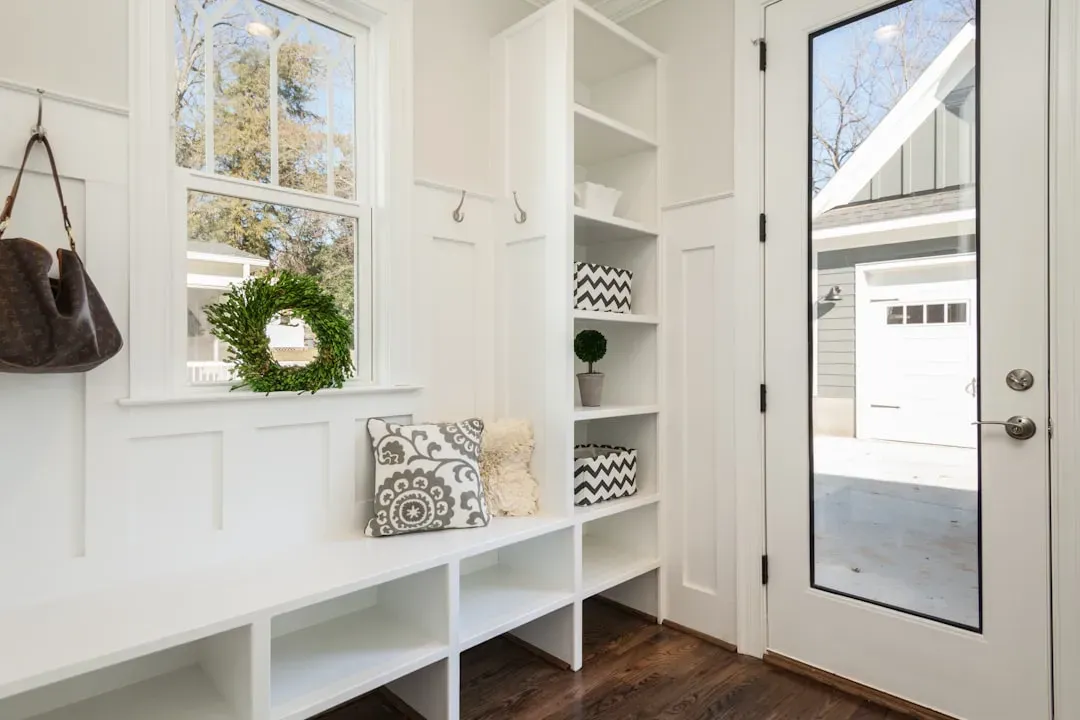
Random shoe mountains create instant visual chaos and practical headaches. Nothing communicates “disorganized home” faster than a jumble of footwear greeting visitors at the door. The fix isn’t complicated. Having a place to put coats, such as a coat rack or a closet, and a place for shoes, such as a storage bench, are great ways to keep these items out of view and keep the entryway free of clutter.
2. Poor Lighting That Flattens the Whole Space
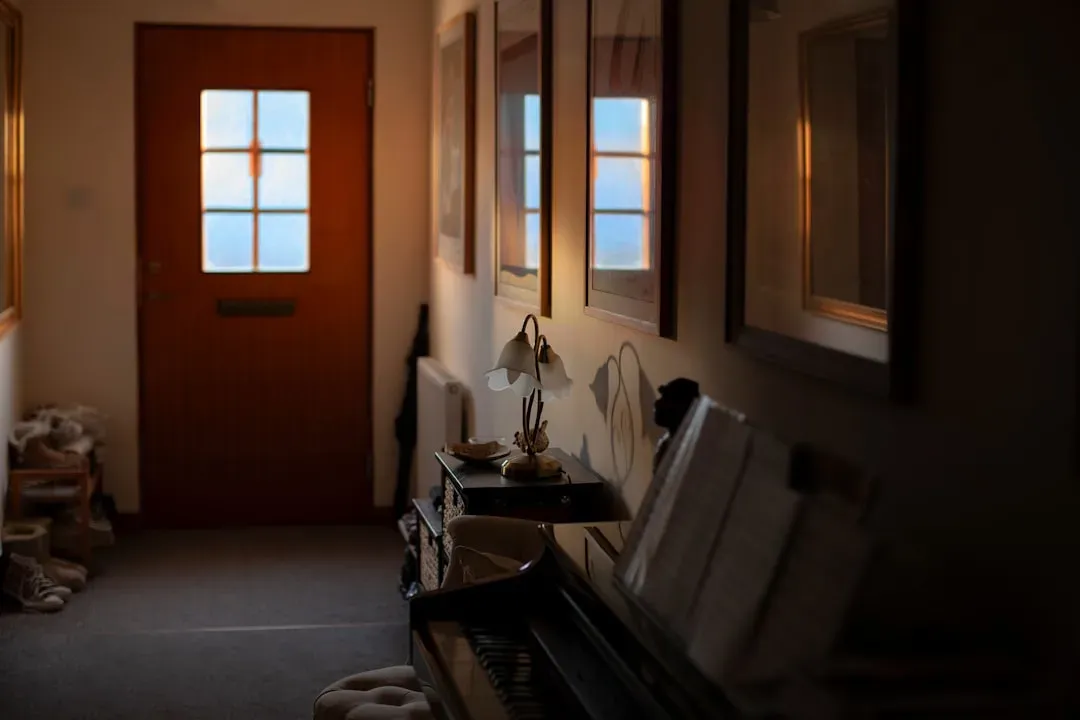
More often than not, poor lighting will make the entrance to your home look cheap and feel glum. A single dim bulb or a harsh overhead fixture does little to welcome anyone. Overhead lighting can feel harsh and sterile, casting heavy shadows. The effect on faces is generally a less-than-flattering, sunken look that’s certainly not ideal for receiving family or visitors at your front door.
Layering your lighting by combining a central fixture with wall sconces or a table lamp eliminates harsh shadows and creates a warm glow. Even a modest upgrade in this area changes how a space feels immediately upon entry. Lighting is an essential part of home decor, and even if you have a naturally well-lit space, adding a chandelier will level up your guest’s perception of your home as soon as they enter.
3. No Storage System, No Drop Zone
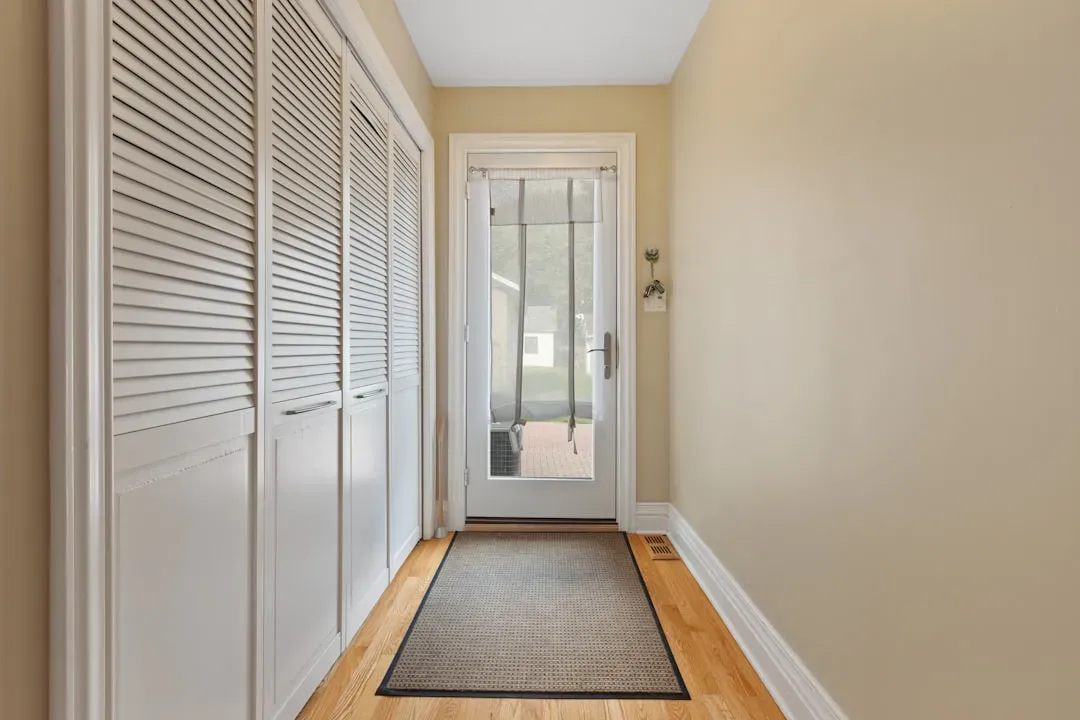
Without a designated place for keys, bags, or mail, clutter quickly takes over. This is one of the most practical mistakes, and it compounds itself daily. An entryway that is not designed with any space for storage can lead to messier and more cluttered living spaces throughout the rest of the home. This is why ignoring storage and not creating a drop zone are entryway decor mistakes to avoid.
Entryways easily become catch-all spots for keys, bags, and mail. Without a set place for these items, clutter builds up fast. A drop zone helps keep things in order, whether that means a small bowl for keys, a tray for mail, or a drawer for odds and ends. It doesn’t need to be elaborate. It just needs to exist.
4. The Wrong Rug, or No Rug at All
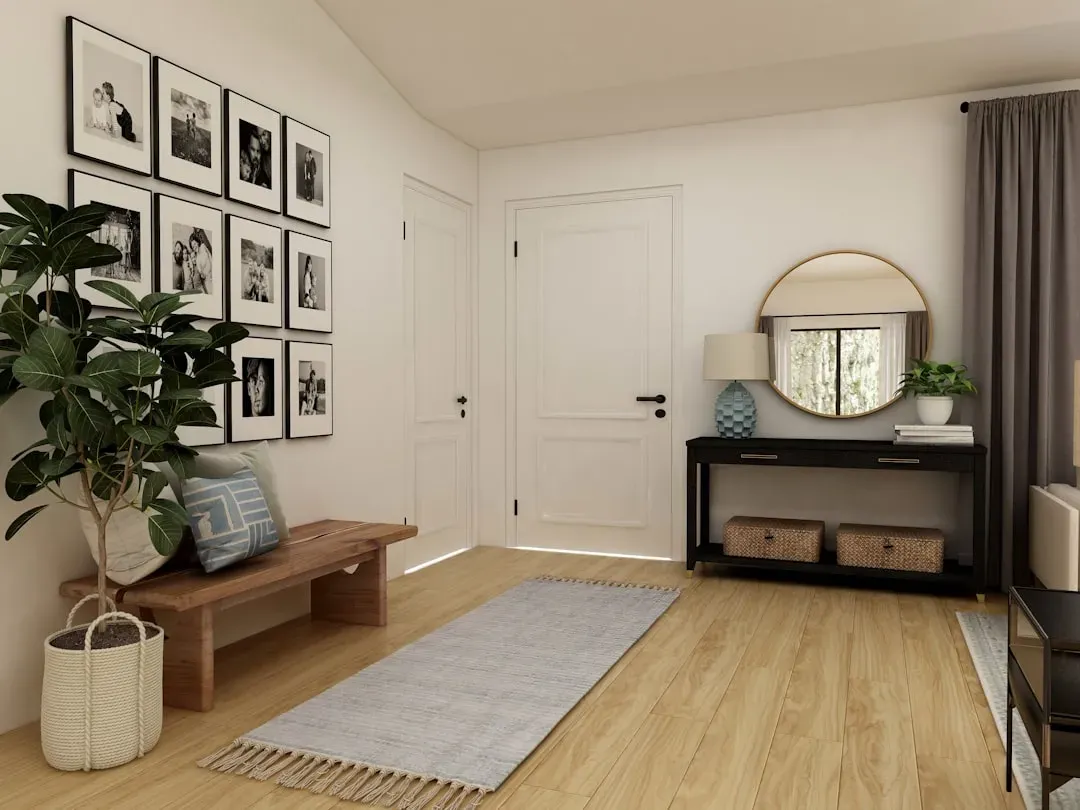
The best way to add texture to an entrance is with a rug. An entryway without a rug is like a window without curtains. It can be done, but it’s not pretty or practical, not least because most hallways today are fitted with hard flooring. A missing rug is one of those details that guests register without knowing why the space feels unfinished.
The wrong rug – or no rug at all – can throw off the entire look of your entryway. Too small, and it looks awkward. Too delicate, and it won’t withstand high foot traffic. An entryway rug is the perfect opportunity to add a pop of pattern or texture, anchor and define the space, and keep dirt and dust at a minimum. Size, durability, and placement all matter more than most people expect.
5. A Bare, Personality-Free Space
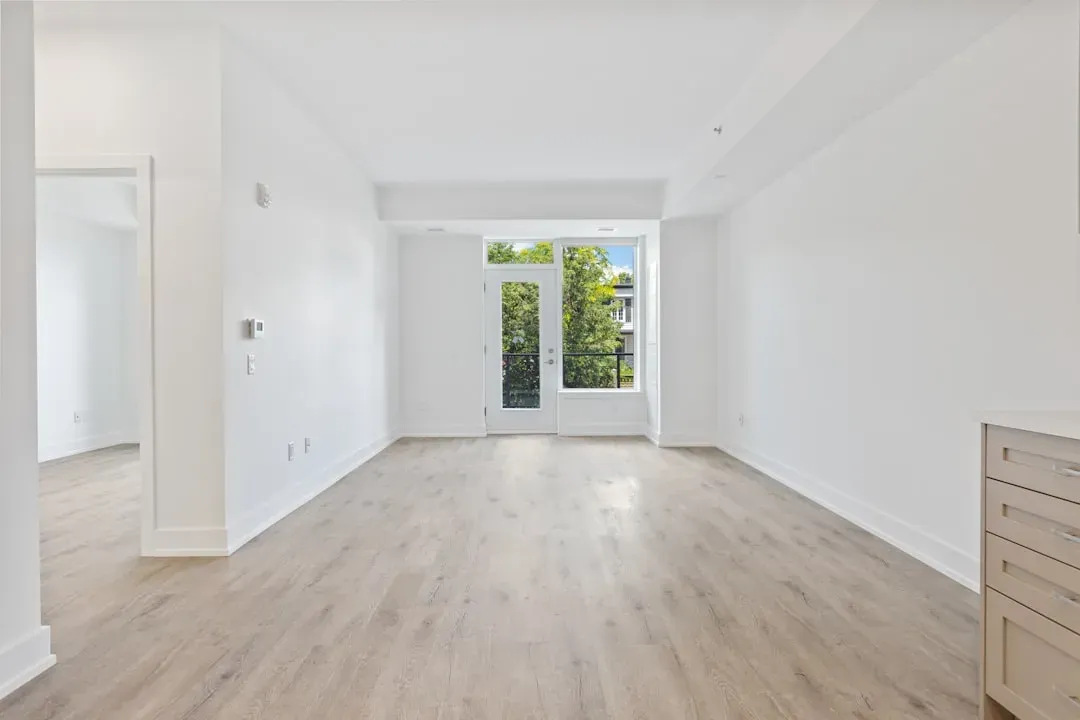
A blank entryway with no personality feels sterile and uninspired. This space is the first thing guests see – why not make it memorable? A completely neutral, feature-free hallway reads as an afterthought rather than a home. Instead of treating your entryway as an afterthought, create a dedicated design that fits the space. By utilizing bold and thoughtful decoration, the room can feel intentional.
No matter what entryway size you have, when you don’t add character and personality to it, you’re creating a generic space and missing out on a visual moment. Bringing personality to your entryway can be something as simple as a family heirloom resting on a table or family photos placed in frames that reflect your decor style. A single strong piece of art, a sculptural object, or even a confident paint color shifts the entire tone of the room.
6. Ignoring Scent as Part of the Welcome
Often, the first message a home sends is sensory, and the strongest one is smell. The psychology behind scent significantly impacts our everyday lives and shapes our decisions and experiences in ways we may not even be aware of. Among all our senses, smell is most closely associated with memory and emotions. Guests will form a feeling about your home before they’ve processed a single visual detail.
The smell in your entryway leaves a strong first impression on your guests. It’s no wonder that the place where wet jackets, dog leashes, and dirty boots are stored can get a little funky from time to time. You hardly want that to be the first impression of your home. Natural freshness works better than artificial scents. Regular cleaning, proper ventilation, and houseplants like peace lilies that naturally purify air create a subtly welcoming atmosphere without the chemical overload.
7. Furniture That’s the Wrong Scale for the Space
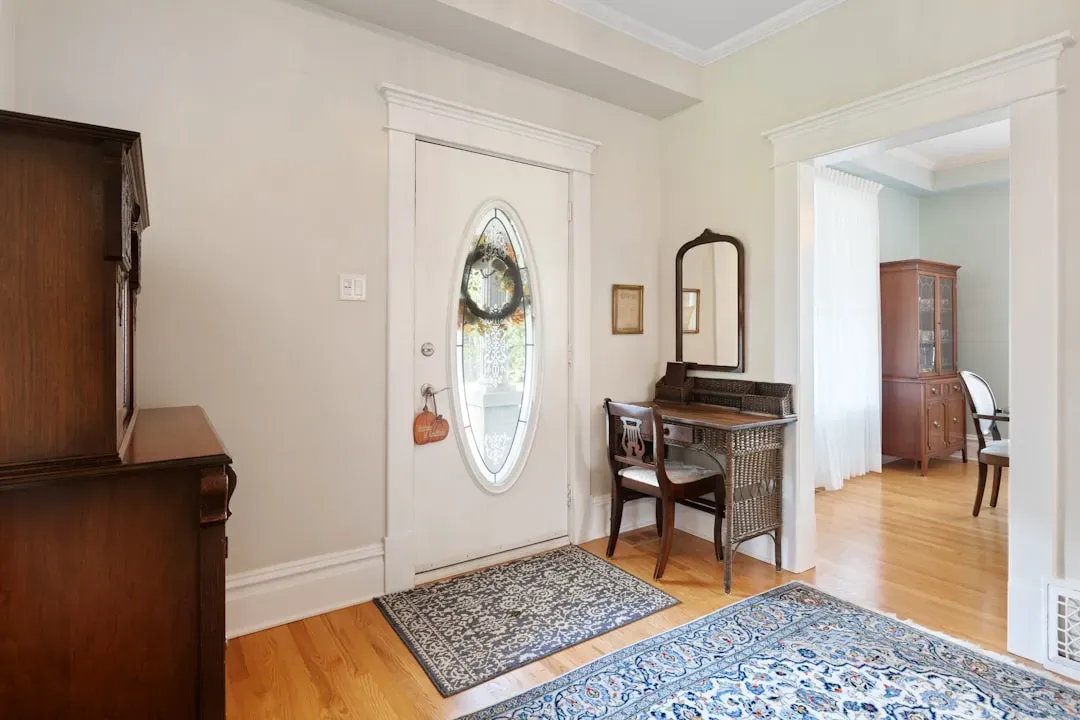
Proportion is everything. Too much furniture makes an entryway feel cramped, while too little makes it feel incomplete. Getting this balance wrong is surprisingly easy, especially when pieces are chosen in a store rather than measured against the actual space. Oversized couches or cabinets create instant bottlenecks in your entryway. The entrance should function as a smooth transition point, not an obstacle course. Professional designers recommend keeping at least 36 inches of clear walking space in any hallway.
One of the most frequent home entrance decor mistakes is a failure to understand proportion. Many homeowners fall in love with a piece of foyer wall decor in a large showroom, only to find it swallows their small apartment entrance. Conversely, a tiny mirror on a vast wall looks like an accidental leftover. Slim console tables, wall-mounted hooks, and bench seating with storage underneath offer functionality without sacrificing precious square footage. The right furniture disappears into the design in the best possible way, making the space feel effortless rather than crowded.
The entryway is a small space with an outsized job. It shapes how every guest feels the moment they step inside, and that feeling tends to color everything they see afterward. What we see first shapes how we interpret everything that comes after. If the entryway feels clean and open, guests tend to read the rest of the home more positively. If the entryway feels chaotic, they often view the same details with a more critical lens. Fixing even two or three of these mistakes can quietly change the entire character of how your home is received.





Leave a Reply