
Lincoln and Kennedy: The Presidential Parallels That Won’t Quit
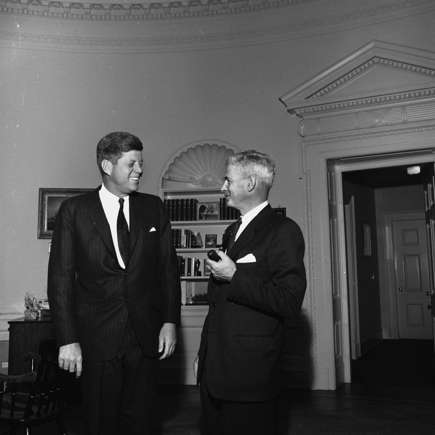
Honestly, if you stumbled across this story in a novel, you’d tell the author it was too on-the-nose. Abraham Lincoln and John F. Kennedy are widely considered two of the greatest presidents in U.S. history, and the coincidences surrounding their assassinations have become so well-known that books have been written about them and members of Congress have even discussed the topic.
Both were undeniably towering figures, both were gunned down, and the overlapping details are genuinely hard to brush aside.
Both were elected to Congress in ’46 – Lincoln in 1846, Kennedy in 1946 – and rose to the presidency in ’60, precisely one hundred years apart. Both presidents were killed on a Friday with their wives by their sides, and both were succeeded by men whose last name was Johnson – Andrew Johnson and Lyndon B. Johnson.
The succession detail alone is startling enough. Add in the timing and the shared day of the week, and the eyebrows start going up.
Both assassins, John Wilkes Booth and Lee Harvey Oswald, were born in ’39 and were known by their three names, composed of fifteen letters. Booth ran from a theater and was caught in a warehouse; Oswald ran from a warehouse and was caught in a theater. While it’s true that there are a number of verifiable overlaps within the Lincoln-Kennedy coincidences – such as the presidents being elected one hundred years apart and succeeded by men with matching surnames – many of the more sensational claims are either misinterpreted or simply false.
Still, the confirmed parallels alone are enough to make you pause.
The Titan and the Titanic: A Novel That Predicted Disaster

Here’s the thing about this story. It sounds like something someone made up after the Titanic sank, but the timeline has been verified independently by multiple sources. In 1898, author Morgan Robertson penned a novella titled Futility, telling the story of an “unsinkable” ship called the Titan that met its end after hitting an iceberg.
Strikingly, just fourteen years later, the Titanic suffered a nearly identical fate. The eerie similarities between the fictional Titan and the real Titanic disaster have fueled debate about prediction, chance, and the power of coincidence.
Beyond the coincidence of the ships’ names and both being described as “unsinkable,” both the fictional Titan and the Titanic ran into trouble after hitting icebergs on the starboard side of the ship. They were both four hundred miles off Newfoundland when they sank, both on April nights, and in both cases, the passengers suffered tragically due to a shortage of lifeboats. The specificity of these details is what makes this one so unnerving.
Robertson couldn’t have known. Or could he? It’s hard to say for sure, but a genre writer predicting not just a disaster but the precise geographic location and the very mechanism of mass death is something that defies easy explanation.
Mark Twain and Halley’s Comet: A Cosmic Exit on Cue
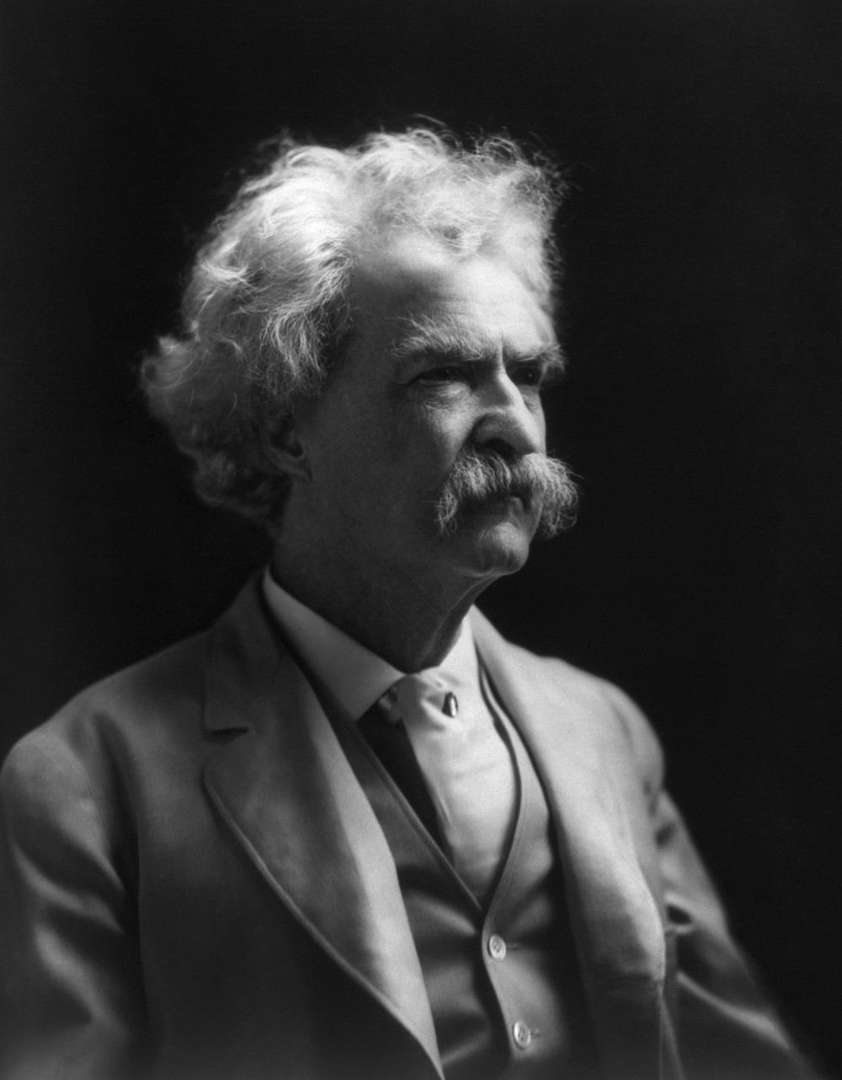
Mark Twain was born two weeks after Halley’s Comet’s closest approach in 1835. In 1909, he predicted: “It is coming again next year, and I expect to go out with it. It will be the greatest disappointment of my life if I don’t go out with Halley’s Comet.” That kind of self-aware cosmic humor is peak Twain, to be fair.
The man had a gift for the dramatic, and he apparently intended his death to be no different.
Twain’s prediction was eerily accurate. He died of a heart attack on April 21, 1910, one day after the comet was at its closest to the Sun and a month before the comet passed the Earth. Data published by NASA’s Jet Propulsion Laboratory shows that the comet’s next perihelion was on April 20, 1910 – the day before Twain died.
This is a somewhat uncommon occurrence given that Halley’s Comet only passes by the Earth approximately every 76 years. Scientists, to their credit, note the timing is real and documented, even if the precision of the match is sometimes overstated in popular retellings.

Violet Jessop: The Woman Who Survived Three Disasters on the Same Fleet
Let’s be real – this story sounds like something a screenwriter invented. Violet Jessop survived the sinking of both RMS Titanic in 1912 and sister ship HMHS Britannic in 1916, as well as having been aboard the eldest of the three ships of that class, RMS Olympic, when it collided with the British warship HMS Hawke in 1911. That is three catastrophic incidents on three sister ships, all within five years.
The odds of that are almost impossible to calculate.
Remembered as the “Queen of sinking ships” and “Miss Unsinkable,” Jessop relied on her deep faith and strong will to endure these calamities at sea, as well as to overcome severe illness and personal tragedies. When the Britannic struck a mine near the Greek island of Kea in 1916, Jessop was in a lifeboat when it was drawn into the Britannic’s still-churning propellers. The water turned red with blood as people and boats were chopped to pieces by the massive screws.
Jessop jumped into the sea and escaped death but suffered a severe skull fracture and deeply gashed leg. She survived even that. The “unsinkable” Violet Jessop finally died of congenital heart failure in 1971.
She was 83 years old.
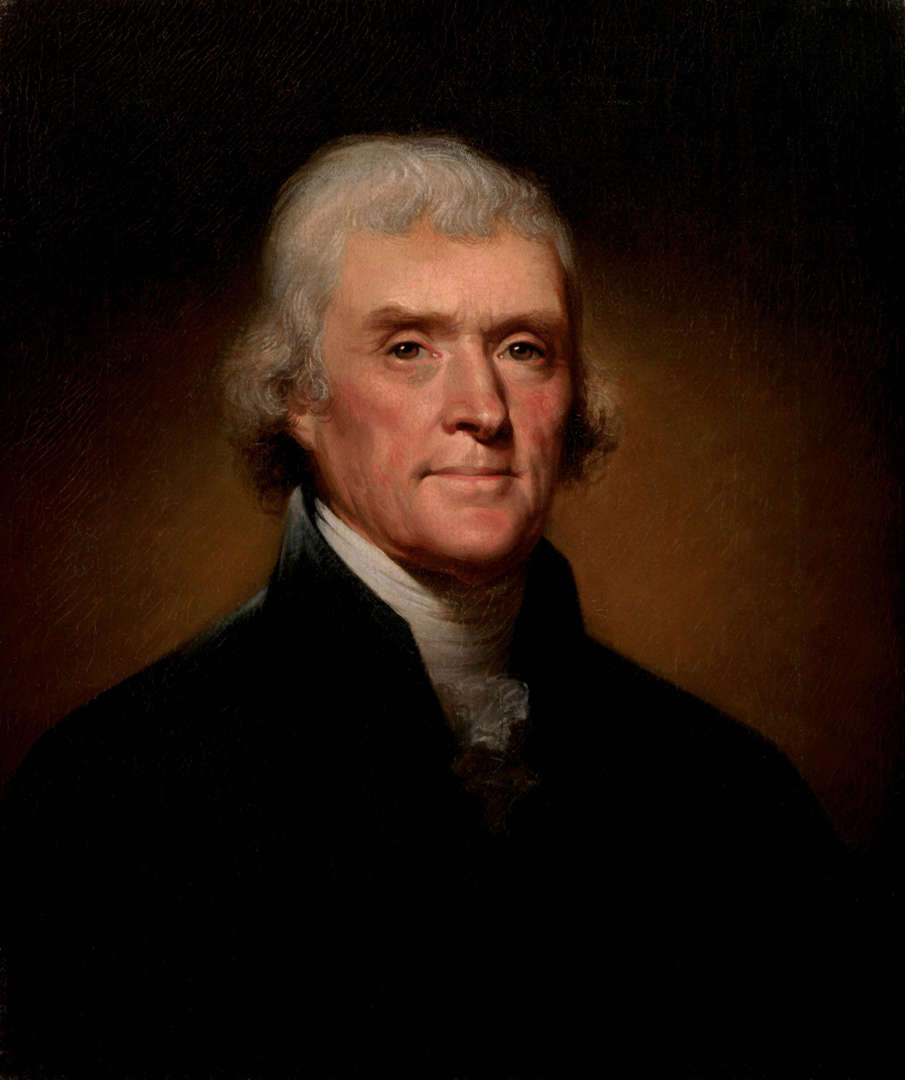
5. Jefferson and Adams: Two Founding Fathers, One Final Day©Rawpixel
The death of a Founding Father is always historically significant. The death of two, on the same day, on the fiftieth anniversary of the nation they built together, is something else entirely. Founding fathers Thomas Jefferson and John Adams, alternately close friends and bitter rivals across their intertwined political careers, died on the same day – July 4, 1826 – the 50th anniversary of American independence, of which these two men were chief architects.
The symbolic weight of that date is so heavy it almost feels staged.
The date of their passing was July 4, 1826 – 50 years to the day after the Declaration of Independence was adopted. John Adams and Thomas Jefferson weren’t the same age when they died, though – Adams was 90 and Jefferson was 83. At around 6 p.m. on that fateful day, Adams, unaware that Jefferson had died just after noon, uttered his final words: “Thomas Jefferson survives.” Even in death, history added a twist.
Adams’ final words were factually wrong by mere hours. If you tried to write that scene, an editor would probably cut it for being too contrived.
The coincidence that two Founding Fathers died on the fiftieth anniversary of American independence stunned the nation and cemented the date as one of the most symbolically charged in American history. No rational explanation has ever been offered. Probability theorists note that the law of large numbers allows for strange convergences, but even they tend to go quiet when this particular story comes up.

6. The Curse of Tamerlane’s Tomb: A Warning Ignored
You don’t have to believe in curses to find this story deeply unsettling. In 1941, Soviet archaeologists opened the tomb of Tamerlane, despite a chilling inscription warning of catastrophe. Just two days after the tomb was disturbed, Nazi Germany launched its invasion of the Soviet Union.
The sequence of events was so uncanny that many attributed the ensuing disaster to a curse. Whether coincidence or consequence, the story endures as a legendary warning from history.
Local protectors claimed that the tomb was cursed and that opening it would bring destruction. When the archaeological team ignored these warnings on Stalin’s orders, they reportedly experienced numerous technical difficulties almost immediately. Then came Operation Barbarossa, one of the largest military invasions in history, two days later.
Stalin was so scared that he ordered Timur be reburied in his tomb, and five weeks after he was returned in November 1942, the Soviets won the Battle of Stalingrad. This pivotal victory marked a turning point in the war. Coincidence layered on coincidence.
Historians document the events. Explaining them is another matter entirely.
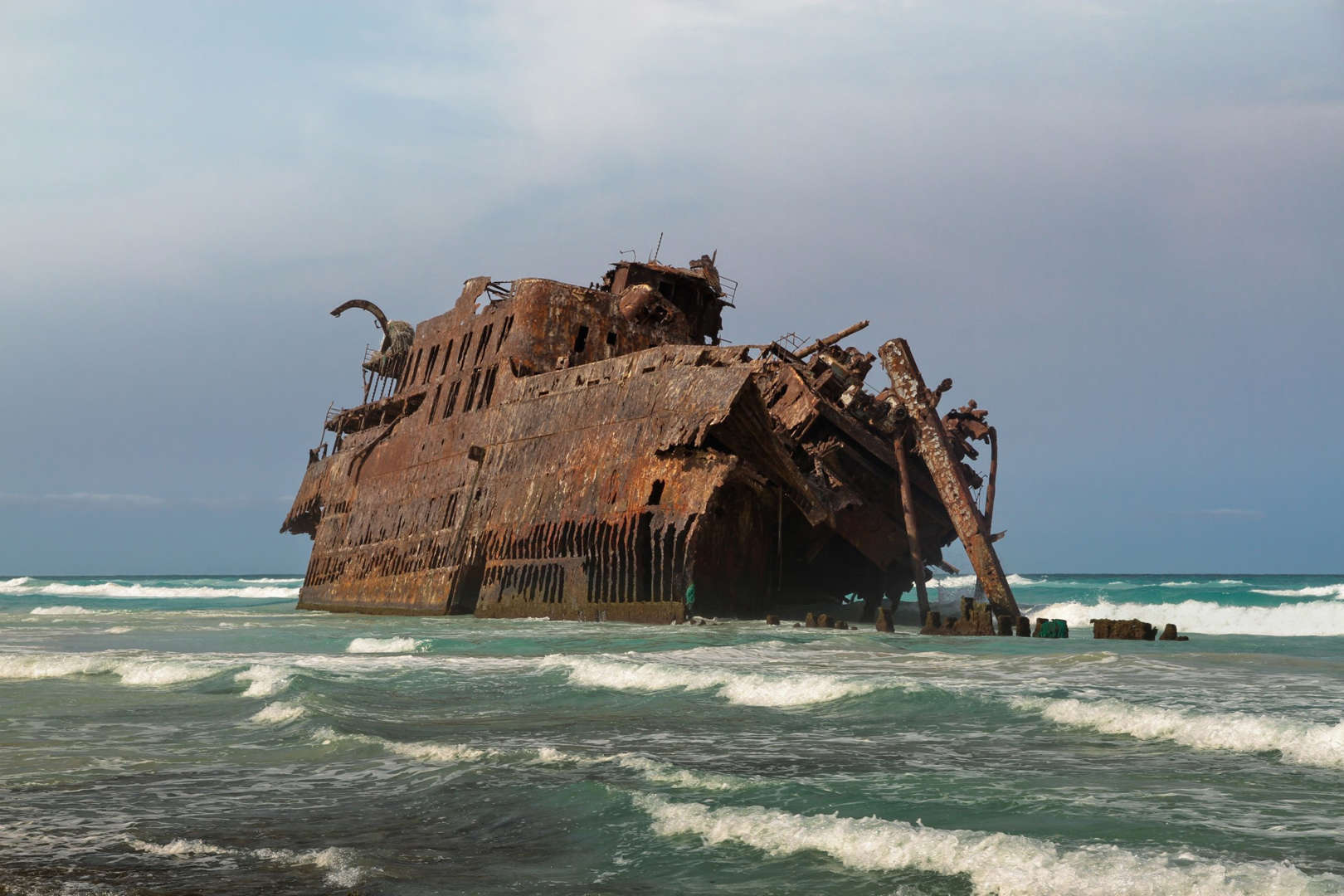
7. Edgar Allan Poe’s Shipwreck Prediction: A Name Too Real to Be Fiction
Poe had a talent for darkness. What he apparently also had – though nobody knew it at the time – was an unsettling talent for accidental prophecy. Poe’s tale, The Narrative of Arthur Gordon Pym, describes a shipwreck where desperate survivors resort to cannibalism, choosing a victim named Richard Parker.
In Poe’s 1838 novel, a starving ship’s crew cast lots to see who should be sacrificed, and the unlucky sailor is named Richard Parker. In 1884, a real ship, the Mignonette, in similar circumstances, selected one of the crew, and the sailor they chose was also named Richard Parker.
The name, the circumstances, the act of drawing lots – everything aligned with haunting precision. In 1884, a real shipwreck known as the Mignonette case involved survivors who killed and ate a cabin boy named Richard Parker. The extraordinary name match between fiction and real life remains one of literature’s strangest coincidences.
Poe died in 1849, more than three decades before any of it happened. He couldn’t have known. The name “Richard Parker” was not a famous name at the time.
There is no satisfying rational explanation, and that is precisely what makes it so persistently haunting.

8. The Jim Twins: Two Lives Lived in Parallel Without Knowing It
If this were a movie plot, it would be rejected for being too implausible. Among the most astonishing coincidences are the lives of identical twins separated at birth in Ohio. Reunited decades later, they learned both were named Jim, had married women named Linda, divorced, then remarried women named Betty, and each named their sons James Allan.
Their uncanny parallel lives remind us just how mysterious fate can be.
The twins had been raised in entirely different households, with entirely different families, and yet had independently made the same choices in names, relationships, and even careers. The takeaway isn’t that DNA is destiny, or that some unseen hand is guiding our actions. Confirmation bias is real, but coincidences are fun.
In a certain way they might “mean nothing,” but the fact that we persist in identifying them and finding them noteworthy means something. Scientists have studied the Jim twins as part of the Minnesota Study of Twins Reared Apart, and while genetics helps explain many behavioral similarities, the matching names of spouses and children remain genuinely difficult to account for through biology alone.
A Final Thought
These ten stories share something important. They are documented, checked, and sourced. They are not legends dressed up as history.
Some have been examined by statisticians, verified by historians, and scrutinized by scientists – and they still resist clean, comfortable explanations. That is precisely what makes them so compelling.
The human mind is a pattern-seeking machine. We are wired to find meaning in coincidence. Sometimes the patterns we find are real, mathematically verifiable, and utterly without explanation.
Whether that is the result of probability, fate, genetics, or something else entirely, is a question that remains beautifully, frustratingly open.
Which of these coincidences surprised you the most? Drop your thoughts in the comments – it’s always the stories we weren’t expecting that stay with us the longest.





Leave a Reply