
1. Keeping a consistent wake-up time, even on weekends
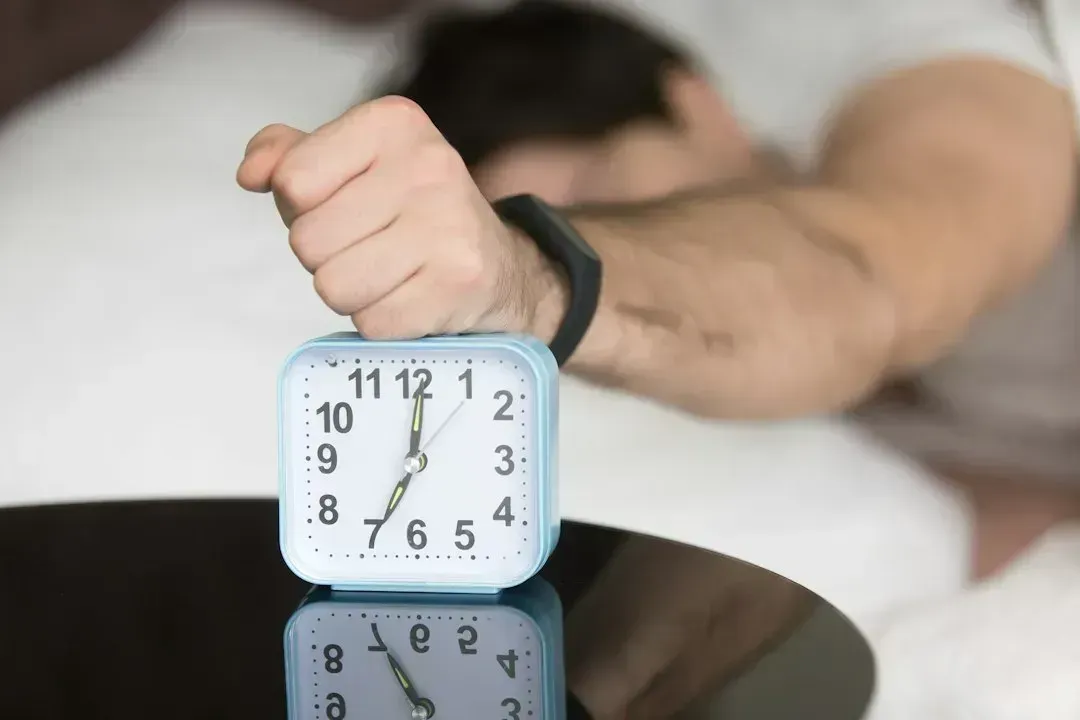
Sleep specialists frequently point to wake time, not bedtime, as the anchor of a healthy sleep schedule. Waking up at roughly the same hour every day helps stabilize the body’s internal clock, which in turn makes it easier to feel sleepy at a consistent bedtime. This is one reason clinicians treating insomnia often start here rather than telling patients to simply go to bed earlier.
Sleeping in on weekends can create a pattern similar to jet lag, sometimes called social jet lag, where the body’s rhythm shifts and Monday mornings feel harder than they should. Even an extra hour or two of weekend sleep-in can throw off the following night’s sleep drive. Keeping wake times within about an hour of each other, seven days a week, is a small adjustment that compounds over weeks and months.
2. Getting morning sunlight soon after waking

Exposure to natural light shortly after waking helps set the circadian clock by suppressing melatonin and signaling to the brain that the day has begun. Sleep researchers have long studied how light, more than any other single cue, regulates the timing of the sleep-wake cycle. Ten to twenty minutes outside, even on a cloudy day, delivers far more light intensity than most indoor lighting.
People who get this morning light consistently tend to fall asleep more easily at night because their circadian rhythm stays properly aligned. This habit matters even more for people who work indoors all day or rely on screens first thing in the morning, since artificial light is typically too dim to produce the same effect. Over time, this simple routine can also improve mood and daytime alertness, both of which feed back into better sleep quality.
3. Limiting caffeine after early afternoon

Caffeine has a half-life of roughly five to six hours in most adults, meaning a cup of coffee at three in the afternoon can still have a meaningful amount of caffeine in the bloodstream at nine that night. Sleep specialists often recommend cutting off caffeine intake by early afternoon, particularly for people who already struggle to fall asleep. Sensitivity to caffeine also varies by genetics, age, and liver function, so some people feel effects longer than others.
The issue isn’t just falling asleep. Caffeine can reduce the amount of deep, slow-wave sleep even in people who don’t consciously notice trouble drifting off. Shifting that last cup of coffee or tea earlier in the day is a small change that protects sleep quality later without requiring anyone to give up caffeine altogether.
4. Dimming lights and screens in the evening

Bright light in the hours before bed, especially blue-toned light from phones, tablets, and overhead LEDs, can delay the release of melatonin, the hormone that signals the body it’s time to sleep. Sleep specialists generally advise dimming household lights in the evening and switching to warmer, softer lighting starting a couple of hours before bedtime. This doesn’t require blackout curtains or total darkness, just a gradual reduction that mimics natural dusk.
Screens are a bigger challenge than lamps because of proximity and the sheer amount of time people spend on them at night. Many sleep clinicians suggest a phone-free window before bed, or at minimum enabling night mode settings that reduce blue light output. The goal isn’t to eliminate technology but to avoid working directly against the body’s natural signal to slow down.
5. Keeping the bedroom cool

Core body temperature naturally drops in the evening as part of the process that initiates sleep, and a warm bedroom can interfere with that drop. Sleep medicine guidelines commonly cite a range around sixty-five to sixty-eight degrees Fahrenheit as ideal for most sleepers, though personal preference varies. A room that’s too warm is one of the most common environmental complaints among people with fragmented or restless sleep.
This habit is easy to overlook because people often address noise or light in the bedroom before temperature. Simple changes, like using breathable bedding, cracking a window, or adjusting a thermostat an hour before bed, can make a noticeable difference over several nights. It’s a low-effort fix that works quietly in the background rather than requiring active discipline each night.
6. Reserving the bed for sleep and intimacy only

This principle, known as stimulus control, comes directly from cognitive behavioral therapy for insomnia, which is considered a first-line treatment by sleep specialists. The idea is that the brain forms associations, and if the bed becomes a place for scrolling, working, or watching television, it stops signaling sleep as strongly. Over time, this can contribute to conditioned insomnia, where lying in bed itself triggers alertness rather than drowsiness.
Practicing stimulus control means getting out of bed if sleep doesn’t come within roughly twenty minutes and returning only when drowsy again. It sounds counterintuitive to people who are already tired, but sleep therapists report that this retraining process, done consistently, rebuilds the mental link between bed and sleep. It’s one of the more evidence-backed habits on this list, with decades of clinical research behind it.
7. Winding down with a consistent pre-sleep routine

A predictable sequence of calming activities before bed, whether that’s reading, light stretching, or a warm shower, helps cue the body that sleep is approaching. Sleep specialists often compare this to the bedtime routines used for young children, noting that adult brains respond to the same kind of predictable, repeated signaling. The specific activities matter less than the consistency of doing them in the same order most nights.
A warm shower or bath about an hour before bed has some research support because it causes a temporary rise in skin temperature followed by a drop, which can mimic and slightly accelerate the body’s natural cooling process. Reading a physical book, rather than a screen, avoids the blue light issue while still providing a mentally engaging wind-down activity. The routine essentially trains the nervous system to shift out of an alert state gradually, rather than expecting sleep to arrive the moment the lights go off.
8. Getting regular exercise, but not too close to bedtime

Regular physical activity is consistently linked to better sleep quality and shorter time to fall asleep, according to sleep medicine research. Aerobic exercise appears to increase the amount of deep sleep people get, which is the most physically restorative stage of the sleep cycle. Even moderate activity, like a brisk daily walk, shows measurable benefits when done consistently over weeks.
Timing matters somewhat, though the old rule about never exercising within a few hours of bed has softened in recent guidance. Vigorous exercise very close to bedtime can raise core temperature and heart rate enough to delay sleep onset in some people, but the effect varies by individual. Sleep specialists generally suggest finishing intense workouts at least an hour or two before bed while noting that some people tolerate evening exercise just fine.
9. Managing pre-sleep worry with a wind-down mental practice

Racing thoughts are one of the most commonly reported barriers to falling asleep, and sleep specialists increasingly recommend structured techniques to address this rather than just willpower. Writing down tomorrow’s tasks or worries in a notebook before bed, sometimes called a worry journal, has shown benefit in sleep research by giving the brain a sense that concerns have been captured and can wait until morning. Brief relaxation practices, including slow breathing exercises or progressive muscle relaxation, are also commonly recommended in clinical sleep settings.
These techniques work by lowering physiological arousal, the state of alertness that keeps the nervous system from settling into sleep. Unlike medication, they carry no side effects and can be practiced anywhere, which is part of why they show up so often in cognitive behavioral therapy for insomnia programs. The benefit tends to build gradually, with people reporting more noticeable improvement after a few weeks of regular practice rather than immediate results.
None of these habits work as an overnight fix, and sleep specialists are usually upfront about that. The value comes from repetition, from the body learning over weeks that certain signals reliably precede rest. Choosing two or three to start with, rather than overhauling an entire routine at once, tends to be the more sustainable path toward better sleep.




Leave a Reply