
1. Office real estate stopped being a safe bet

Commercial landlords spent decades treating office towers as one of the steadiest investments around. That confidence cracked hard once hybrid schedules became normal. Office property vacancy rates in the U.S. reached a record 19.6% in Q1 2025, the highest on record.
The picture has grown more complicated since then, not simply worse. As of April 2026, the national office vacancy rate stood at 17.6 percent, representing a 210-basis-point year-over-year drop. Some markets are healing while others, particularly older buildings, are still struggling to find tenants, which tells you the recovery is uneven rather than uniform.
2. Return to office became a slow, uneven push rather than a single mandate

There was no single moment when companies flipped a switch back to full office life. Instead it’s been a drawn out, sector by sector effort. According to a proprietary analysis by Robert Half, the number of fully in-office roles rose from 65% in Q4 2025 to 87% in Q2 2026.
Yet that headline number hides a lot of nuance. The headlines make it seem like remote work ended in 2025 and 2026, but that’s far from the truth, since the return-to-office push has been mostly limited to the largest companies and the government. Smaller firms, in many cases, simply never bothered enforcing strict attendance rules.
3. Hybrid quietly became the default, not remote or full office

Few predicted that the eventual resting point would be neither fully remote nor fully in office, but something in between. According to Gallup’s latest workplace research, 52% of remote-capable employees now work in a hybrid arrangement, while 27% work exclusively remotely. That’s a majority of the remote capable workforce splitting their week between two places.
Industry watchers have started describing this as a settled pattern rather than a transition phase. Hybrid isn’t a trend anymore, it’s the new normal. Companies have stopped debating whether hybrid will stick around and started building policies, technology, and office layouts specifically for it.
4. Loyalty started running through flexibility, not paychecks

Pay used to be the obvious lever for keeping employees in place. Flexibility has muscled its way into that conversation, especially among younger workers. A 2025 Deloitte survey shows that 65% of Gen Z and Millennials say they would leave their job if forced back to the office full-time.
This isn’t confined to the United States either. In the UK, 93% of workers said they would consider quitting if remote flexibility were revoked. For a generation entering the workforce after the pandemic, flexible arrangements aren’t a perk to be grateful for. They’re simply an expectation baked into how a job is evaluated.
5. Trust between managers and employees shifted, measurably

One of the quieter changes has been in how supervisors relate to the people who report to them. Remote arrangements forced a different kind of management, one built more on outcomes than visible presence. SurveyMonkey’s remote and hybrid work study reveals that remote workers are twice as likely as in-person workers to say that their management trusts them.
That gap says something about how office culture used to operate, often on the assumption that being seen at a desk equaled being productive. Once that assumption got tested at scale, many managers discovered their teams performed just fine without constant oversight. The relationship that emerged, whatever its flaws, looks less top-down than the one it replaced.
6. Productivity debates got messier, not clearer

You would think six years of data would have settled the question of whether remote work helps or hurts output. It hasn’t, at least not cleanly. Moody’s economists who study commercial real estate noted plainly that for many industries, it appears that productivity has not been significantly affected by work from home, while acknowledging that studies on the issue have yielded mixed results.
Other data points lean more optimistic. Remote workers gain approximately 62 hours of productive work each year due to fewer in-office interruptions. The honest takeaway is that the research remains genuinely split, and anyone claiming certainty in either direction is probably overselling their case.
7. Salary negotiations started factoring in location, not just role

Compensation conversations used to be fairly straightforward, tied mostly to title, experience, and industry. Location flexibility has added a whole new variable into that mix. 55% of employees want to work remotely at least three days per week.
At the same time, plenty of workers are willing to trade flexibility for money if the offer is generous enough. 66% of professionals say they would be willing to come into the office five days a week for a higher salary. That split suggests flexibility isn’t a universal deal breaker so much as one more line item people weigh against everything else on the table.
8. Enforcement tools moved from rare to routine

Trusting employees to log in from home used to be the whole system. Now, for a growing number of companies, that trust comes with tracking software attached. Enforcement is intensifying: 37% of companies are actively enforcing office attendance in 2025, up from just 17% in 2024, and 34% of businesses have implemented badge tracking and attendance monitoring to make sure policies are actually followed.
This marks a real shift in workplace culture, from an honor system to something closer to surveillance. Employees who spent years managing their own schedules are now bumping into badge readers and attendance dashboards. It’s a reminder that flexibility, once granted, doesn’t always stay unmonitored.
9. Cities and commuting patterns rearranged around fewer daily trips
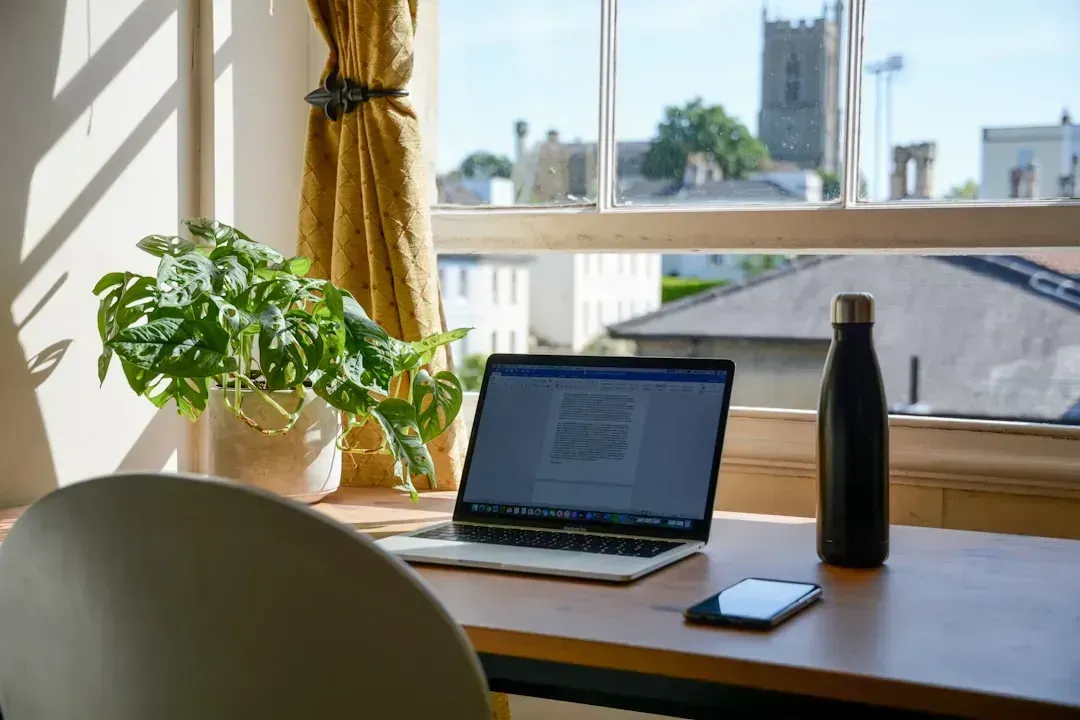
Commuter rail lines, downtown lunch spots, and parking garages all built their business models around predictable weekday traffic. That predictability broke, and it hasn’t fully returned. About 25% of paid days in the US in January 2026 were work-from-home days, whereas before COVID remote work amounted to less than 5% of workdays, around one day per month.
That’s a fivefold jump in the share of the week people spend working from home, and it shows no sign of reverting to pre-pandemic norms. Downtown business districts in many cities have had to rethink everything from transit schedules to retail mix, because the crowds simply don’t show up the way they used to on Mondays and Fridays.
Taken together, these nine shifts describe a workforce that adapted faster than the institutions built around it. Real estate, transit systems, management styles, and even salary negotiations have all had to catch up to a working world that no longer assumes everyone shows up at the same building, five days a week. Some of these changes may soften over time as return-to-office mandates expand. Others, particularly the generational shift in what workers expect from employers, look far more permanent than temporary.




Leave a Reply