
The 15-minute slot was never designed for depth

Appointment lengths in the United States have stayed remarkably stable for decades, which sounds reassuring until you realize what “stable” means here. Doctors spend 13–24 minutes with patients, a range that has remained unchanged for decades despite digital records, telehealth, and COVID-19 impacting healthcare delivery. A widely cited figure puts the typical visit closer to the middle of that range.
A study cited by the National Institutes of Health found the typical doctor’s appointment lasts about 17.4 minutes on average, with the median time being even less, at 15.7 minutes. Within that window, the talking is split almost evenly and briefly. Patients and doctors each speak for roughly 5.3 and 5.2 minutes, respectively, with almost a minute of silence between exchanges. That leaves very little room for nuance, follow-up questions, or the kind of back-and-forth that actually clarifies a diagnosis.
Documentation eats more time than the conversation itself

It’s not just the visit that’s short. It’s what happens around the visit that quietly steals the minutes you thought you had. For every 15 minutes a physician spends with patients, they spend an average of nine minutes charting notes in their EHR software, according to Tebra research. That ratio means documentation is not a footnote to the appointment. It is nearly as large as the appointment.
Primary care physicians in particular carry a heavier documentation load than other specialties. Doctors in gerontology, endocrinology, primary care, and internal medicine had the highest EHR times per encounter, up to 18 to 22 minutes. Multiply that by a full patient roster, and it becomes clear why a doctor might be mentally drafting your chart note while still in the room with you, rather than fully present for a longer explanation.
Physicians are quietly working a second shift on your chart
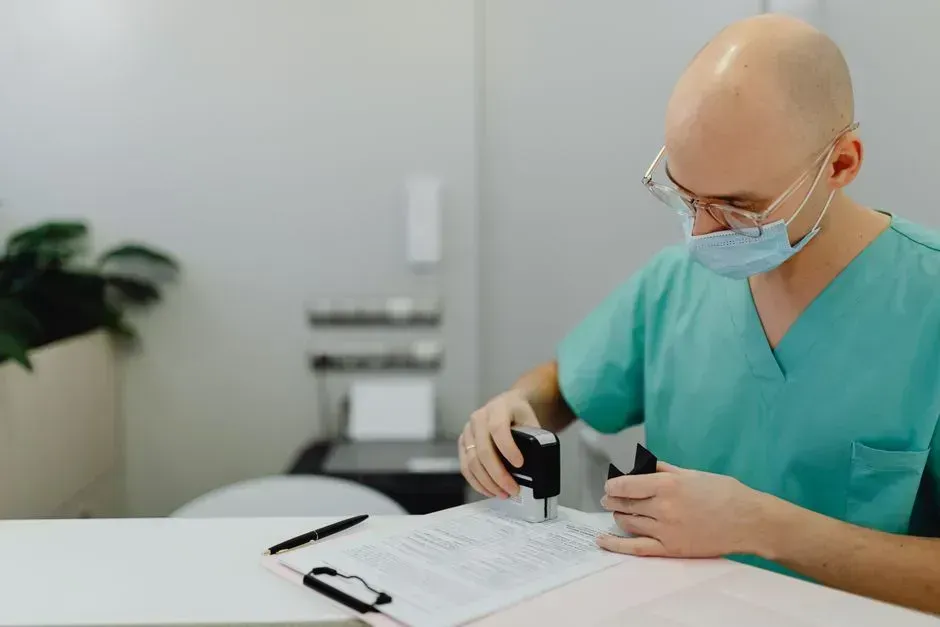
Ask most doctors when they actually finish their paperwork, and the honest answer for many is at home, after dinner. Researchers even have a name for it. A 2021 study revealed that doctors spent an average of 15.6 hours per week solely on paperwork and related administrative tasks. That is nearly two full workdays a week that never touch a patient at all.
This after-hours catch-up, sometimes called pajama time, has become its own measured phenomenon in health systems research. Physicians typically spent 36.2 minutes on the EHR per visit, which included 6.2 minutes of pajama time per visit and 7.8 minutes on the EHR inbox per visit. When a doctor is already anticipating that evening workload during your appointment, the incentive to linger over every detail with you in real time shrinks considerably.
The fee-for-service system rewards volume over conversation

Doctors do not set their own schedules in a vacuum. Most operate inside a payment structure that compensates them per visit and per billing code, not per minute of thoughtful discussion. The traditional fee-for-service system, driven by financial pressures, tends to prioritize the number of patients seen over the depth of each visit, resulting in hurried appointments.
That structural pressure is compounded by declining reimbursement rates for many services. Decreasing reimbursements have forced physicians to see more patients to retain the same amount of income, which means shorter patient visits and less time for relationship building. A doctor is not choosing brevity out of indifference. They are often responding to a financial model that punishes slowness.
You get interrupted almost immediately, and that shapes everything after

One of the more striking findings in communication research involves how quickly a physician responds once a patient starts speaking. The average patient gets about eleven seconds before the doctor interrupts. That is not necessarily rudeness. It’s often an attempt to redirect toward the most clinically urgent issue before time runs out.
The problem is that early interruption can crowd out the second or third concern a patient came in with. The visit is long enough to handle the one thing at the top of your chart, not long enough for the three other things you were hoping to raise, so you walk out with a prescription and a follow-up while the rest goes back in the drawer until next year. Whatever gets mentioned last, or hesitantly, often does not get addressed at all.
Chart review alone can swallow hours of a physician’s day
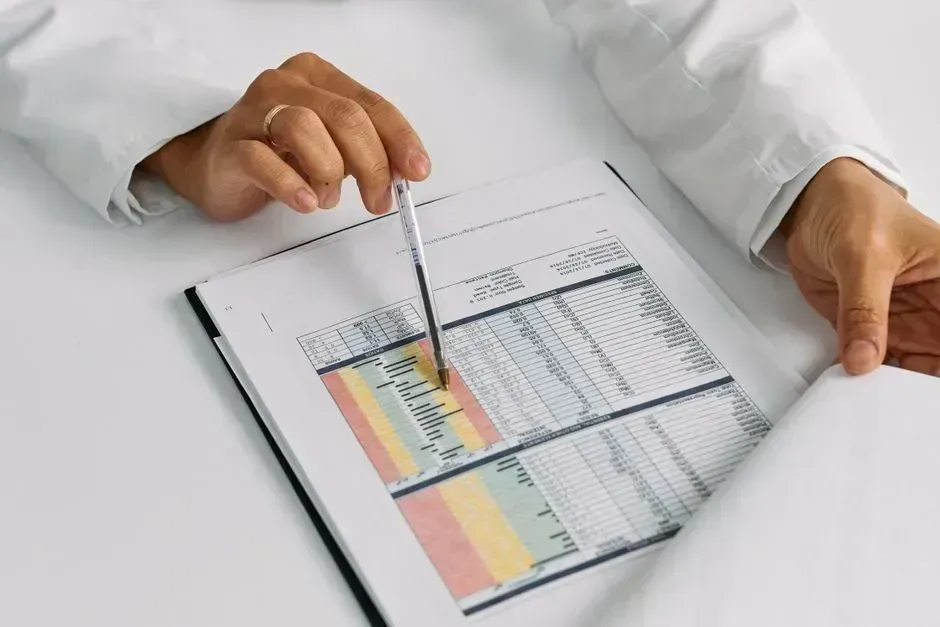
Before a doctor even walks into the exam room, there is often a mountain of prior records to sift through. Patient files have grown dramatically in size as digital systems accumulate years of notes, labs, and specialist reports. Each patient can have patient records as short as 29 pages and as long as over 500 pages, and painting an accurate picture from that volume of data is a monumental manual task.
That review time adds up across an entire patient panel, not just one complicated case. A physician spends an average of 4.5 hours per day doing EHR workflow, with about a third of that being patient chart review, translating to roughly 1.5 hours of patient chart review per day. When that much time goes into background reading, the face-to-face minutes with you become the smallest slice of the physician’s actual workday.
Time with patients is a shrinking fraction of the total workday

It can feel like your doctor’s entire job is sitting across from patients. In reality, that direct interaction represents a surprisingly small share of total working hours once documentation and administration are counted. Physicians spend nearly half of their time per day with EHRs while only about a quarter is dedicated to face-to-face time with patients.
This imbalance has real consequences for morale, not just scheduling. Burnout linked to documentation load has become one of the most studied problems in clinical medicine over the past several years, and primary care doctors report it at especially high rates. The math is simple even if the emotional toll isn’t: less charting would mean more room for conversation, but the current system rarely allows that trade.
Longer visits exist, but usually at a financial cost to the patient

Not every doctor operates inside the fee-for-service treadmill. Direct primary care and concierge models have emerged specifically because some physicians and patients wanted more room to talk. Some practices schedule a new patient every 20 minutes, with 30 minutes for complex cases, and their average patient visit lasts 26 minutes including time with the medical assistant.
That extra time tends to come with a membership fee or higher out-of-pocket cost, since insurance reimbursement rarely supports the longer format on its own. It is a workaround rather than a fix for the broader system. Still, it demonstrates that the fifteen-minute ceiling is not a medical necessity so much as a financial default that some practices have chosen to opt out of.
Specialty and complexity quietly determine how much you get

Not all fifteen-minute visits are created equal, even within the same clinic. The actual time allotted often depends on diagnosis codes and perceived complexity rather than how much the patient genuinely needs to discuss. The average time a doctor spends with a patient depends heavily on the reason for the visit, since a simple sore throat in an otherwise healthy person takes far less time than a patient with multiple comorbidities and the same complaint.
This means two patients with the same fifteen-minute slot can walk away with very different depths of explanation, simply because one chart looked more urgent on paper before the doctor even entered the room. It’s a scheduling logic built for triage, not necessarily for the patient’s felt experience of being heard. Knowing this can help explain why a follow-up visit for a chronic condition sometimes feels more thorough than a first visit for a new symptom.
The relationship still matters to doctors, even under pressure

None of this suggests physicians have stopped caring about the people in front of them. Survey data consistently shows the opposite. Physicians consider their relationship with patients the most rewarding aspect of their practices, even as the structural conditions around that relationship keep tightening.
That gap between what doctors value and what the system allows them to deliver is, in many ways, the core tension behind every rushed visit. In one survey, fifteen percent of physicians reported that a lack of time with patients contributed to job dissatisfaction. The frustration cuts in both directions, patient and physician alike, which is a detail easy to miss when you’re the one sitting on the exam table wondering why the conversation ended so fast.
What this means for how you use your next appointment




Leave a Reply