
There’s a certain kind of person who still writes things down by hand, picks up the phone to actually call someone, or cooks dinner from a real recipe without consulting a video. They don’t make a fuss about it. They just do it, the way people always did, and somehow it works better for them than the newer alternatives ever seem to.
These aren’t habits born from stubbornness or nostalgia alone. Many of them turn out to be quietly supported by research showing real cognitive, emotional, and social benefits. If several of the following feel familiar, you’re likely more old-fashioned than most, and that’s not a bad thing at all.
1. You Write Things Down by Hand

Most people reach for a keyboard or tap at a phone screen the moment they need to remember something. If you still prefer pen and paper, your brain might actually be thanking you. A study published in Frontiers in Psychology monitored brain activity in students taking notes and found that those writing by hand had higher levels of electrical activity across a wide range of interconnected brain regions responsible for movement, vision, sensory processing, and memory.
Research shows that people who regularly engage in handwriting tasks score higher on attention and concentration tests. There’s also something grounding about the physical act itself. Taking to pen and paper utilizes the visual, motor, and cognitive brain processes differently than when we recruit technology, and it is by nature more labour-intensive, requiring us to slow down and connect the mind with the hand, one word at a time.
2. You Cook Real Meals from Scratch

Pulling out a recipe, chopping actual vegetables, and letting something simmer on the stove is a habit that’s quietly fading among younger generations. Roughly seven in ten Baby Boomers say they cook dinner at home from scratch every Sunday, compared to only about four in ten Gen Z adults. If you’re doing this on a regular weeknight without much thought, that already puts you in a shrinking group.
A strong majority of Americans find cooking to be more stress-relieving than stressful. The practical upside is hard to ignore, too. Home cooking costs roughly four dollars per serving on average, while eating out runs close to twenty dollars, a nearly five-times price difference that explains why most people who cook at home do so partly to save money. Cooking from scratch is both an economic habit and a quiet act of self-reliance.
3. You Actually Call People Instead of Texting

Texts are convenient, but they strip away a lot of what makes communication feel real. If you habitually pick up the phone and dial rather than typing a string of abbreviated messages, you’re practicing something richer than it might seem. Contact and communication through phone calls has been shown to have a maintenance and exchange effect on social relationships similar to face-to-face communication, and more intimate emotional and personal information exchanges are possible through phone calls.
The shift away from voice calls has been dramatic, particularly among people under thirty-five, who increasingly treat a ringing phone as an interruption rather than a connection. Choosing to call instead is a deliberate act of slowing down. It signals that the other person is worth more than a few typed lines, and most people on the receiving end notice that difference.
4. You Read Physical Books

Curling up with an actual book, the kind with pages you can fold a corner on or hold open with your thumb, is increasingly rare in a world of endless scrolling. The cognitive case for it is strong. A 2024 meta-analysis of 49 studies found that students who read on paper consistently scored higher on comprehension tests than those who read the same material on screens.
Research suggests that comprehension is six to eight times better with physical books than e-readers, and physical books help readers absorb and recall content more effectively. Turning pages as we read also creates a kind of “index” in the brain, mapping what we read visually to a particular page. The book you hold in your hands is not just a delivery device for words. It’s a spatial experience your brain actually uses.
5. You Send Handwritten Cards or Letters

Birthdays, thank-you notes, condolences, a simple hello to a friend who lives far away. Most people handle these moments with a quick text or a social media comment. If you still sit down with a card, a stamp, and an envelope, you belong to a tradition that carries more weight than most digital gestures can match. Handwriting is still preferred in situations that call for sincerity, such as love letters and greeting cards.
Digital messages are considered less valuable than conventional handwritten letters because they are easily written with less effort. The recipient of a handwritten card knows you stopped, thought, wrote carefully, and mailed it. That sequence of effort is precisely what gives the gesture its meaning. No notification ping has ever produced quite the same feeling as finding a real letter in a mailbox.
6. You Prefer to Fix Things Rather Than Replace Them

When a hem unravels, a button falls off, or a piece of furniture wobbles, the modern default is to throw it out and order something new. If your instinct is to fix it instead, you’re operating from a value system that used to be common sense. Basic repair skills can extend the life of everything from clothing to furniture to electronics, and learning simple sewing techniques, how to patch holes, or how to tighten loose screws can save hundreds of dollars over time.
This approach doesn’t just save money. It also reduces environmental impact, aligning frugality with sustainability values that matter more than ever. There’s also a quiet satisfaction in mending something with your own hands. It’s a small act of competence in a world that increasingly outsources even the most basic tasks.
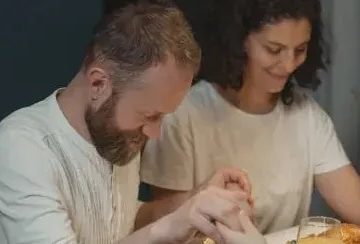
7. You Sit Down for Proper Meals

Eating at a table, without a screen open in front of you, might sound unremarkable. In practice, it’s rarer than it used to be. Lunch at a desk, dinner on the couch, breakfast skipped entirely, these have become the default rhythm for millions of people. If you consistently sit down to eat, especially with others, you’re holding on to something meaningful. According to a 2024 study, over sixty percent of families ate dinner together more frequently during the pandemic compared to pre-pandemic times, which suggests how much the habit had faded before circumstances forced it back.
The act of sitting down for a meal, unhurried and without multitasking, does something simple but important. It creates a clear boundary between eating and everything else. That boundary tends to make food taste better, conversations go longer, and the end of the day feel more like a real stopping point rather than just another hour that blurred into the next.
8. You Focus on One Task at a Time

Multitasking is sold as efficiency, but the evidence against it has been piling up for years. Multitasking feels productive, but in reality it makes us less effective. Before digital distractions, people focused on one thing at a time, giving it their full attention until it was done, and splitting attention between multiple tasks leads to mistakes, stress, and reduced quality of work.
The ability to focus deeply on a single task is becoming a rare and valuable skill. If you naturally work through one thing before moving to the next, without seven open tabs and your phone face-up on the desk, you’re doing something that most people genuinely struggle to do. It’s not an antiquated approach. It’s just how sustained, quality thinking actually works.
9. You Save Money Before You Spend It

The buy-now-pay-later culture has made patience feel like an obstacle rather than a virtue. Apps, subscriptions, and one-click checkout have engineered impulse into every transaction. If you still save toward something before buying it, you’re holding a position that previous generations considered the only sensible one. Generations before us didn’t have credit cards to fall back on. If they couldn’t afford something, they simply didn’t buy it. That mindset is a stark contrast to today’s buy-now-pay-later culture, but it’s also the foundation of true financial freedom.
This habit isn’t about deprivation. It’s about keeping the relationship between earning and spending intact, so that money feels connected to effort rather than abstracted into a monthly statement. People who consistently save first tend to feel more in control of their lives overall, not just their bank accounts.
10. You Go to Bed at a Consistent Hour

There was a time when the end of the day was defined by something external, whether the setting sun, the end of a broadcast, or simply the quiet that settled over a house. Now, the night can stretch indefinitely through screens that never go dark. If you maintain a consistent bedtime and protect your sleep as a non-negotiable, you’re practicing a discipline that most adults struggle with. In past generations, rest wasn’t seen as laziness. It was recognized as essential for long-term productivity, and people worked hard but also made time to disconnect and recharge.
Sleep researchers consistently point to regularity, going to bed and waking at the same time, as one of the most important factors in sleep quality. A consistent bedtime is less about being rigid and more about respecting the body’s natural rhythms. It’s an old-fashioned habit that modern science has simply caught up with.
None of these ten habits require a dramatic lifestyle overhaul. They’re quiet, daily, almost invisible. The people who do them don’t usually announce it. They’ve just kept certain things that work, while the world around them replaced them with something faster and louder. That quiet persistence, it turns out, tends to age well.



Leave a Reply