
1. Rolling Their Eyes Or Sneering At You

Body language experts and couples therapists point to contempt as one of the clearest signs of relationship trouble, and it often shows up first in public because that’s where people feel the most pressure to perform politeness, yet sometimes can’t help but let their real feelings slip. According to research from psychologist John Gottman, contempt is the most destructive of the four horsemen and the single greatest predictor of divorce, communicating disgust and superiority toward a partner through eye-rolling, mocking, sneering, and name-calling.
What makes this so damaging is the message underneath it. Gottman’s work found that contempt is the most destructive of the four horsemen because it conveys “I’m better than you, I don’t respect you,” and couples who show contempt toward each other are more likely to suffer from infectious illness than those who don’t. If you notice your partner sneering at something you say in front of others, that’s not just an awkward moment, it’s a signal worth naming.
2. Criticizing You In Front of Friends Or Family

There’s a big difference between a lighthearted joke and being torn down in front of an audience. Relationship writers note that a partner who doesn’t shy away from disrespecting you openly in public, rolling their eyes, criticizing you in front of friends, and generally treating you poorly, is showing a genuine red flag rather than a harmless quirk. Public criticism tends to sting more because it adds humiliation on top of the original complaint.
Therapists distinguish this from a fair complaint, which focuses on a specific behavior rather than attacking someone’s character. As one couples therapist explained, a healthy complaint sounds like “I’m upset that you didn’t call,” while criticism is an attack on a partner’s beliefs, personality, or sense of self, essentially telling them they are wrong and putting them down. When that kind of judgment happens in front of an audience, it’s rarely accidental.
3. Being Physically Distant Or Ignoring You On Purpose

Sometimes the red flag isn’t loud at all, it’s silence and physical distance. Picture a couple walking together where one person is consistently several steps ahead, or a meal where one partner starts eating before the other’s food even arrives. Psychologists who study relationship dynamics say this kind of small disrespect matters. As one social psychologist put it, a couple might be out for a meal with one person eating as soon as their food arrives even though their partner hasn’t gotten theirs yet, or walking together with one person ten steps ahead of the other.
These moments might seem minor individually, but experts warn they add up. A lack of basic consideration in public often reflects a lack of consideration in private too. A lack of respect in a relationship is considered a major red flag, and over time it can damage the self-esteem and sense of self of the person on the receiving end. If this happens consistently rather than on the rare rushed day, it’s a pattern worth acknowledging.
4. Checking Your Phone Or Questioning Who You’re Talking To

Jealousy dressed up as concern is one of the more common public red flags, especially when a partner starts questioning your interactions with other people right there in the moment, whether it’s a friend, a coworker, or even a stranger making small talk. Experts note that mild protectiveness is normal, but it crosses a line quickly. As one relationship guide explains, while being protective of a bond in a subtle tone is acceptable, when jealousy becomes the defining trait of a partner who constantly surveils and questions the people you interact with, it indicates instability, and it’s better to walk away from that dynamic.
This possessiveness often escalates from questioning in public to controlling behavior in private, including monitoring a partner’s phone or social media without permission. Relationship counselors describe this pattern as a vivid red flag that signals a partner who’s incredibly jealous and controlling, wanting to control every aspect of their partner’s life, from career to attire to friends. Public jealousy rarely stays contained to public settings for long.
5. Snapping Or Shutting Down Instead Of Talking It Out

Every couple disagrees occasionally in public, that’s just life. The concerning pattern is when a partner responds to any friction by going cold and refusing to engage, a behavior researchers call stonewalling. It’s one of the four communication patterns identified in decades of relationship research alongside criticism, contempt, and defensiveness, described as four communication patterns that can quietly, and sometimes not so quietly, erode a relationship: criticism, contempt, defensiveness and stonewalling.
When someone shuts down mid-conversation at a restaurant or during a family event, it can leave the other partner feeling dismissed and embarrassed in front of others. Researchers who study these patterns note that the more of these behaviors that show up in a relationship, the more likely there is to be a breakup or divorce, since together they signal a dysfunctional relationship. A partner who consistently checks out during hard conversations in public is often avoiding accountability rather than simply needing space.
6. Making Jokes At Your Expense That Aren’t Really Jokes

Humor is supposed to bring couples closer, not chip away at one partner’s confidence in front of an audience. Therapists describe a specific kind of joke that carries a hidden insult, something that gets laughs from the room while quietly humiliating the target. This overlaps closely with contempt, which experts describe as showing up through eye-rolling, sarcasm, mockery, name-calling, and hostile jokes with a real barb inside, all aimed at making one partner feel smaller than the other.
The tricky part is that this behavior can hide behind the excuse of “just teasing,” which makes it harder to call out without seeming overly sensitive. Yet relationship guides are clear that a partner who mocks you or laughs at you when you’re not there in person is a huge red flag and should not be tolerated, and the same standard applies when the mockery happens right in front of you with an audience watching.
7. Refusing To Take Responsibility When Called Out
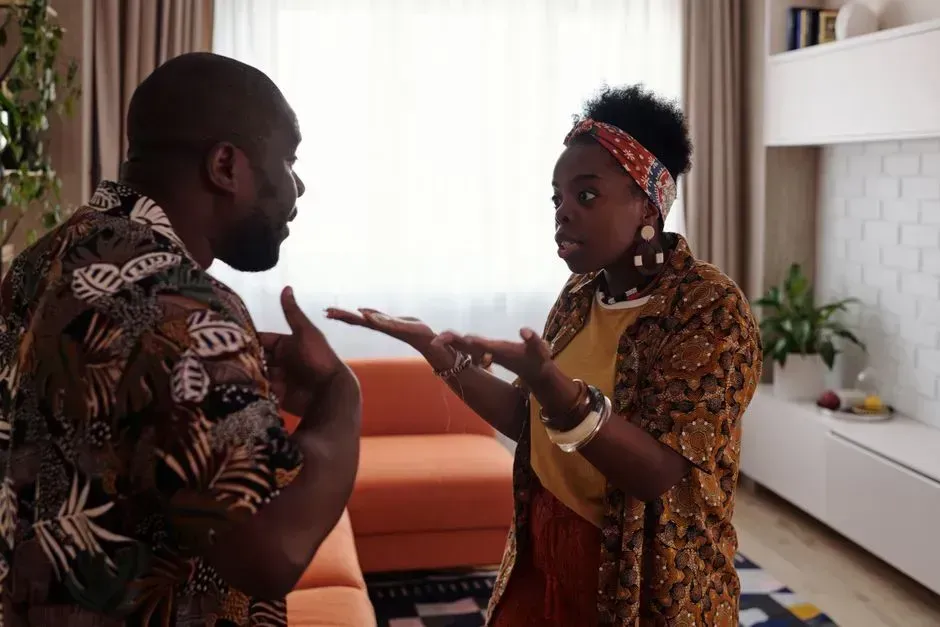
Watch what happens when a partner is gently corrected or called out in a group setting. Someone who reacts to feedback, even mild feedback, by immediately deflecting blame is showing a pattern therapists call defensiveness, one of the most common communication breakdowns in troubled relationships. This shows up as a refusal to own mistakes, even small ones, in front of others.
Experts describe this pattern bluntly: these are the kind of people who can never seem to take accountability and responsibility for what they do wrong, instead treating their partner as a scapegoat and loading their share of the blame onto them as well. When this plays out publicly, it often means the person cares more about how they look to others than about actually resolving the issue with their partner.
8. Dismissing Your Feelings Or Priorities In Front of Others

The last major red flag is subtler but just as corrosive over time: a partner who visibly stops caring about what matters to you, especially in social settings where it would be easy to show basic support. This might look like forgetting a commitment they made to show up somewhere, brushing off something you clearly care about, or acting bored when you’re the one speaking. As one psychotherapist explained, disrespect can show up in bigger ways too, where a partner can stop seeing your priorities, meaning what matters to you simply doesn’t matter to them anymore.
This dismissiveness often extends to identity and values as well. Experts note that a partner can also disrespect your identity, putting down or devaluing the things that make you who you are, whether that’s tied to gender, social class, or any other group you identify with. Being consistently unseen in front of the people who matter to you is rarely a coincidence, and it’s usually a sign the same disregard exists behind closed doors too.
None of these behaviors, taken as a single bad moment, necessarily spells doom for a relationship. Everyone has an off day, a stressful week, or a poorly timed joke that lands wrong. What relationship experts consistently emphasize is the pattern, not the isolated incident. Contempt, criticism, defensiveness, and stonewalling become dangerous when they repeat over time and go unaddressed, and researchers have found these patterns can predict relationship breakdown with striking accuracy when they’re consistently present.
The good news is that awareness is the first step toward change. If you recognize your partner, or yourself, in several of these behaviors, it doesn’t automatically mean the relationship is over. It does mean the pattern deserves an honest conversation, and possibly some outside support, before these public moments start to define what the relationship actually is behind closed doors too.




Leave a Reply