
1. Portugal

Portugal keeps showing up at the top of retirement rankings, and the reasoning holds up. Portugal offers the lowest cost of living in Western Europe, where a couple can live nicely on $2,500 to $3,000 a month outside of the major cities. Smaller towns push that figure even lower, while cities like Lisbon and Porto naturally cost more.
Housing is the biggest variable. A comfortable single-retiree budget in Lisbon runs €2,000-3,000 per month, while a single retiree in Porto can live comfortably on €1,600-2,400 per month. Healthcare adds real peace of mind too, since healthcare costs $50–200/month for private insurance, transitioning to free SNS public healthcare after residency. The main visa route for Americans and other non-EU retirees remains the D7, and the D7 Visa requires a steady passive income based on Portugal’s minimum wage (at least €920 per month as of 2026).
2. Greece

Greece has quietly overtaken its longtime rivals in the retirement conversation. Greece has taken the top spot in International Living’s 2026 Annual Global Retirement Index, edging out long-time favourites like Portugal and Spain, thanks largely to its tax incentives and Mediterranean pace of life. The appeal isn’t just scenic, either. Greece tops the 2026 Global Retirement Index for its 7% flat tax on foreign income, affordable Mediterranean lifestyle, and Golden Visa program starting at €250,000 in real estate investment.
Day-to-day costs remain reasonable even in a rising-price environment. Average monthly cost is roughly €1,500 for a single retiree and €2,500–€3,000 for a couple, including rent. For those who don’t want to go the property-investment route, Greece’s Financially Independent Person visa is ideal for retirees and requires proof of $4,050 in monthly income. There are small perks too, like the fact that discounts on transport, museums, and cultural sites for those over 65 make it easier to explore, stay active, and stay connected to the country’s rich history.
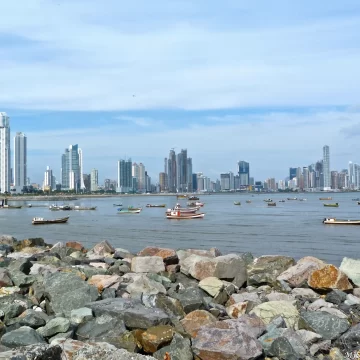
3. Panama

Panama has spent decades refining what a retiree-friendly country looks like, long before the phrase became trendy. Panama quietly perfected the art of welcoming retirees, and today it ranks No. 2 in International Living’s 2026 Global Retirement Index for its ease, comfort, and extraordinary value. Because the economy is dollarized, there’s none of the currency-conversion guesswork that complicates budgeting elsewhere.
The numbers back up the reputation. A couple can live comfortably on around $2,000 to $3,000 per month, with $2,500 often hitting the sweet spot. In cooler mountain towns, rent ranges from $800 to $1,500, while beachside living comes at a premium but still offers solid value. Panama’s Pensionado program is widely considered one of the world’s most generous retiree programs, and once approved, retirees gain access to discounts that touch nearly every part of daily life, from pharmacies to entertainment.
4. Mexico

Mexico remains the default first choice for many North American retirees, and proximity explains a good part of that. Retiring in Mexico can stretch a U.S. retirement income further than almost any other country within a short flight of home, drawing roughly 1.6 million Americans already living there, the largest U.S. expat community in the world. Warm climates, modern private healthcare, and large English-speaking enclaves all sweeten the deal.
Budgets vary by region, but the overall picture is consistent. A retired couple can often live comfortably on $2,000 to $3,500 per month, and retirees commonly report budgets 30% to 50% lower than stateside, with the biggest savings on housing, groceries, and home help. Residency does take some paperwork, since applicants must demonstrate monthly income starting at USD $4,300 monthly for the past 6 months, or a minimum balance in investments or savings starting at USD $70,000. Popular spots like Lake Chapala and San Miguel de Allende have grown into full-fledged retirement communities with established support networks.
5. Costa Rica

Costa Rica built its retiree-friendly reputation on stability and biodiversity in roughly equal measure, and it hasn’t lost its footing. The country offers several distinct paths to residency depending on a retiree’s financial situation. The Pensionado route requires a minimum $1,000 monthly pension income, the Rentista option needs a $60,000 bank deposit and proof of $2,500 monthly transfers, and the Inversionista path calls for a $150,000 investment in property, stocks, bonds, or other qualifying assets.
Once settled, retirees over 65 gain access to genuinely useful perks. Retirees over 65 qualify for Ciudadano de Oro benefits, including free local bus rides and senior discounts at more than 1,600 businesses, including pharmacies, hotels, shops and labs. Costa Rica sits in a comfortable middle tier of affordability, more expensive than Southeast Asia but still delivering considerable savings compared to North America, alongside a public healthcare system that many retirees find genuinely reliable.
6. Colombia

Colombia has spent the past several years shedding old perceptions and rebuilding its image around culture, climate, and value. Medellín in particular draws attention for its year-round mild weather, sometimes called the city of eternal spring, and a cost of living well below what most Western retirees are used to. The country’s low cost of living is considered attractive by more retirees, with Colombia’s Cost of Living Index measured at 30.85, far lower than the United States’ Cost of Living Index at 76.61, according to Numbeo.
Residency here is also refreshingly uncomplicated on paper. Colombia’s M-type retirement visa has the lowest monthly income requirement globally at approximately $750 to $1,100 per month. Add a territorial tax system that leaves most foreign income untouched, and it’s easy to see why Colombia keeps climbing the affordability rankings without sliding on quality of life.
7. Malaysia

Malaysia doesn’t always make the shortlist of Western retirees, but the numbers make a compelling case. Average monthly living costs are $537 for a single person and $1,958 for a family of four, with things slightly more expensive in major cities such as Kuala Lumpur but still much cheaper than in countries like the US and UK. The long-running MM2H program is one of the region’s most established retirement pathways.
Tax treatment is another quiet advantage. Foreign-sourced income received by individuals is currently exempt from tax under rules in place until December 2026, meaning expat retirees typically do not pay tax on foreign pensions or Social Security benefits. Healthcare in cities like Kuala Lumpur and Penang is modern and often English-speaking, though options are a bit more limited in smaller towns and rural areas, so retirees outside busier areas will probably need a car and may want private health insurance. The main trade-off is distance, since getting home for holidays or family visits involves considerably longer flights than Latin America or Europe.
8. Thailand

Thailand has long attracted retirees for a simple reason: the cost of a genuinely comfortable life here is remarkably low by Western standards. Cities offer very different price points depending on lifestyle preferences. Chiang Mai and Phuket are places in Thailand where retirees can live for $1,700 and $2,500 per month, respectively.
The retirement visa process is well established, though it does come with ongoing requirements. The Non-Immigrant O-A long stay visa, often referred to as the Thailand Retirement Visa, is a relatively affordable option for people 50 or older, typically involving a monthly pension or income and a minimum bank balance, with visa extensions requiring reporting to immigration every 90 days. Healthcare insurance is not optional either, since immigration requires a health insurance policy that meets the specific coverage minimums required by Thai immigration for the O-A visa, currently at least 3,000,000 THB. For retirees comfortable with regular paperwork, the payoff is a lower cost of living paired with excellent private hospitals in Bangkok and Chiang Mai.
9. Ecuador

Ecuador rarely gets the same spotlight as Portugal or Mexico, but it quietly delivers one of the best value propositions on this list. Ecuador regularly ranks as a budget retiree haven, and it’s possible to live comfortably on $1,500 or less in cities like Cuenca or along the coast. Using the U.S. dollar as its official currency removes a layer of financial uncertainty that complicates budgeting in many other countries.
Getting residency here is also relatively accessible. Ecuador offers a retiree visa with just $800/month income required, one of the lowest thresholds among Latin American countries. Cuenca in particular has developed a sizable expat community over the past decade, with colonial architecture, a spring-like Andean climate, and healthcare that many retirees describe as both affordable and genuinely capable.
Weighing Comfort Against Cost




Leave a Reply