
1. They repair quickly after conflict

Every couple argues, and no amount of communication training eliminates that. What separates lasting relationships isn’t the absence of conflict but what happens right after it. Clinical psychologists and researchers John and Julie Gottman interviewed more than 3,000 couples and followed some for as long as 20 years, and have also studied more than 40,000 couples who are about to begin couples therapy.
One commonality most successful couples had was their ability to do “repairs.” The couples who really were successful a few years down the road were the ones who made repairs. That repair doesn’t need to be dramatic. Making a repair doesn’t mean buying flowers or treating your partner to an expensive dinner. It can be a question or a comment which acknowledges that your partner is a person and not an enemy.
2. They know each other’s inner world, and keep updating it

Couples who stay close tend to treat their partner as someone still worth discovering, even after years or decades together. Gottman researchers call this having accurate “love maps.” Love maps are Gottman’s term for truly knowing your partner’s inner world, everything from their favorite meal to their biggest worries, and strong couples continually update these maps by asking questions, listening closely, and staying curious even after years together, seeing their spouse not just as a partner but as an evolving individual.
This habit sounds simple, but it requires ongoing effort rather than assuming you already know everything about someone. Regularly asking something like “What’s been on your mind lately?” keeps the connection alive and prevents drifting into emotional distance. People change jobs, moods, fears, and priorities over the years, and couples who stay close keep pace with those shifts instead of relying on outdated assumptions.
3. They notice and respond to small bids for connection

A “bid” is a small attempt to get attention, affection, humor, or support from a partner. It might be a comment about something on the news, a sigh, or a request to look at something on a phone screen. Understanding a partner’s inner psychological world, their hopes, worries, goals, and history, forms a strong base for the relationship.
Acknowledging and responding positively to a partner’s bids for attention, affection, or support matters, and even small bids are opportunities to connect. One well-known finding from the Gottman research is that whether couples consistently “turn toward” each other in these small moments, rather than turning away, can make a real difference. Whether or not a couple turns toward one another can make a massive difference in the relationship’s longevity.
4. They maintain a strong ratio of positive to negative interactions

It isn’t realistic to expect a relationship free of friction, criticism, or the occasional sharp comment. What matters more is the overall balance. Research shows that couples who maintain roughly a twenty to one ratio of positive to negative interactions create lasting bonds.
That ratio doesn’t mean twenty compliments for every complaint in a literal, tallied sense. It reflects an overall climate of warmth, humor, and goodwill that outweighs moments of tension by a wide margin. Couples who let criticism, sarcasm, or contempt pile up without enough positive interaction to balance it tend to see their satisfaction erode over time, even if no single argument seems serious.
5. They use humor to de-escalate tension

Humor shows up again and again in research on durable relationships, not as comic relief but as a genuine coping tool. In good marriages, couples actively de-escalate conflicts by injecting well-timed humor into tense situations, which can lower the tension level of an argument, destroy the division between partners, and remind them that they’re human.
This isn’t something that can be scripted or forced into a moment. This behavior is one that researchers say can’t be programmed into someone; it just happens when couples have a positive shared experience and a generally positive outlook on their own life. Couples who laugh together during minor conflicts, rather than only during good times, tend to hold onto their sense of partnership even when disagreements get heated.
6. They manage perpetual problems instead of trying to solve them
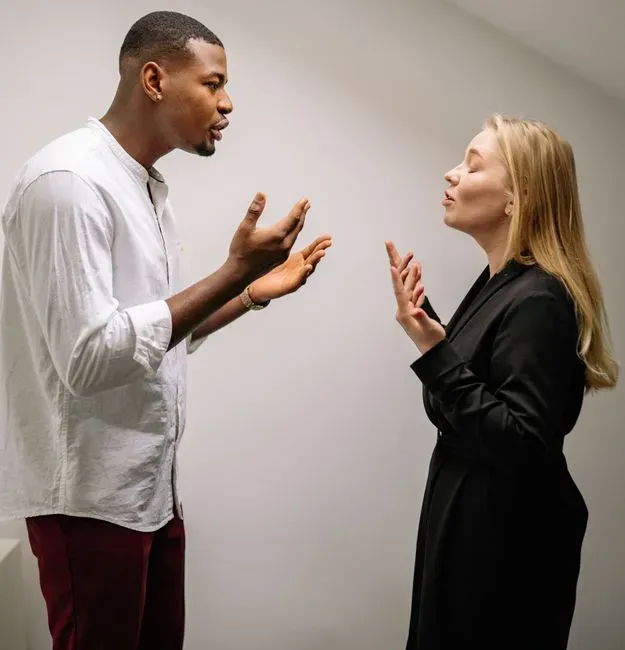
Not every disagreement in a relationship is solvable, and long-lasting couples seem to understand this earlier than most. Gottman and Levenson discovered that couples’ interaction had enormous stability over time, and that most relationship problems, about 69 percent, never get fully resolved.
Rather than treating every recurring argument as a battle to win, couples who stay close learn to manage these ongoing differences with patience. The Gottmans discovered that 69 percent of marital conflicts are “perpetual,” based on personality differences or lifestyle preferences that won’t go away, and the key isn’t solving them but managing them with humor, empathy, and open dialogue, so couples who thrive learn to talk about these issues without letting them dominate the relationship. Recognizing which fights are truly unresolvable, and choosing to stop refighting them, frees up energy for the parts of the relationship that can actually improve.
7. They soften how they bring up problems

How a disagreement starts often predicts how it will end, which is a small but powerful insight from decades of observed couple interactions. How an argument begins often predicts how it ends; a harsh startup involving blame, criticism, or sarcasm leads to defensiveness and escalation, while a softened startup opens the door for resolution.
Couples who stay close for years tend to raise concerns in a way that invites a conversation rather than a defense. This might mean describing a feeling instead of assigning blame, or raising an issue calmly instead of during a moment of frustration. Over time, this habit shapes the entire emotional tone of a relationship, since the first ten seconds of a difficult conversation often set the trajectory for everything that follows.
8. They regularly express gratitude and appreciation

Appreciation turns out to be one of the more measurable ingredients in long-term relationship health, and recent research has only reinforced this. New research suggests that gratitude from one’s partner may be a powerful tool for couples, increasing relationship satisfaction and commitment while protecting couples from the corrosive effects of ineffective arguing and financial stress.
The effect appears to work in both directions, benefiting the person who receives thanks and the person who offers support in the first place. Received gratitude boosts the relationship satisfaction of the person who provided the help, supporting the idea of gratitude as a feedback loop where appreciation acts as a reward that validates the effort put into the relationship. A 2024 study on dyadic coping found a similar pattern, with gratitude acting as a mediator that strengthens the link between how couples support each other and how satisfied they feel in the relationship overall.
9. They protect and prioritize their friendship

Underneath the romance, the practical logistics, and the occasional conflict, lasting couples tend to treat each other as genuine friends first. This friendship functions as a buffer, making it easier to weather disagreements without those disagreements curdling into resentment. Friendship fuels the flames of romance because it offers the best protection against feeling adversarial toward your spouse.
This habit also shows up in how couples choose to spend ordinary time together, not just anniversaries or vacations, but weekday evenings and small shared routines. Successful long-term relationships are created through small words, small gestures, and small acts, which is part of why some research groups have focused entire projects on exploring how small, repeated behaviors shape connection over time. Couples who keep investing in that friendship, rather than letting it fade into pure logistics and parenting or work talk, tend to describe their relationships as feeling steady even decades in.
The Takeaway





Leave a Reply