
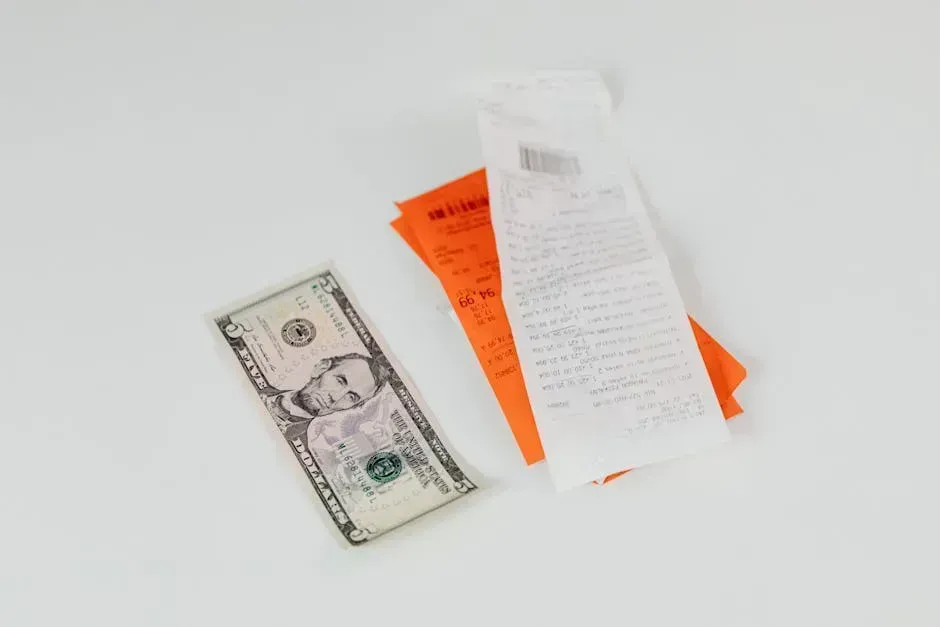
Picture this: a table of four lingers over a two-hour dinner, orders rounds of cocktails, a full spread of appetizers, entrees, and desserts, then leaves a crisp five-dollar bill on the table before walking out. To the diners, maybe it felt generous in a vague, tangible way. To the server clearing those plates, it registered as something closer to an insult.
The “Flat Five” has become something of an unspoken category in restaurant culture. It refers to the habit of leaving a fixed dollar amount, almost always five dollars, regardless of the size of the check, the complexity of the meal, or the time spent at the table. While it might look like a tip on the surface, to anyone who works in a full-service restaurant, it carries a very different message. Understanding why requires a closer look at how restaurant wages actually work, what servers do with the money, and what that flat bill reveals about a diner’s assumptions.
The Baseline: What a Reasonable Tip Actually Looks Like in 2026

In a full-service restaurant, it’s customary to tip at least 20% of your tab. That number has held steady as an industry standard for years, with some flexibility on either side depending on the experience. Full-service dining tips range from 20 to 25% for excellent service, 20% for good service, and 15% for satisfactory service. Those percentages exist for a reason, and they aren’t arbitrary.
The math is straightforward. On a $60 bill for two people, a 20% tip is $12. A flat five falls so far below that threshold it barely registers as a rounding error. For waitstaff at sit-down restaurants, the tip should be at least 18% of the pretax bill. When someone leaves $5 on a $60 tab, they’re tipping at roughly 8%, which falls well below any reasonable definition of adequate service compensation.
Servers Are Not Paid a Living Wage Without Tips

One of the most persistent misconceptions among diners is that tips are a bonus on top of a full hourly wage. The opposite is closer to the truth for most servers in the United States. Federal law still lets employers pay tipped workers as little as $2.13 an hour, and in 2025, that’s nowhere near enough to cover the basics. This federal tipped minimum wage has remained frozen for decades.
While the national minimum wage for tipped workers is $2.13 per hour, restaurants are legally required to ensure servers earn at least $7.25 per hour, and if a server’s tips don’t bring their average hourly wage to this amount during a pay period, the restaurant must compensate for the difference. In practice, that safety net rarely becomes relevant when tips are flowing. When they aren’t, it can leave a server scrambling. Tips make up roughly 58.5% of a waiter’s and 54% of a bartender’s share of hourly earnings.
Your $5 Doesn’t Just Go to One Person

Another layer most diners never consider: the tip they leave usually doesn’t stay with the person who served them. The National Restaurant Association’s 2024 State of the Restaurant Industry Report found that 73% of full-service restaurants use some form of tip pooling or tip sharing. That five-dollar bill isn’t landing in a single pocket. It’s being divided.
When you leave a $43.20 tip at 20% on a $216 check, five different staff members may have touched your table that evening: bartender, server, busser, food runner, and host, and the tip flows through all of them. Now shrink that $43 down to $5 and run the same math. A typical tip pooling agreement might have servers keep 60% of the tips, give 25% to a hostess pool, and 15% to a busser pool. A $5 flat tip, split that way, becomes a negligible sliver of income spread across an entire team.
The Signal a Flat Tip Sends to Staff
Restaurant workers are perceptive professionals. They track patterns, they notice table behavior, and they read tips in context. A flat five-dollar amount on a $30 check at a casual diner reads differently than the same $5 on an $85 tab at a mid-range restaurant. The second one signals something specific: the diner either doesn’t understand how tipping works, or doesn’t care. For many people, tipping is simply a reflex, but tipping is neither as obvious nor as uniform as most people assume.
Research has highlighted that the tipping literature has often overlooked the server’s perspective in identifying variables that influence a tip amount and where servers concentrate their efforts during the service encounter. What servers know from experience is that a flat dollar tip, regardless of check size, removes all proportionality from the exchange. It communicates that the diner placed a fixed ceiling on what the service was worth, no matter how much they ordered, how long they stayed, or how attentive the experience was.
The Numbers Get Worse on Larger Checks
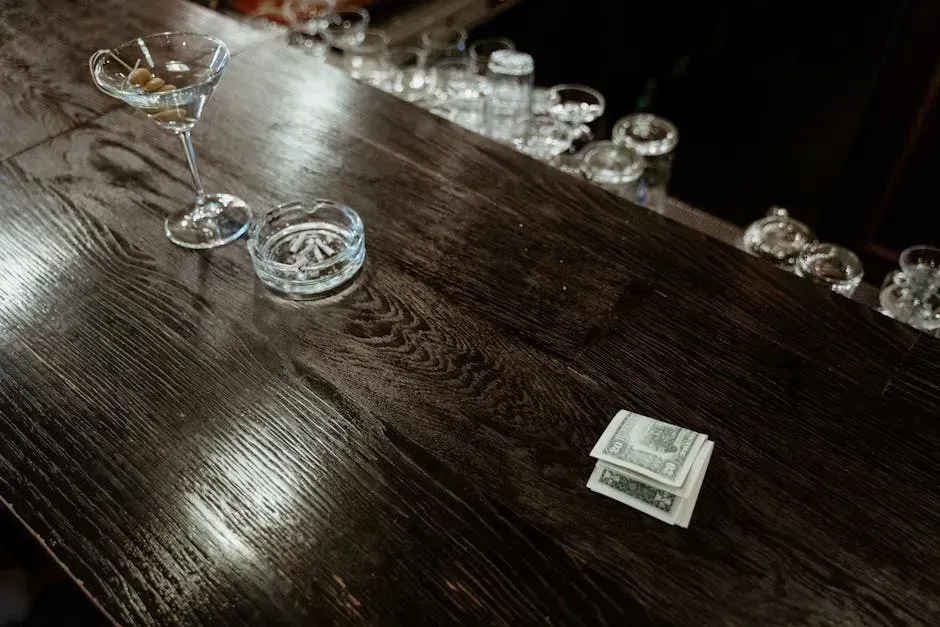
The problem with the Flat Five scales dramatically with the bill. On a $25 lunch, $5 is still low at 20%, but it’s in the defensible zone. On a $100 dinner, it represents 5%. On a $150 tab for a group, it’s barely above 3%. Tips are a critical component of income for restaurant workers, with one analysis showing that tips comprised 23% of total restaurant wages in 2024, and even small fluctuations in the average tip percentage can have a significant impact on a worker’s ability to pay bills and plan for the future.
Fine dining amplifies the gap even further. Fine dining restaurants typically offer the highest earning potential due to higher check averages and more generous tipping expectations, with tips ranging from $180 to $400 per shift. Leaving $5 on a high-end dinner check doesn’t just fall short of expectation. It actively communicates indifference to a worker who may have spent hours managing a complex table with specialized knowledge of the menu, wine pairings, and multiple courses.
Tip Fatigue Is Real, But It Doesn’t Justify a Flat Rate
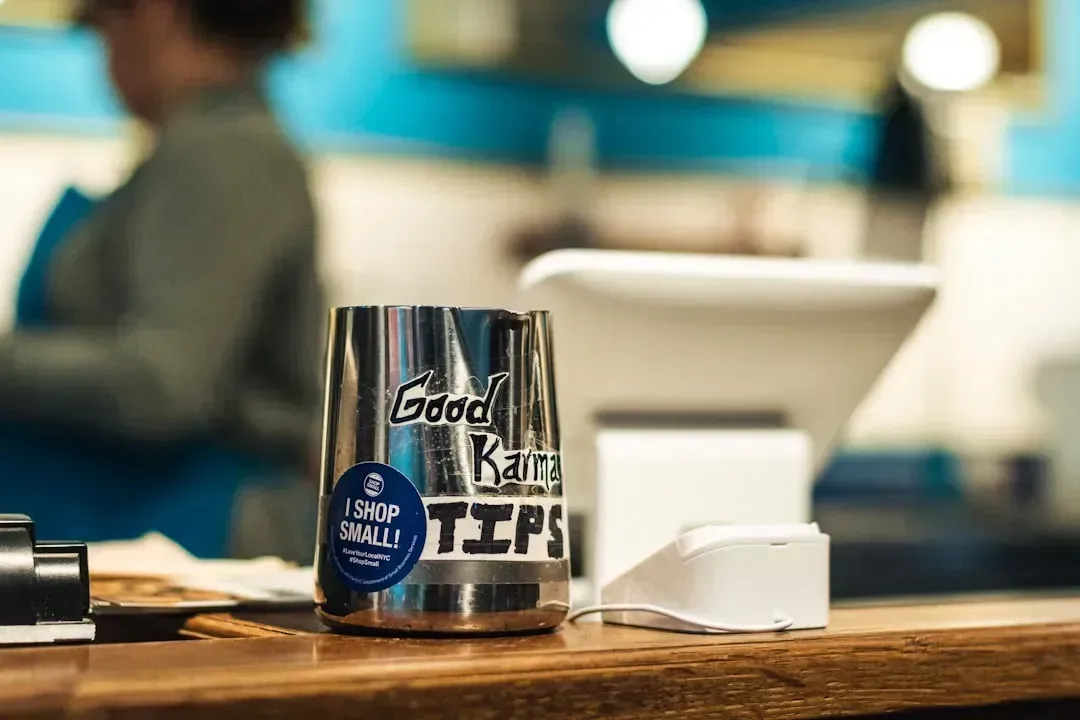
It would be dishonest to ignore the legitimate frustrations driving some tipping behavior. This phenomenon is termed “tip fatigue,” where individuals might feel pressured to tip more than they’re comfortable with. Tablet screens prompting 30% at a coffee counter, tips requested at self-checkout kiosks, automatic service charges added to already-expensive meals, these are real and increasingly common irritants. A whopping 90% of Americans think the existing tipping culture in the U.S. has become excessive.
Still, there’s an important distinction between tipping fatigue, which is a reasonable response to a sprawling tip-prompt ecosystem, and leaving a flat $5 on a full-service restaurant table. The frustration belongs to a different conversation than the one happening when a server clears your two-hour table. One 2025 report found that 54% of restaurant and hospitality workers plan to leave their jobs within the next year, citing competitive pay as a top challenge. Generalizing tip fatigue to a one-size-fits-all flat amount contributes directly to that instability.
What It Reveals About the Diner’s Mental Model
The Flat Five is rarely malicious. More often it reflects a mental model that treats a tip like a vending machine transaction, a fixed token of acknowledgment rather than a proportionate exchange. Some diners genuinely believe that $5 is “a nice gesture.” Others think of it as rounding up. Very few are doing the math against a percentage, and that disconnect is exactly the problem. About 11% of U.S. adults say they are confused about who and how much to tip.
The Flat Five also tends to appear more frequently when diners feel the bill is already high. There’s an instinct to resist tipping more on an expensive meal, as though the restaurant itself is already getting enough. Tipping is not just an act of financial generosity, it’s a critical component of the economic model that sustains many restaurants and their employees, and many service staff rely on tips as a significant portion of their income, with wages often structured with the expectation of supplementary tipping. The price on the menu going up doesn’t change that underlying structure at all.
The Broader Wage Context Servers Are Living In

Restaurant wages have shifted meaningfully over the past several years, but not uniformly. As of September 2024, median pay for full-service restaurant workers was $23.88 an hour including tips and base wages, up from $18.61 an hour in January 2020, a 28% increase. That sounds encouraging until you factor in inflation and rising costs of living across most major cities.
As of September 2024, base wages made up 43% of restaurant worker pay, up from 35% in January 2020. The remaining income still depends on customers tipping proportionately. In cities like Washington D.C., tips accounted for 81% of total wages, making every low tip a direct hit to a worker’s monthly income. Reliance on tips results in unpredictable income streams dependent on customer generosity, seasonality, and biases, and this can lead to significant financial instability for service workers, making it difficult to plan for the future or meet basic needs.
The Tipping Trend Line Is Already Moving in the Wrong Direction
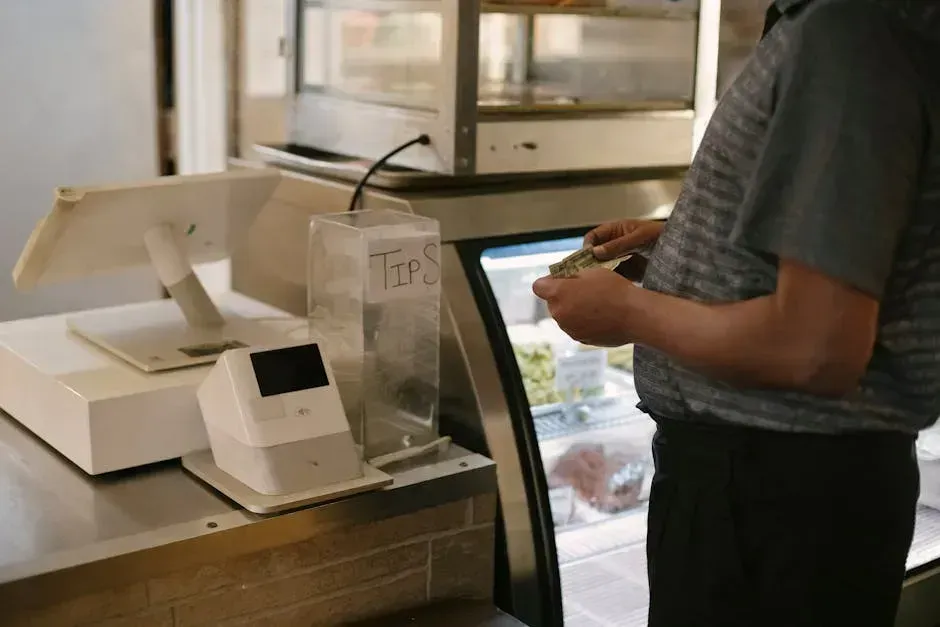
Servers aren’t imagining the squeeze. The data confirms it. The national average tip has declined to 14.9% in Q2 2025, down from 15.5% in 2023, marking the lowest level in recent years. That downward drift affects every worker in the industry, and individual flat tips at the low end of the spectrum pull that average further down.
Recent surveys indicate a decline in the percentage of people who “always tip,” dropping from 77% in 2019 to 65% in 2023. When fewer diners tip consistently and those who do leave flat amounts rather than percentages, the income floor for restaurant workers becomes increasingly unpredictable. The decline in tips, combined with uneven wage growth, creates financial uncertainty for staff. The Flat Five, multiplied across thousands of tables on any given evening, is not a neutral act.
What to Do Instead: Simple Math, Real Impact
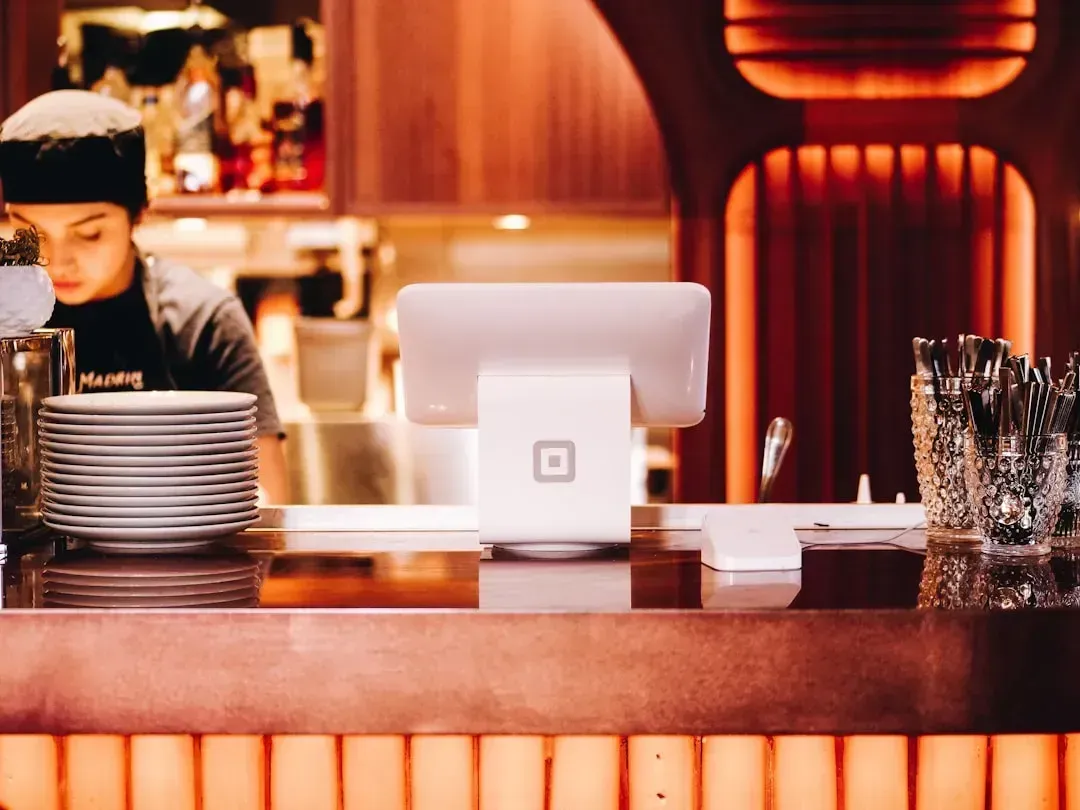
The fix is genuinely simple. Most payment terminals today display suggested percentages automatically, and even a rough mental calculation, doubling the tax or moving the decimal and doubling the result, gets a diner close to an honest 18 to 20% tip. About 55% of consumers with a household income of $75,000 or higher report tipping 20% or more, which suggests that percentage-based tipping is common practice across most income levels.
If budget is the concern, the cleaner solution is to order less, skip an extra round, or choose a different type of restaurant rather than offset the cost by short-changing the person who brought you water, managed your requests, and carried your dishes for the better part of an evening. In many industries, particularly hospitality, tips form a significant part of employees’ earnings. A $5 flat tip doesn’t reduce the server’s workload. It just reduces their compensation for it. That’s the red flag staff recognize the moment they pick it up off the table.




Leave a Reply