
A trend that shows up in the numbers, not the headlines

For nearly twenty years, the story of the American landline was one of steady, almost boring decline. Over the past five years, landline phone use has declined by 40.9 million households, and in the last year alone, 6.5 million have cut the landline cord nationwide. That’s still a lot of people walking away from their home phones every year.
But look closer at the survey data and a different pattern starts to surface. A nationwide survey found that 30% of Gen Z and 28% of Millennials say they miss having a landline at home, while 62% of Gen Z and 54% of Millennials feel nostalgic about landline phones. Even more telling, more than two-thirds of Americans, 68%, believe landline phones are still useful, even if they no longer have one at home. That’s not the sentiment of a technology everyone considers extinct.
Rural cell coverage still hasn’t caught up to the map
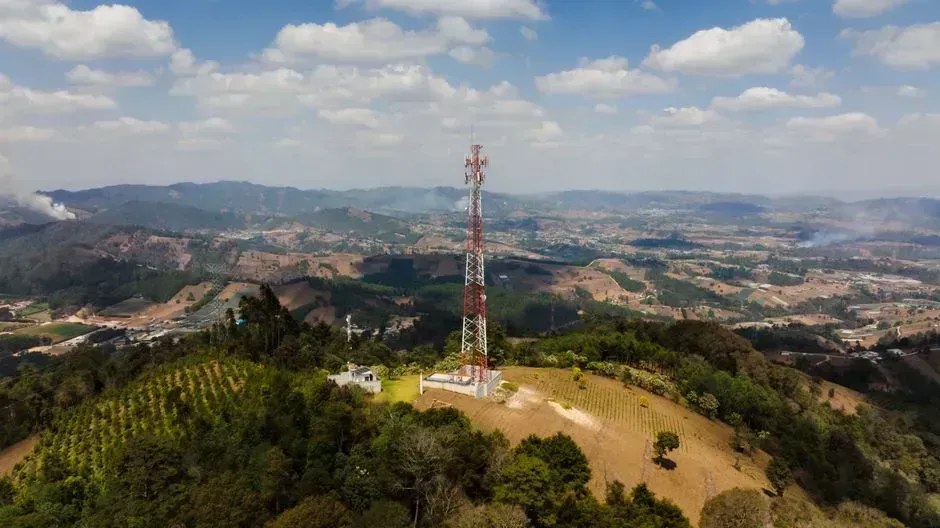
Carriers love to publish coverage maps that look nearly solid across the country. Life on the ground tells a different story. Despite nationwide network upgrades, rural Americans in 2026 still experience far worse cell coverage than urban residents, with sparse tower infrastructure, tough terrain, and distance from cities all contributing to spotty service.
The gap isn’t small either. Rural users encounter dead zones several times more often than urban dwellers, with one analysis suggesting three to seven times more frequently depending on the region, and the state with the most reported dead zones had nearly seven times the complaints of the best-connected state. A local supervisor in Nevada County, California put it plainly when describing her own commute: there are countless places where a cell phone simply doesn’t work, with calls dropping multiple times along certain highways where drivers have to keep moving until they find a signal. Against that backdrop, a wire running straight to the house starts to look less old-fashioned and more like common sense.
The copper shutdown gave the issue a deadline

Much of this renewed attention traces back to a very specific regulatory push. Beginning in June 2026, AT&T is expected to start permanently decommissioning copper infrastructure in approximately 500 wire centers nationwide, roughly 10% of its network footprint, following FCC approval for the first wave of discontinuance projects. That’s not a distant, hypothetical future. It’s already underway.
The broader plan is even bigger. The carrier has plans to retire the large majority of its copper outside of California by the end of 2029. Regulators have made that easier, too, since in March 2026 the FCC took steps to accelerate the transition by removing key regulatory hurdles, eliminating network change disclosures, and streamlining approval for discontinuing copper based services. For rural households who assumed their old phone jack would simply keep working, letters announcing an end date have landed like a small shock.
Why the copper wire itself is the point

What makes a traditional landline different isn’t the handset, it’s the wire underneath it. Copper wires enable legacy landlines to remain operational even when a storm knocks out power. A cell tower needs electricity. A copper line, in most cases, carries its own.
Consumer advocates have leaned hard on this point during regulatory fights. Groups opposed to easing copper retirement said they feared wireless service would be less reliable for rural residents, noting that a wireless signal is a shared medium and only a certain number of devices can connect to a single antenna before congestion begins to degrade service, a limitation particularly critical during emergencies. That’s a technical way of saying what a lot of rural residents already suspected from experience: when everyone reaches for a phone at once during a crisis, cell networks can choke.
911 calls and the fine print of “adequate replacement”
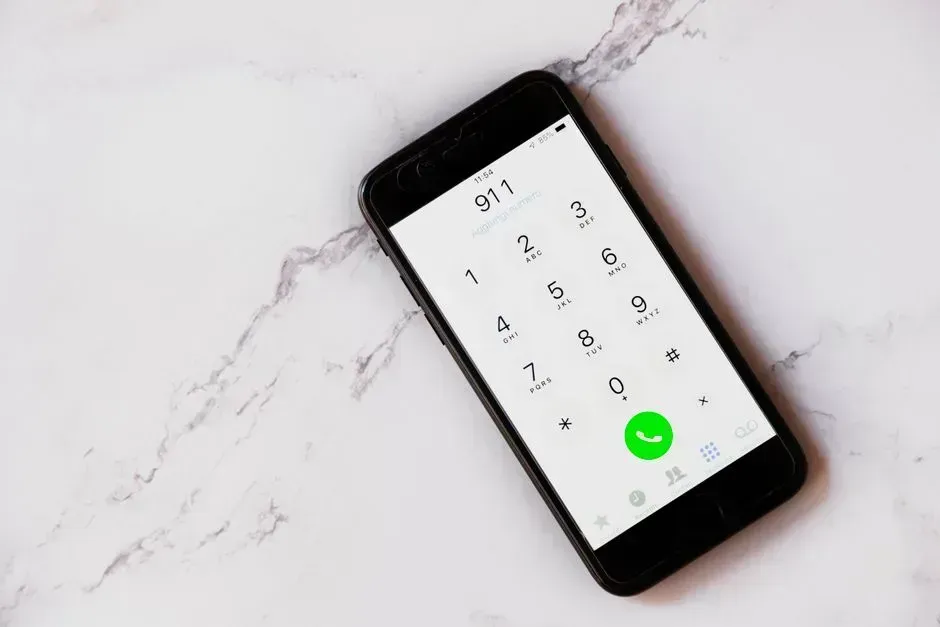
Emergency access sits at the center of nearly every landline debate happening right now. In California’s ongoing fight with AT&T over copper retirement, state regulators pushed back hard on the company’s cellular replacement product. California told the FCC it is not an adequate replacement for copper landline because its indoor coverage is unverified and it may cost more than basic service in rural or low income areas.
A county supervisor and longtime firefighter in Mendocino County framed the stakes in blunt, human terms, describing an elderly resident whose landline is often the only way she has to call 911 for help when a fall happens, in an area where cell coverage is patchy and copper landlines are often the only line that works in an outage. Stories like that are exactly why so many rural counties are resisting a quick switch away from wire.
Seniors are the quiet anchor of the trend

Age remains the single biggest predictor of who still answers a home phone. As of July 2024, half of Americans over 65 still had a landline in their homes, according to data analyzed by Chamber of Commerce. More recent survey work backs that up, finding that 40.7% of Americans aged 65 and older still have a landline phone at home.
The federal government’s own health survey tells a similar story with different numbers. Between 85 and 89 percent of U.S. adults in each age group under 44 relied exclusively on wireless phones in 2024, while 57.9 percent of seniors did. That gap has real consequences for how families think about aging in place, since a landline paired with a medical alert system is often the difference between a quick response and a dangerous delay.
Wildfires, storms, and the case for a backup line

Climate stress has quietly become one of the strongest arguments for keeping a wired phone around. In wildfire-prone counties, officials describe cellular outages as a recurring, predictable failure point rather than a rare exception. As wildfires become larger, faster and more unpredictable, reliable communications can mean the difference between safety and tragedy, and during disasters, cellular networks can become overloaded or lose power when people need them most.
Mendocino County has direct experience with this. When the 2017 Redwood Complex Fire severed AT&T’s backbone fiber between two towns, the after action report found it was carrying nearly all telecommunications north of one town with no backup route, and cell service, 911, cable and broadband failed across much of the county at once. In that same event, the copper line that survived kept working simply because it ran on its own power. Memories like that don’t fade quickly in small towns.
A new kind of “landline” built on cell towers

Not every home reviving its landline is clinging to old copper. A newer category of device is quietly filling the gap, one that looks and works like a landline but runs on cellular infrastructure instead of wires. These wireless home phone bases don’t tie a phone to the internet, working instead off resilient cell towers, with partnerships across nationwide carriers ensuring connectivity across 99% of the US, including rural areas.
The pitch is straightforward: keep the familiar handset and phone number, but swap the fragile parts underneath. One option offers a home phone that runs on cellular towers instead of copper wires or internet connections, letting a parent keep using their existing handset and their existing number. For families with an aging relative in a rural zip code, that combination of familiarity and resilience is often the whole sales pitch.
The unplugging-the-kids angle isn’t a myth

Alongside the infrastructure story, there’s a smaller, more personal one playing out in households with children. Parents worried about screen time have started handing landlines to kids instead of smartphones, a trend that’s picked up enough steam to get national press attention. Looking to steer kids away from screens and social media, more families are going analog.
The appeal is partly the built-in limitations. The landline is very limited by today’s standards, since you have to be home to make or intercept a call, can only move as far as its cord or range allows, and typically doesn’t text, take photos, or load TikTok. In rural households already keeping a home phone for emergency reasons, giving kids access to that same line costs nothing extra and solves two problems at once.
Where the holdouts actually live

The geography of landline loyalty doesn’t always match assumptions. Residents of the Northeast are more likely to keep a landline, with one third of adults in the region saying they have one at home, making it the most landline loyal part of the country. Meanwhile, some of the country’s most rural, lightly populated states have actually been the fastest to cut the cord entirely.
That pattern surprises people who assume weak cell coverage automatically means more landlines. Nearly 80% of homes only use cell phones in Idaho, Oklahoma, Mississippi, Wyoming, and New Mexico, while the states with the lowest percentage of cell only homes are New York, Maryland, Massachusetts, and New Jersey. One theory ties it to old fiber build outs rather than coverage at all, since it’s likely that people who have used Verizon FiOS for a long time have never bothered to drop the landline service. The comeback, in other words, is uneven, driven less by simple geography than by a tangle of infrastructure history, income, and age.
A policy fight that isn’t finished

The tug of war between federal deregulation and state consumer protection is still very much unresolved. Under the current FCC chairman, the commission issued a March 2026 order making it easier for carriers to retire copper networks and asserting that conflicting state rules are subject to federal preemption. California has pushed back forcefully, and the fight has moved into federal court.
The stakes go well beyond one state. A nonprofit public interest group previously warned the FCC directive could impact consumers in rural areas, the elderly, those with disabilities, and anyone who relies on specialized medical equipment that uses phone lines. Illinois has seen similar friction, with consumer advocates believing there are a significant number of people who would continue to benefit from reasonably priced landline phone service, pushing for legislation that would require an additional five years of traditional copper service. How these battles resolve over the next couple of years will likely decide whether the quiet landline revival becomes a lasting fixture of rural life or a brief holdout against an inevitable shift to wireless and fiber.
What this quiet shift actually adds up to






Leave a Reply