
There’s something almost comical about it. You’re sitting at the kitchen table, maybe helping yourself to a second slice of pie, and grandpa clears his throat and says something like “don’t spend what you don’t have” in that slow, deliberate tone, like he’s reading from a very old book. You roll your eyes a little. You scroll through your investing app later that night, and somewhere in the back of your head, you hear his voice again.
Honestly, it turns out the old man was onto something. Financial behavior patterns haven’t changed nearly as much as we like to think, and the data from 2024 to 2026 actually backs grandpa up in some pretty striking ways. Money wisdom was being shared long before banks, stock markets, or credit cards. Proverbs carried across generations distilled financial truth into simple lines people could remember, and these sayings still resonate today because human behavior around money has changed very little, even as the economy has grown more complex. Let’s dive in.
“Don’t Spend What You Don’t Have”

Here’s the thing – this might be the most ignored piece of advice in modern America. It sounds so simple. So obvious. Yet the reality in 2025 and 2026 paints a very different picture.
PNC Bank’s annual Financial Wellness in the Workplace Report found that roughly two thirds of workers say they are living paycheck to paycheck, up from about 63 percent in 2024. That number should stop us in our tracks. We’re talking about full-time employees at established companies, not people on the fringes of the economy.
Living paycheck to paycheck is defined as households spending over 95 percent of their income on necessities like housing, groceries, gas, utilities, internet plans, and childcare – leaving them with little or no leftover funds for savings or discretionary purchases. That’s not a comfortable place to be. Grandpa’s one-liner suddenly sounds less like a cliché and more like a survival guide.
The saying “money doesn’t grow on trees” reminds us that financial resources are finite and must be approached with care. In a consumer-driven culture bombarded by advertisements and flashy sales, it is easy to overspend on impulse. By internalizing such age-old wisdom, individuals can foster a mindset of prudent money management. Grandpa never had a streaming subscription, a daily latte habit, or one-click checkout. He was still right.
“Save a Little Every Day, and One Day You’ll Have a Lot”
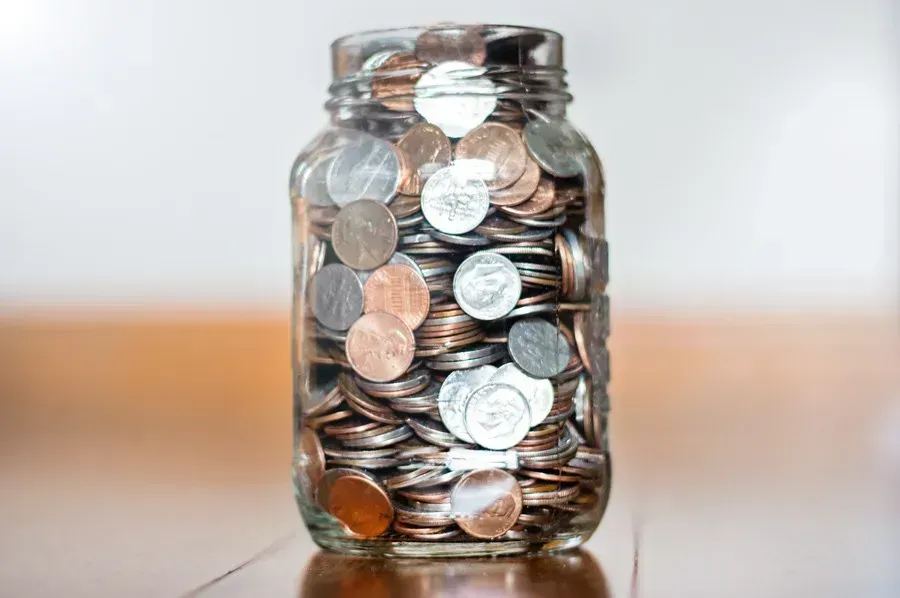
I know it sounds almost laughably simple, but the math behind this one is genuinely surprising. Small consistent savings are the foundation of virtually every wealth-building strategy ever devised. The problem is that most people skip this step entirely.
Americans were saving less than 5 percent of their income in 2024, down from 32 percent in 2020. Think about that swing. During the 2020 pandemic, people were saving at historic rates. Then spending came roaring back, inflation hit, and that financial cushion evaporated. The personal savings rate essentially fell off a cliff.
Small savings accumulate into meaningful amounts. With modern budgets, small recurring expenses like subscriptions can add up quickly, proving the wisdom of this proverb. That last point is worth sitting with. The logic works both ways – small savings compound up, and small unnecessary expenses compound down. Grandpa probably didn’t have three streaming services he forgot about.
Fewer than half of Americans met or exceeded their savings goals for 2024, with this shortfall reflecting financial challenges such as inflation, stagnant wages, and unexpected expenses that force people to dip into their savings. The gap between knowing you should save and actually doing it remains enormous. Grandpa wasn’t just talking. He was doing.
“Always Have Something Put Away for a Rainy Day”

This one hits harder than any of the others when you look at current data. The emergency fund – that basic financial safety net – is something millions of households still don’t have, even in 2025 and 2026.
Two in five Americans don’t have an emergency savings fund. Nearly as many couldn’t cover a $1,000 emergency expense with cash or savings, though 60 percent said they’d had an unexpected expense pop up in the past year. That last stat is the real gut-punch. Life delivers financial surprises with remarkable regularity, and roughly two out of five people have nothing saved to handle them.
Despite the country’s current low unemployment rate, 59 percent of Americans in 2025 don’t have enough savings to cover an unexpected $1,000 emergency expense. A single car repair, a medical co-pay, a broken appliance – any of these could trigger a debt spiral for more than half the country. It’s a fragile way to live.
The timeless lesson of saving for a “rainy day” is especially relevant now, as unforeseen circumstances can arise at any moment. By establishing an emergency fund, one can alleviate stress and safeguard against unexpected financial strain. Grandpa’s rainy day fund wasn’t some old-fashioned quirk. It was a genuine risk management strategy dressed up in folksy language.
“Never Borrow What You Can’t Pay Back”

There’s a reason this saying survived centuries. Debt has a way of growing faster than income, and grandpa knew it long before credit card APRs existed. The relationship between Americans and debt in recent years is, to put it mildly, complicated.
The latest New York Fed data showed that total U.S. consumer debt hit nearly $8 trillion in the third quarter of 2024, a record high. Meanwhile, all 50 states saw their average credit scores decline in 2024. Every single state. That’s not a regional trend or a demographic blip. It’s a national pattern.
Over one third of U.S. adults had more credit card debt than emergency savings in 2024. Millennials and Gen X led the way here, with roughly 46 and 47 percent respectively saying this was the case for them. Think about what that means in practice – millions of people are one missed paycheck away from a cascading debt situation, with no savings buffer underneath them.
Shakespeare’s warning about lending and borrowing reflects a time when careless borrowing was a moral risk. Today, responsible credit use can help build financial stability, but the lesson remains that careless borrowing or lending can lead to loss and damaged relationships. The mechanics of debt have changed dramatically since grandpa’s time. The core danger hasn’t.
“The Earlier You Start, the Better Off You’ll Be”

This is where the numbers get almost unbelievable. The difference between starting to invest at 25 versus 40 is not just a matter of degree – it’s a matter of a completely different financial outcome. Grandpa may have said it casually, but the math is extraordinary.
Consider a woman who starts directing $500 a month to her retirement account at age 30. She earns a hypothetical 6 percent return per year and continually contributes until she turns 67. When she’s ready to retire, she has $763,609 waiting for her. Even though she contributed less each month than someone who started a decade later, she ended up with over $150,000 more. More money, smaller contributions. The only difference is time.
Compounding puts both time and money to work, allowing the earnings on savings to generate their own earnings over the years, which can significantly increase the growth of retirement savings. This potential for boosted growth is especially powerful when you save early, because it provides more time for interest to accumulate. Grandpa called it common sense. Mathematicians call it exponential growth. The result is the same.
These scenarios highlight the undeniable power of compound interest and the importance of starting early. Time is the most crucial factor in wealth accumulation through investing or saving. The longer your money has to compound, the greater the potential returns. Starting early not only maximizes the benefits of compounding but also allows for more flexibility and less stress in achieving long-term financial goals. Every year you wait is a year of compounding you’ll never get back.
“Work Hard, Spend Wisely, and Don’t Try to Keep Up With the Joneses”

Let’s be real – this might be the hardest one to follow in the age of social media. The temptation to match or exceed what our peers appear to own has never been more relentless or more visible. Grandpa lived in a neighborhood. We live on the internet.
For higher-income households that are living paycheck to paycheck, lifestyle creep is likely the main driver. As one economist put it, “you bought a house, you bought a couple of cars, and before you know it, all your money is going out to bills.” This is lifestyle inflation in action, and it affects people at nearly every income level.
Even roughly one in five households earning $150,000 or more say they’re still stuck in the paycheck-to-paycheck cycle. A six-figure income and no savings cushion. It sounds impossible, but spending tends to expand to fill whatever income is available, especially when the social pressure to upgrade is constant. This is what grandpa was warning about.
Despite all the new sources of financial wisdom available today, Americans are still more likely to turn to family and friends for money advice than any other resource, a recent Gallup survey found. So in a strange and rather wonderful way, grandpa’s kitchen table wisdom still sits at the top of the financial advice hierarchy. Not a podcast host. Not an app. Just the person who lived through hard times and paid attention.
It’s hard to say for sure why we resist the simplest financial advice the longest. Maybe because it doesn’t feel exciting enough, or because the modern world sells us the idea that complexity equals sophistication. Yet every single one of grandpa’s one-liners maps directly onto a real, measurable financial problem that millions of people face right now in 2026.
The wisdom was never the problem. Applying it was. What do you think – are you already living by one of these, or is there one you know you’ve been ignoring? Tell us in the comments.





Leave a Reply