
It rarely happens all at once. A parent who used to climb ladders, cook elaborate Sunday dinners, and keep the garden pristine slowly starts trimming back the list of things they do without ever announcing it. Adult children often notice the gaps only in hindsight, piecing together small clues during visits or phone calls that something has shifted.
These changes are not always dramatic, but they tend to follow familiar patterns. Below are six common household habits that many people quietly abandon after 70, and why they tend to catch a family’s attention.
1. Climbing ladders or step stools
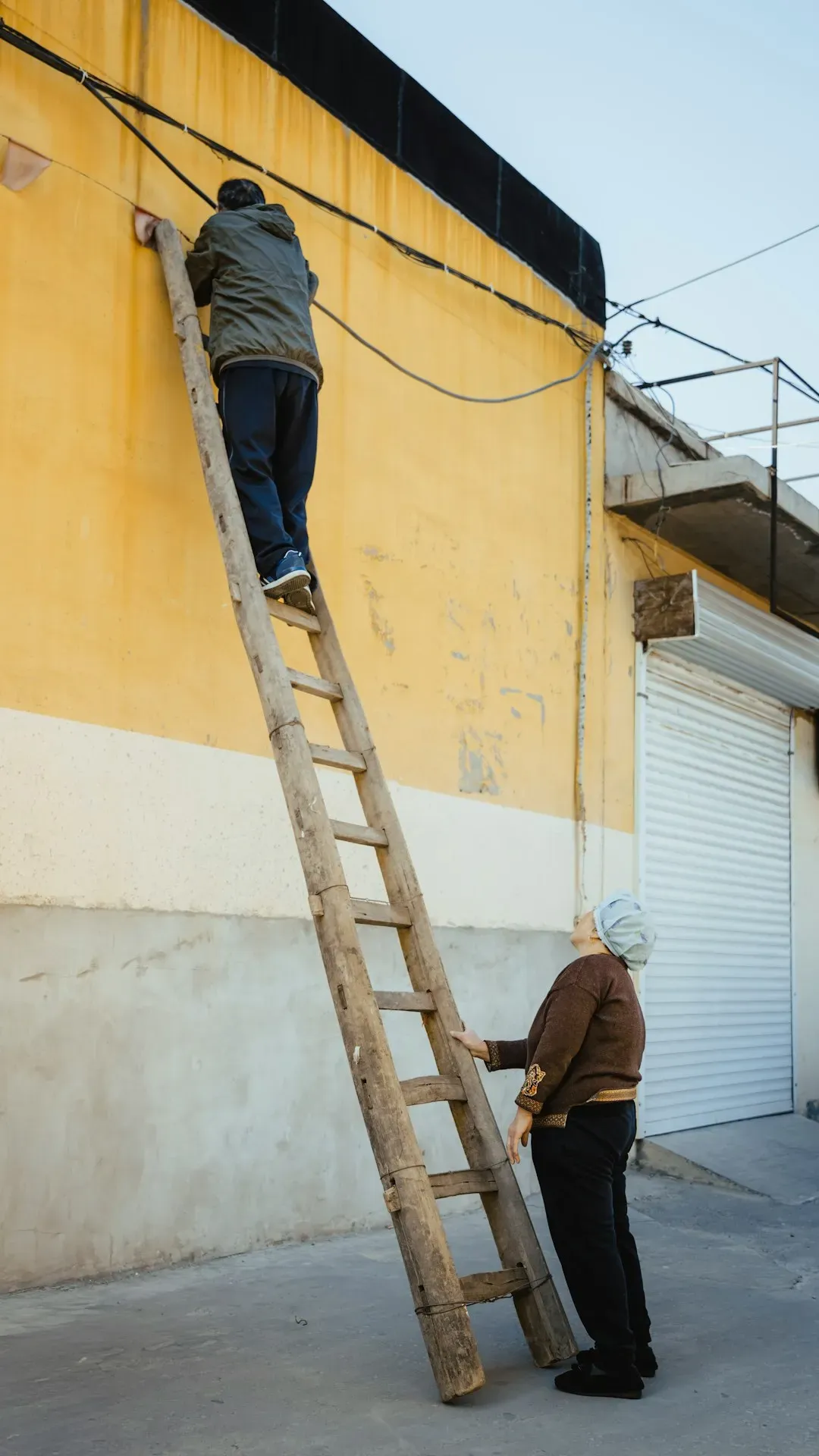
Reaching for high shelves or changing a lightbulb used to be a non-event. After 70, many older adults start avoiding ladders and step stools altogether, even low ones, because balance and depth perception naturally decline with age. Falls remain one of the leading causes of injury among older adults, and even a short fall from a step stool can result in a fracture that takes months to heal.
Kids often notice this shift when they visit and spot a burned-out bulb that has been left unchanged for weeks, or a stack of items left on the counter instead of being put away on a high shelf. It is rarely about laziness. It is a quiet form of self-preservation that signals a parent has recalibrated their own sense of physical risk.
2. Cooking full meals from scratch

Many older adults who once prepared elaborate meals daily begin leaning more on simple, low-effort options like sandwiches, canned soup, or frozen dinners. Standing for long periods while chopping, stirring, and monitoring multiple pots can become physically tiring, and the sensory pleasure of cooking sometimes fades when eating alone rather than for a family.
This shift concerns children because nutrition is closely tied to overall health outcomes in older age. Skipped meals or repetitive, low-variety eating can quietly lead to unintended weight loss or nutrient deficiencies, both of which are associated with increased frailty and hospitalization risk in adults over 70.
3. Driving at night or on highways

Night driving is one of the first things many older adults voluntarily give up, often well before family members raise concerns. Age-related changes to vision, including slower adjustment to glare and reduced contrast sensitivity, make nighttime roads harder to navigate safely. Some parents also start avoiding highways or unfamiliar routes, sticking instead to short, familiar trips during daylight hours.
For adult children, this self-imposed restriction is often the first visible sign of a parent’s changing relationship with independence. It can also be an early indicator that a larger conversation about mobility and transportation alternatives may be needed sooner rather than later.
4. Deep cleaning and heavy housework

Scrubbing bathtubs, vacuuming under furniture, and washing windows require a combination of strength, flexibility, and stamina that can diminish gradually with age. Many people over 70 quietly let these tasks slide, tidying visible surfaces while avoiding the physically demanding parts of housekeeping like moving furniture or kneeling to scrub floors. Arthritis, which affects a significant portion of adults over 65, is often a contributing factor since kneeling, bending, and gripping cleaning tools can become genuinely painful.
Children sometimes notice dust accumulating in corners or a bathroom that no longer gets the thorough clean it once did. Rather than a sign of neglect, this is frequently a practical adaptation, a parent choosing to conserve energy for tasks that matter more to their daily comfort and safety.
5. Climbing stairs regularly

In homes with multiple levels, many older adults begin consolidating their lives to a single floor, using the upstairs bedroom less often or avoiding the basement altogether. Stairs demand balance, joint strength, and confidence, all of which can be affected by conditions like osteoarthritis or general muscle loss that becomes more common with age. Some parents start sleeping in a downstairs room or converting a den into a bedroom without explicitly telling their children why.
This adaptation often flies under the radar until a visiting child notices unused rooms gathering dust or asks why mom or dad has moved their bed downstairs. It is frequently one of the clearest practical signs that a home may no longer fit an aging body, prompting conversations about renovations, stairlifts, or eventually relocating to a single-level residence.
6. Managing finances and paperwork independently

Balancing checkbooks, paying bills on time, and keeping track of financial documents can become quietly overwhelming for some older adults, particularly as cognitive processing speed naturally slows with age. Rather than asking for help outright, many parents let mail pile up, miss payment deadlines, or begin avoiding financial tasks they once handled with ease. Older adults are also frequently targeted by financial scams, and a decline in the ability to manage paperwork can sometimes overlap with increased vulnerability to fraud.
Adult children often discover this shift accidentally, perhaps through a late notice in the mail or a bank statement left unopened for weeks. It is one of the more sensitive changes to address, since finances are tied closely to independence and pride, but it is also one where early involvement can prevent larger problems down the road.
None of these changes happen overnight, and none of them mean a parent is in crisis. They are small, practical adjustments that reflect a body and mind recalibrating to new limits. Paying attention to them early gives families the chance to have supportive conversations before a minor adjustment turns into a safety concern.




Leave a Reply