
In 1983, married women in the United States did far more housework than their husbands. The gap was big enough that researchers described it in whole workdays, not minutes. Four decades of surveys now let us see what moved and what stayed put.
The short version is that couples have shifted toward fairness, though not all the way. The numbers depend on who you ask and how the question is framed. Diary studies, opinion polls and national statistics each tell a slightly different part of the story.
The 1983 Baseline: A Very Lopsided Home

A University of Michigan analysis of national survey data gives a clear starting point. In 1983, married men completed 6.4 hours of housework, along with 40.1 hours of market work. Their wives were doing several times that at home.
The same research shows women’s side of the ledger. Married women’s hours of housework fell from 26.9 to 15.4 between 1983 and 2015, while their paid work hours rose from 19.1 to 28.2. That is a large reshuffling of a typical week.
Men Did More, Women Did Less

The change came from both directions. By 2015, married men were doing 7.8 hours of housework, and their paid work hours stayed about the same at 40.4. So men added chores without cutting back on their jobs.
Women’s drop was much steeper than men’s gain. The total number of hours of housework declined from 1983 to 2015. Part of the story is simply that homes got less labor intensive, and part is that women had less time to give.
What Two Decades of Diary Data Show

More recent work by sociologists Melissa Milkie, Liana Sayer and colleagues covers 2003 to 2023. They found that married women reported 1.6 times as many hours as married men on total housework in 2022 to 2023, down from 1.8 times in 2003 to 2005. The gap is narrower, but still clearly there.
The movement was larger for daily tasks. Women spent 4.2 times the hours men did on core chores in 2003 to 2005, compared with 2.5 times in 2022 to 2023, a drop of about 40 percent. The authors also note that men’s added time, more than two hours, outweighed women’s reduction of around one hour.
The Latest Federal Numbers for 2024

The Bureau of Labor Statistics keeps the American Time Use Survey, which asks people to account for a full day. In 2024, 87 percent of women and 74 percent of men spent some time on household activities on an average day. On days they did them, women averaged 2.7 hours and men 2.3 hours.
An NBC News analysis of the same data found a record for men. Men averaged 100 minutes a day on household activities in 2024, up 20 minutes from 2003. In 2003, women did an hour more than men at home, and in 2024 the difference was 40 minutes.
Which Chores Are Still Gendered

The split by task remains familiar. In 2024, women spent about 53 minutes a day on housework such as cleaning and laundry, compared with 22 minutes for men. Cooking and cleanup showed a similar pattern, with women at 52 minutes and men at 28.
Men lead in a few areas. One compilation of the 2024 federal figures puts men’s lawn and garden care at 16 minutes a day against 8 for women. A Pew analysis summarized by Reader’s Digest likewise found that men more often handle intermittent or outdoor jobs, while women more often own daily chores like cooking, cleaning and laundry.
Paid Work Explains Part of the Story

Work hours have drawn closer, yet they haven’t equalized. On days they worked in 2024, employed men worked 33 minutes more than employed women. That partly reflects women’s greater likelihood of working part time.
Even among people with similar schedules, a gap shows up. Among those usually working 35 hours or more a week, men worked 8.2 hours a day and women 7.9. The difference is small, so it can’t account for all of the housework gap.
Perception Gaps Between Partners

Ask couples who does more, and the answers rarely match. Pew Research Center surveyed working parents in March 2026. According to a summary of that survey, 43 percent said the mother does more, 40 percent said the split is about equal and 17 percent said the father does more.
Mothers see it differently from the group as a whole. The same summary reports that 63 percent of mothers say they do more in their own household. A UK survey by Starling Bank of more than four thousand couples showed a similar mismatch, with 72 percent of women saying they do most tasks, though only 18 percent of men agreed.
Beyond the United States

The pattern isn’t only American. A compilation of UK Office for National Statistics figures says women did 3 hours 32 minutes of unpaid work a day in March 2024, against 2 hours 35 minutes for men. That is a gap of 57 minutes.
The same source says the British gap has narrowed from 1 hour 12 minutes in 2020 to under an hour in 2024. Canada saw an earlier shift as well. Statistics Canada reported in 2006 that the gap between men and women in dividing labor was still there but slowly getting narrower.
Where Things Stand Now
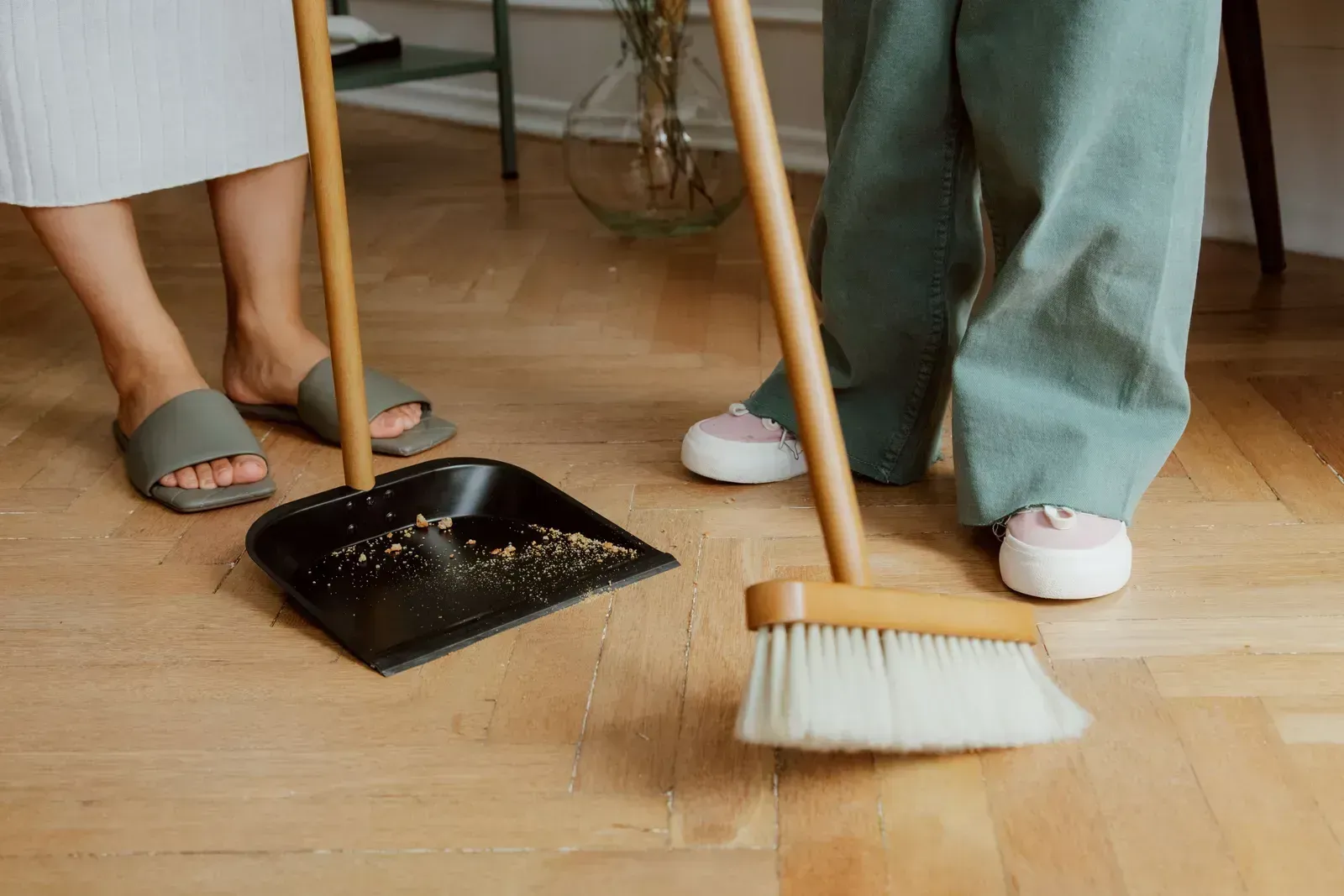
Since the 1980s, the typical couple has moved from a clearly lopsided arrangement toward a closer one. Men now spend record time on household work, and women spend much less than they once did. The remaining gap is about 40 minutes a day in the 2024 American data.
Parents saw a notable change too. Milkie and colleagues found that married mothers did 2.1 times the housework hours of married fathers in 2003 to 2005, a ratio that fell to about 1.7 after the pandemic began. Women still do more of the daily, repeating chores, and partners still disagree about who carries the load.





Leave a Reply