
There’s a particular kind of hesitation that happens at hotel front desks. You’ve just handed over your ID, the agent is typing away, and a small voice in your head wonders whether asking about a better room will make you look pushy. It’s a common worry, and it turns out the answer isn’t as simple as yes or no.
Hotel employees who deal with this exact moment dozens of times a day have fairly consistent views on it. Their answers reveal less about etiquette rules and more about timing, tone, and what’s actually happening behind the counter.
What hotel staff actually think about upgrade requests
Front desk agents don’t consider the request itself impolite. In fact, staff have said for years that a short, polite conversation at check-in can unlock small comforts and conveniences that guests never think to request. The scenario they describe often involves the opposite problem: guests who never ask at all.
One recurring theme from front desk workers is regret on the guest’s behalf, not irritation. Employees have pointed out that a guest walks up, hands over an ID, signs the folio, and disappears into the elevator without asking a single question, never learning that somewhere behind that counter sits a spare room with a better view, a quieter floor, or a fee they didn’t actually have to pay. So the request isn’t the problem. Silence often costs guests more than asking ever would.
Why asking isn’t rude, entitlement is
The distinction hotel staff draw isn’t between asking and not asking. It’s between asking and demanding. A front desk manager quoted in one hospitality piece summed up the actual friction point plainly: we get asked for room upgrades all the time but most people ask like they’re entitled to it.
That framing matters because it shifts the conversation away from whether the question is appropriate and toward how it’s delivered. Staff have also noted that behaviors like making demands (instead of asking) and acting as though your loyalty status or your job title entitles you to endless perks tend to backfire. Bringing up a title or invoking authority rarely helps, and can actually work against you.
Timing matters more than the ask itself
Several travel writers and hospitality experts point to timing as the real variable that determines success, more so than the wording of the request. Advice consistently suggests avoiding rushed moments, since it helps to be as early and specific as possible with requests, and don’t ask in the midst of a check-in rush, timing your arrival to allow for an unrushed conversation.
Later in the day tends to work in a guest’s favor too. Housekeeping has usually finished turning over rooms by then, so staff have a clearer picture of what’s actually available, and timing and framing matter more than most guests realize, the best time to request a room upgrade is mid to late afternoon, when housekeeping has turned over more rooms. Arriving right at the noon rush, when lines are long and everyone’s frazzled, is rarely the moment to bring it up.
The language you use changes everything
How a request is phrased seems to matter almost as much as when it’s made. One hospitality consultant advised against blunt yes-or-no questions, suggesting instead that guests try framing it as a recommendation-based conversation, for example: are there any higher-category rooms with a quieter floor or better view, either complimentary or at a reasonable upgrade, since this invites the front desk to present options instead of shutting the conversation down.
This softer framing gives the agent room to say something other than a flat no. It also avoids putting them in a position where they feel cornered into refusing. A casual, low-key tone tends to land better than an urgent or overly rehearsed one, largely because it doesn’t put pressure on the person behind the counter to perform on command.
Loyalty status still carries weight, but it’s not a golden ticket
Belonging to a hotel’s loyalty program remains one of the more reliable ways to improve your odds, even without elite tier status. Staff have noted that loyalty status can improve your odds too, loyalty program members should always mention their status during check-in, as this can increase upgrade chances.
That said, status doesn’t guarantee anything, and treating it as an entitlement tends to annoy rather than impress. Some programs do offer near-automatic perks at higher tiers. Historically, Hyatt’s Gold Passport has offered diamond members several free upgrades per calendar year, and Starwood Preferred Guest has offered members an upgrade to the best available room at check-in, including suites. Lower tiers or non-members can still benefit simply by being enrolled, since even hotel front desks are trained and frequently incentivized to allocate upgrades to loyalty programme members first, and travelers don’t need elite status or repeat guest history, just enrollment, putting a guest ahead of someone with no account at all.
Special occasions: a legitimate angle, with limits

Mentioning a birthday, anniversary, or proposal is one of the more common tactics guests use, and staff generally respond well to it, as long as it’s genuine. According to travel experts, the biggest hack people share is telling staff about a special occasion being celebrated, but there are rules and limitations to this tactic.
Timing the disclosure matters here too. It helps to mention it ahead of arrival rather than springing it on the desk agent last minute, since it helps to ask ahead of time. The one hard rule that comes up again and again is honesty, since staff advise guests to not lie about special occasions, especially if you plan to book with the hotel again. Hotels do sometimes track this information, and inconsistencies tend to surface on return visits.
Offering to pay changes the entire dynamic
If a complimentary upgrade isn’t available, offering a reasonable fee is generally seen as a fair and welcome alternative rather than a consolation prize. One guide notes that guests should consider offering to pay a reasonable fee for a better room, demonstrating willingness to compromise and understanding of the hotel’s policies.
This approach tends to be well received because it removes the ambiguity of a favor and replaces it with a straightforward transaction. It also signals respect for the hotel’s pricing structure rather than an expectation of something for nothing. Framing the offer modestly, rather than naming a low figure and haggling, generally keeps the interaction pleasant on both sides.
What not to do at the front desk
The behaviors that actually irritate hotel staff tend to involve manipulation rather than a plain request. Some employees have described guests who fabricate complaints purely to extract a perk, with one hotel blogger recalling guests who say things like your bedsheet has a stain, this is not acceptable in a hotel of this class, you can make up for it by upgrading me to one of your suites.
Tipping for an upgrade is another gray area worth approaching carefully. Guests on hospitality forums have pointed out that tips might get you a little further, maybe a little better located room, a slightly better view or a category or two, though in some regions or properties this practice can even create disciplinary issues for staff, since in some places around the world taking tips for providing extra services could be a sackable offence. A small, discreet gesture is one thing. Treating it like a bribe is another entirely, and staff can usually tell the difference.
Asking before arrival is often more effective than asking at the desk
For guests who want to minimize any awkwardness at check-in, reaching out beforehand tends to work just as well, sometimes better. One luxury travel guide points out that contacting the hotel’s guest relations team 48 to 72 hours before check-in is the single most effective upgrade timing, since this is when the hotel is finalizing room allocations and availability is clearest.
This approach also removes the desk agent from any pressure of an in-person ask, giving them more flexibility to say yes on their own terms. A brief note through the booking platform can accomplish something similar. As one travel resource explains, guests can use the special requests field since every time you book a hotel online, you have the option of making special requests for your stay, and filling in this information can increase your chances of getting an upgrade, writing something specific such as room with a good view or room with bigger space.
What happens behind the desk when you ask
Every request a guest makes gets weighed against a set of quiet, fast calculations most travelers never see. Staff are essentially running the math on booking channel, guest history, timing, and tone all at once, since your booking method, your relationship with the hotel, your timing, and your manner of asking all factor into a calculation that front desk staff make dozens of times every day, and getting good at upgrades is less about luck and more about understanding this calculation.
Inventory plays a role too, often more than guests assume. A hotel concierge described the mechanics simply: hotel room upgrades happen when you arrive at the right time, ask politely with a clear preference, have loyalty status, and make it easy for staff to say yes, and this all boils down to inventory and relationship. If there’s nothing to give, no amount of charm changes that. If there is, a polite, well-timed ask is often all it takes to unlock it.
Final thoughts
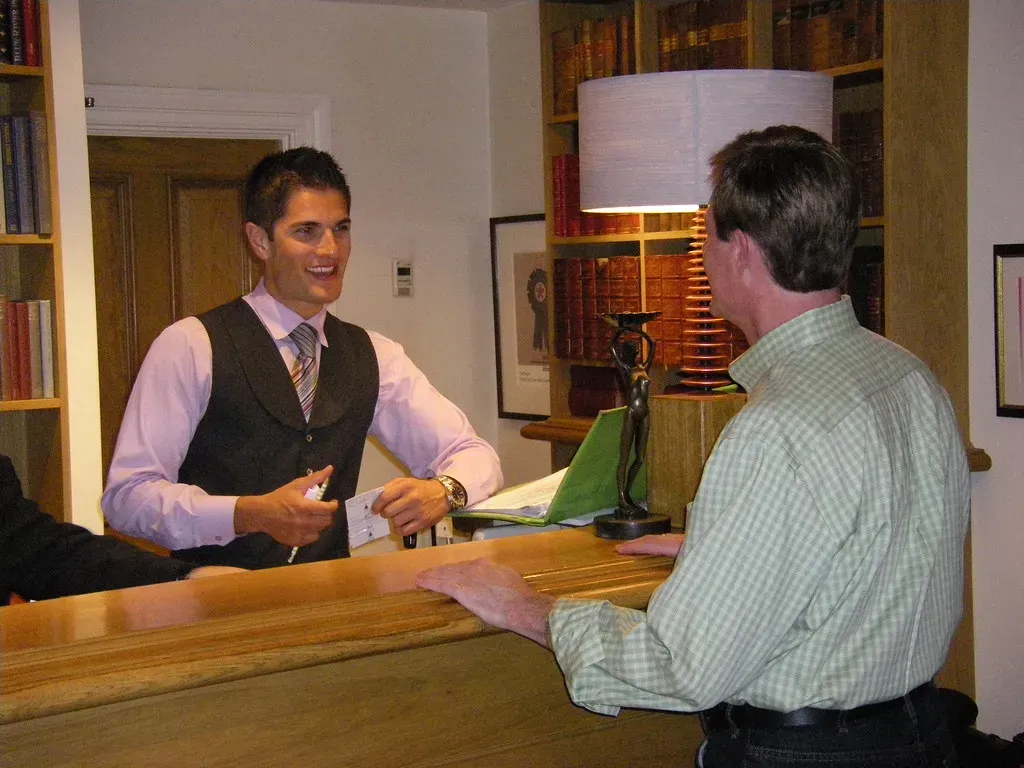
Asking for a room upgrade at check-in isn’t rude on its own. What tips the scale toward awkward or unwelcome is entitlement, poor timing, or pressure tactics rather than the simple act of asking. Hotel staff seem to genuinely prefer a polite, low-stakes question over silence, if only because the alternative means a better room sits empty while a guest never finds out it was available.
The guests who tend to come out ahead aren’t the boldest or the most persistent. They’re the ones who read the room, literally and figuratively, and treat the front desk as a conversation rather than a negotiation to win.



Leave a Reply