
Mexico

Mexico remains the single largest destination for Americans leaving the United States, and it is not close. Depending on the source, estimates place the American population there somewhere between roughly 1.2 million US citizens, according to the 2023 Association of Americans Resident Overseas and figures cited by other trackers closer to 1.6 million, with the 2020 US census recording approximately 797,000 US-born residents as a baseline before recent growth.
The appeal is straightforward rather than exotic. Location, cost of living, and lifestyle make Mexico an appealing destination for Americans moving abroad, and the proximity means people can visit family back home without a transatlantic flight. Cities like Mexico City, Playa del Carmen, and San Miguel de Allende have built entire expat ecosystems around this steady inflow.
Portugal

Portugal has become the poster child for the “fastest growing” part of this trend. Official figures from the country’s immigration agency show Portugal’s AIMA recorded 19,258 US citizens living in the country at the end of 2024, up from 14,129 in 2023, a 36.3% increase. Some more recent estimates go even further, with one analysis noting that Portugal recorded the fastest growth, with American relocations nearly tripling since 2024.
Much of this is driven by accessible visa routes rather than sheer luck. Around 4,800 US residents obtained Portuguese residence permits in 2024 alone, largely through the D7 passive-income visa and its D8 remote-work counterpart. Lisbon and the Algarve get the headlines, but smaller cities like Porto and Coimbra have quietly absorbed a growing share of new arrivals too.
Spain

Spain has pulled ahead of most of its European neighbors in raw permit numbers. According to Eurostat figures cited by immigration analysts, Spain absorbed the largest US permit cohort in the EU, and separate visa-application data shows American applications tripled since 2024 for the country’s digital nomad program.
Part of the draw is simply how well Spain has positioned itself for remote workers specifically. Spain ranked #1 for digital nomads in 2025 with a score of 89.12, leading 64 countries evaluated by Global Citizen Solutions. That combination of lifestyle, weather, and a functioning visa pathway has made cities like Valencia, Málaga, and Barcelona reliable landing spots for Americans working remotely.
Canada

Canada sits at the top of most survey-based wish lists, even if actual permanent moves take longer to arrange. A recent moveBuddha study found that Canada ranked as the number one country Americans hope to move to in 2026, with 24.4 percent of survey respondents choosing the neighbor to the north as their top relocation pick.
The reasoning is less about adventure and more about ease. Shared language and cultural overlap remove a lot of friction, and Americans do need a visa to move to Canada permanently, with the main pathway being Express Entry, a points-based system for skilled workers, with processing times of six months or less, where US applicants often perform well due to English proficiency, education, and work experience. Toronto, Vancouver, and increasingly Halifax have become common destinations for American professionals making the switch.
Costa Rica

Costa Rica has been a fixture on these lists for decades, and it has not lost its footing. Costa Rica has been the American expat standard-bearer for decades, and for good reason, largely thanks to a healthcare system that outperforms expectations for a country its size.
The country’s Digital Nomad Visa remains one of the more accessible options on paper. The Digital Nomad Visa requires only about $900 to $1,000 per month in documented income, one of the lowest thresholds anywhere, though 2025-2026 brought a tightening as the government now favors applicants working in IT or with visible foreign employers, and approvals have become less predictable. Even with that shift, the country’s reputation for stability and environmental policy keeps it near the top of most Americans’ lists.
Italy

Italy has long attracted Americans through ancestry, food, and a slower pace of life, and it still ranks consistently high in interest surveys. One widely cited study found that Portugal ranked first in both stated interest and algorithmic recommendation, followed by Spain, the United Kingdom, Canada, Italy and Ireland among Americans seeking relocation guidance.
What makes Italy notable right now is a policy shift working against the trend rather than with it. Italy’s ancestry citizenship route, historically the most-used by Americans, was restricted by Law 74/2025 to children and grandchildren of Italian citizens, a change that has forced many prospective movers to pivot toward standard visa categories instead of citizenship by descent.
Ireland

Ireland benefits from the same English-language advantage that makes Canada and the UK appealing, plus a cultural connection that many Americans already feel through heritage. It appears repeatedly near the top of both interest surveys and actual relocation trackers, sitting among Portugal ranked first in both stated interest and algorithmic recommendation, followed by Spain, the United Kingdom, Canada, Italy and Ireland in one major assessment.
A separate moveBuddha ranking placed Ireland among the top five countries Americans hope to relocate to in 2026, trailing only Canada, England, and Japan. Dublin’s tech sector, home to major US employers, gives the move a practical career angle beyond simple lifestyle appeal.
United Kingdom

The UK continues to draw a steady stream of Americans, helped enormously by the absence of a language barrier. Census-based estimates put the American population there at roughly 203,000 US-born residents, making it one of the largest expat communities outside North America and Mexico.
Interest has not slowed either. In the same moveBuddha survey referenced earlier, England was the runner-up, selected by 12.2 percent of those surveyed, trailing only Canada. London remains the obvious hub, though cities like Edinburgh and Bristol have picked up more attention from Americans looking for lower costs without losing the language advantage.
Germany

Germany’s American population has grown quietly but substantially, driven partly by simplified remote-work rules. Census figures estimate roughly 118,000 US-born residents already living there, a number that has continued to climb as more employers embrace distributed teams.
Policy changes have made the move easier than it used to be. Recent tracking of digital nomad programs noted that Germany simplified the application process in 2025, removing some of the bureaucratic friction that previously discouraged remote workers from settling there long term. Berlin and Munich remain the primary landing spots for Americans in tech and finance.
Colombia
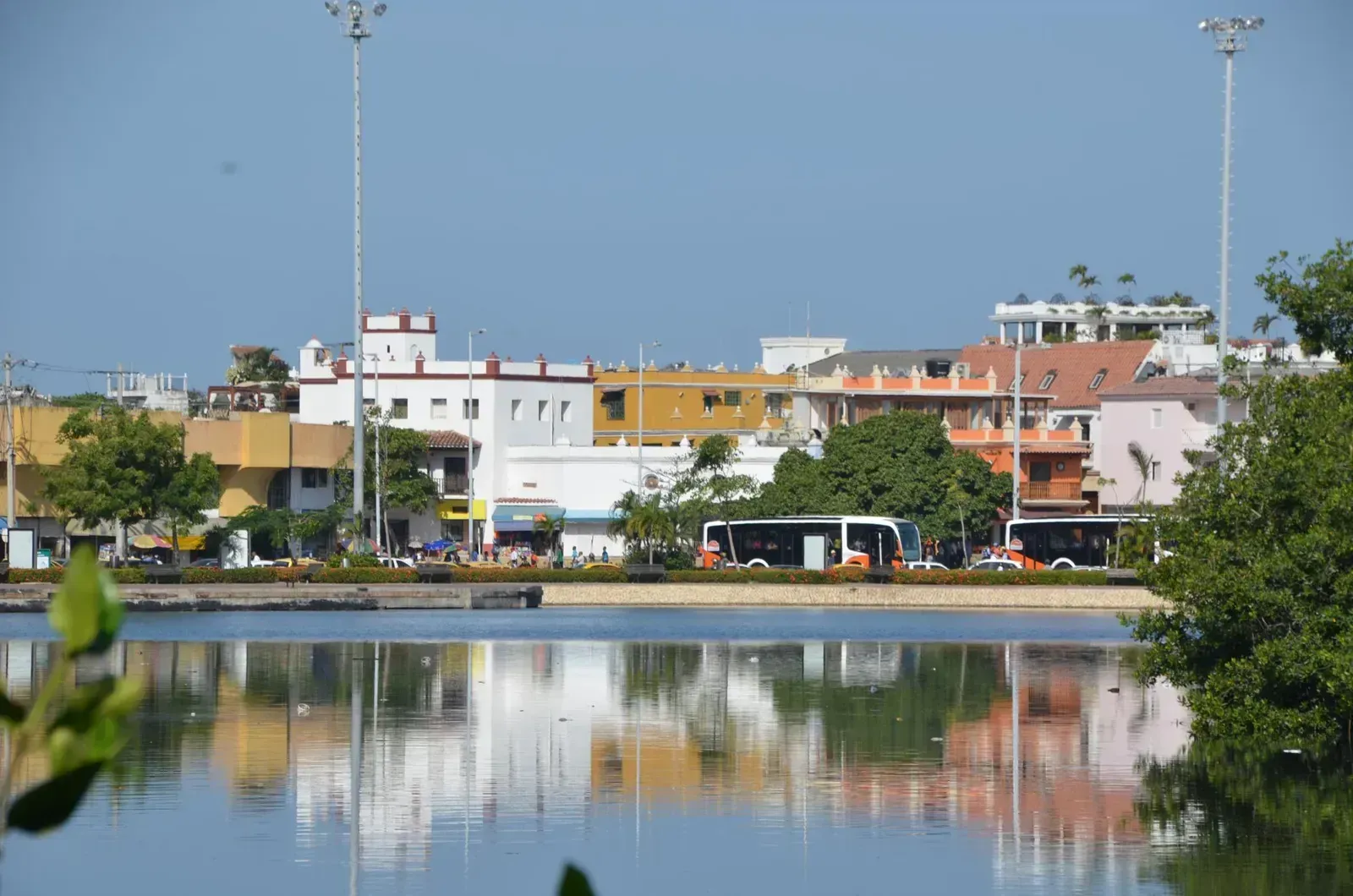
Colombia has moved from a niche backpacker destination to a genuine relocation option, particularly for younger remote workers. Its digital nomad visa is one of the more generous programs available, offering a 2-year visa, low income requirement ($900/month), which puts it well below the thresholds required in most of Europe.
Affordability plays a big role in the country’s appeal beyond the visa itself. Real estate remains a fraction of US prices even in the most popular expat neighborhoods, and Colombian real estate in expat-popular neighborhoods like El Poblado and Laureles has appreciated significantly, but remains a fraction of US prices, with a modern two-bedroom apartment in Medellin’s best neighborhoods running $120,000 to $180,000. Medellín in particular has developed a genuine, self-sustaining American community over the past several years.
Panama

Panama has quietly become one of the most attractive retirement destinations for Americans, largely on the strength of one program. The Pensionado visa offers permanent residency for retirees with a guaranteed lifetime pension from a foreign government, international organization, or legally operating private company, requiring a minimum pension of USD 1,000 per month, and includes retiree benefits such as healthcare, transport, entertainment discounts, and territorial tax advantages.
The numbers, while modest compared to Mexico or Portugal, show consistent uptake. The visa reportedly has a 97% approval rate, and almost 2,000 were granted in 2024. Panama also does not tax foreign-sourced income, which for American retirees living on Social Security or a pension removes a major financial headache that other destinations do not address as cleanly.
Thailand

Thailand represents the clearest Southeast Asian entry on this list, and its visa infrastructure has kept pace with demand. The country’s Long-Term Resident program now offers a five-year, multiple-entry visa allowing 180-day stays with extensions, making it the most flexible long-term option for digital nomads in Southeast Asia.
There is a tax wrinkle worth knowing about before making the move. Thailand’s 2024 remittance rule change means income remitted to Thailand in the same year it’s earned may be subject to Thai tax, though a proposed grace period for 2025-2026 is under consideration. Even with that complication, low living costs in Chiang Mai and Bangkok keep drawing a steady flow of remote workers and retirees from the US.
The overall picture that emerges from these twelve countries is less about escape and more about calculation. People are weighing healthcare costs, tax exposure, visa accessibility, and daily affordability against what they currently have, and increasingly the math points somewhere other than home. Whether this continues to accelerate or eventually plateaus will likely depend on how fee structures, tax rules, and visa policies in these destination countries evolve over the next few years.
Leave a Reply