
Most closets don’t overflow because of one big shopping spree. They fill up slowly, one sweater, one pair of school shoes, one “just in case” jacket at a time. The one-in, one-out rule works on that slow creep. When something new comes into the home, something similar leaves.
The five sections below describe five common family situations and how the rule can be adapted to each. They’re practical scenarios, not case studies of named households. The research behind the idea is real, though, and it explains why a simple habit can work better than an occasional big purge.
Why a Simple Swap Rule Works
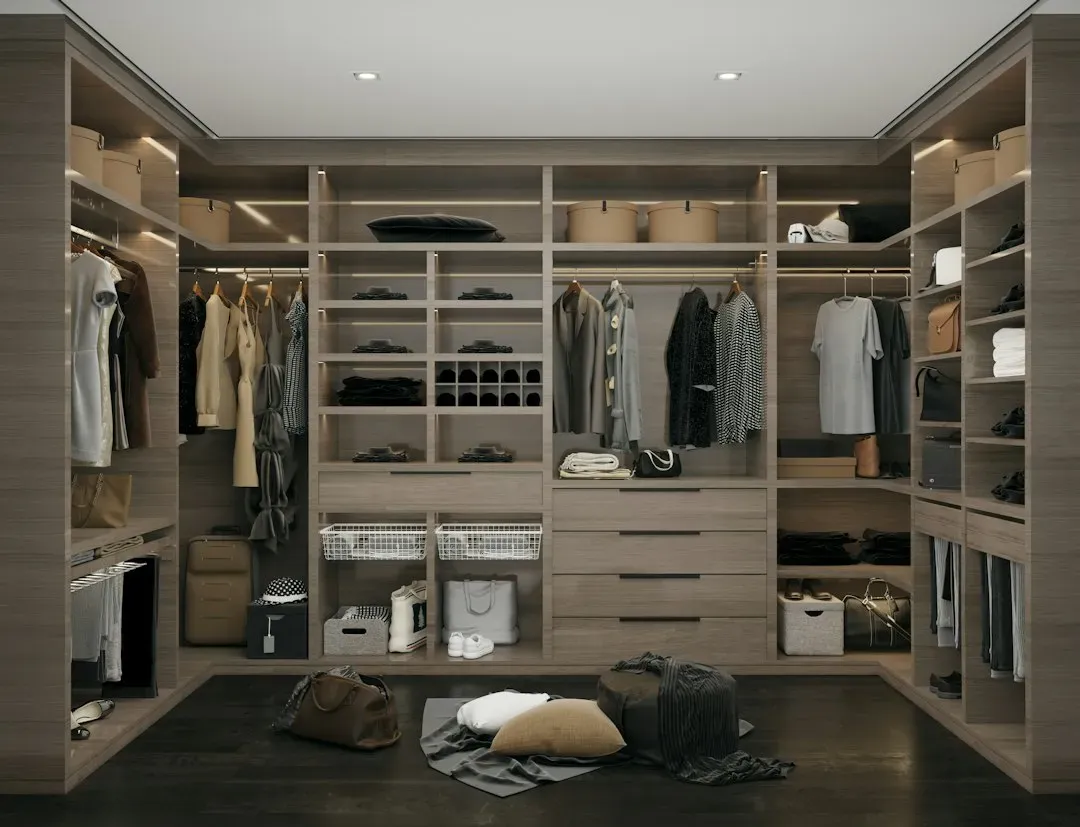
The rule is a cap on volume without a strict number. Your closet stays roughly the same size because every arrival is matched by a departure. That keeps the decision small and immediate, which is why it’s easier to stick to than a yearly overhaul.
Clutter also has a documented effect on people at home. A UCLA study of 32 Los Angeles families, published as the book Life at Home in the Twenty-First Century, found that household stuff was a major source of stress. Related research by Darby Saxbe and Rena Repetti found that mothers who described their homes as cluttered had flatter daily cortisol patterns, which is associated with poorer stress recovery. Those studies are small and observational, so they don’t prove that decluttering fixes stress. Still, they support the idea that a calmer home is worth the effort.
Family One: The Household With Fast-Growing Kids
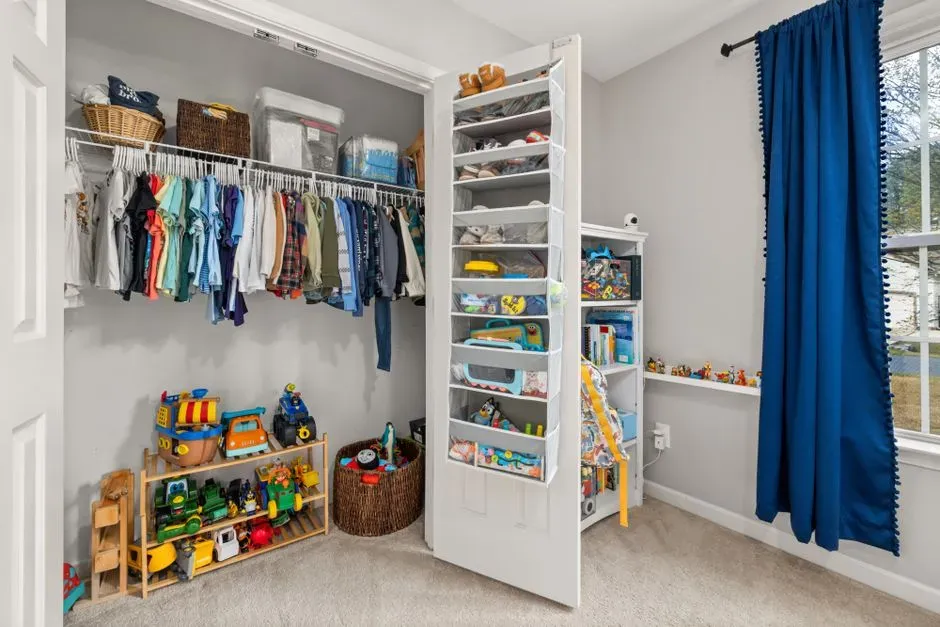
Children outgrow clothes quickly, so this household’s closet fills from both ends. The rule works best here with a staging bin. When a new size comes in, the outgrown size goes into a labeled bin right away. Nothing sits in the drawer “for later.”
From that bin, items go to a younger sibling, a friend, or a donation or resale pile. Setting a short deadline, such as the end of the month, keeps the bin from becoming its own overflow. The pairing also gives kids a visible lesson that new things replace old ones.
Family Two: The Couple Sharing One Small Closet

In a shared closet, the rule needs to be fair. Each person follows it for their own half, and nobody decides what the other lets go. That removes most of the friction before it starts.
Swapping by category helps. A new coat replaces an old coat, and new shoes replace worn-out shoes. This avoids the trap of trading one cheap shirt for one expensive jacket and still running out of hanging space.
Family Three: The Teens Who Shop and Never Sort

Teenagers tend to buy trends and forget what’s already in the drawer. For them, the rule works better as a habit than as a command. A reasonable approach is to ask them to bring out the item they’re replacing before the new one comes home.
Resale gives them a reason to join in. Many teens like selling or swapping clothes, and the money can go toward the next purchase. Parents don’t need to inspect the closet. They just need to hold the rule as a house standard that applies to adults too.
Family Four: The Hand-Me-Down Household

Gifts and hand-me-downs arrive without anyone choosing them. That makes this family’s closet the hardest to control, because incoming items aren’t purchases. The rule still applies. A bag of free clothes counts as “in,” so something must go “out.”
The key step is sorting at the door. Before a bag goes into a closet, the family keeps what fits, suits the season, and will actually be worn. The rest goes straight to donation, so the free stuff doesn’t quietly take over shelf space.
Family Five: The Family With Seasonal Storage

Families in climates with strong seasons often keep off-season clothes in bins, which hides the overflow. The rule can extend to storage. When winter coats come out, the family checks them against what’s already stored and removes anything outgrown, worn, or unused last year.
This twice-a-year check pairs naturally with the swap rule. It also stops bins from multiplying in the attic or under beds. If a bin hasn’t been opened in a full year, that’s usually a good sign its contents can go.
Conclusion: Keep the Rule Light

Across all five situations, a few things stay the same. Match like with like, act at the moment something comes in, and give the outgoing item a clear destination. Perfection isn’t the goal. A closet that stays roughly the same size over time is a success.
Start with one closet and one month, then adjust. A rule that’s easy to follow will outlast a dramatic cleanout every time.

Leave a Reply