
In many Bolognese kitchens, the day’s most important tool is a long wooden board, worn pale by decades of flour and elbows. The pasta that comes off it follows a method most families have never needed to write down.
The women who make it are called sfogline, from the word sfoglia, meaning a thin sheet of dough. Their technique is simple on paper and hard to copy, which is why it has stayed in family kitchens for generations.
The Sfoglina and Her Role
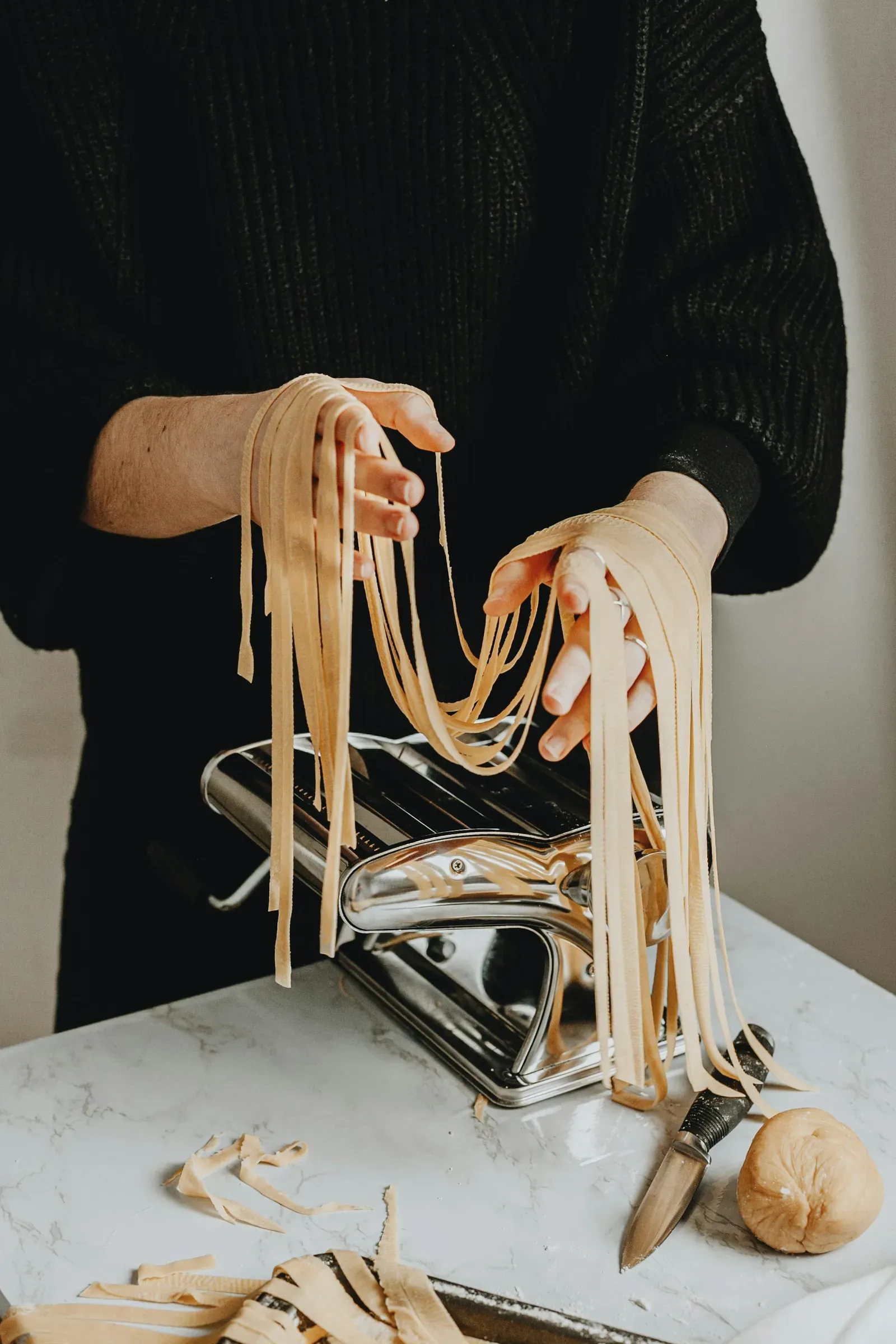
Sfoglina is the Italian word for a woman who rolls out pasta dough by hand. In Bologna it carries real respect, because the skill takes years to build. Many learned by standing beside a mother or grandmother long before they were allowed to touch the rolling pin.
Today the title also belongs to professionals who work in pasta shops and restaurants. Some of them are visible through shop windows, rolling dough in the morning. The craft is handed down mostly by watching and repeating, not by reading recipes.
Just Flour and Eggs
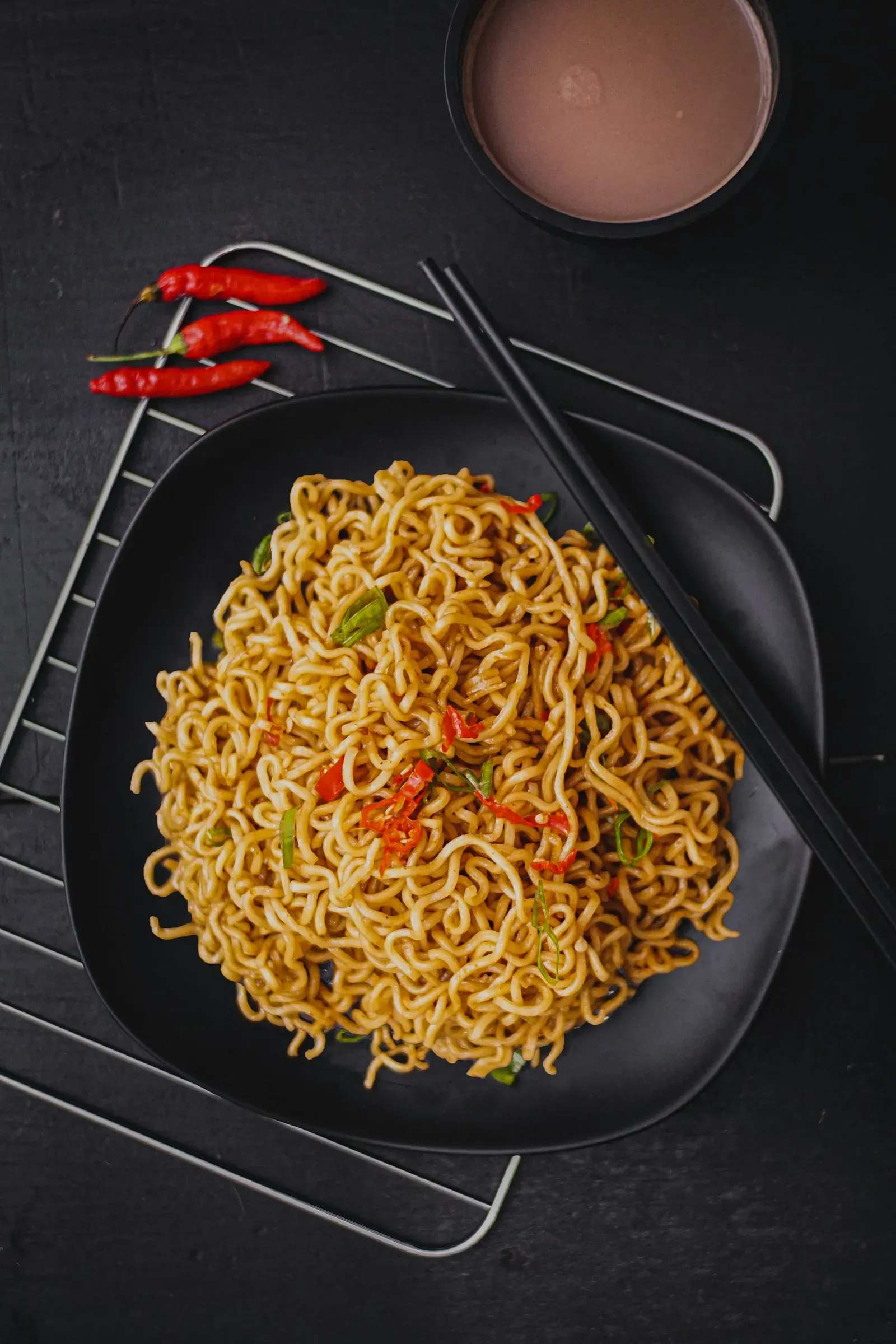
The classic Bolognese dough has only two ingredients. Soft wheat flour, usually the finely milled type labeled 00, is mixed with whole eggs. The traditional proportion is about one egg for every hundred grams of flour, though cooks adjust by feel.
There’s no water, no oil and no salt in the dough itself. The eggs provide moisture, color and richness. Because the recipe is so spare, the quality of the eggs matters a great deal, and many cooks look for ones with deep orange yolks.
Building the Well
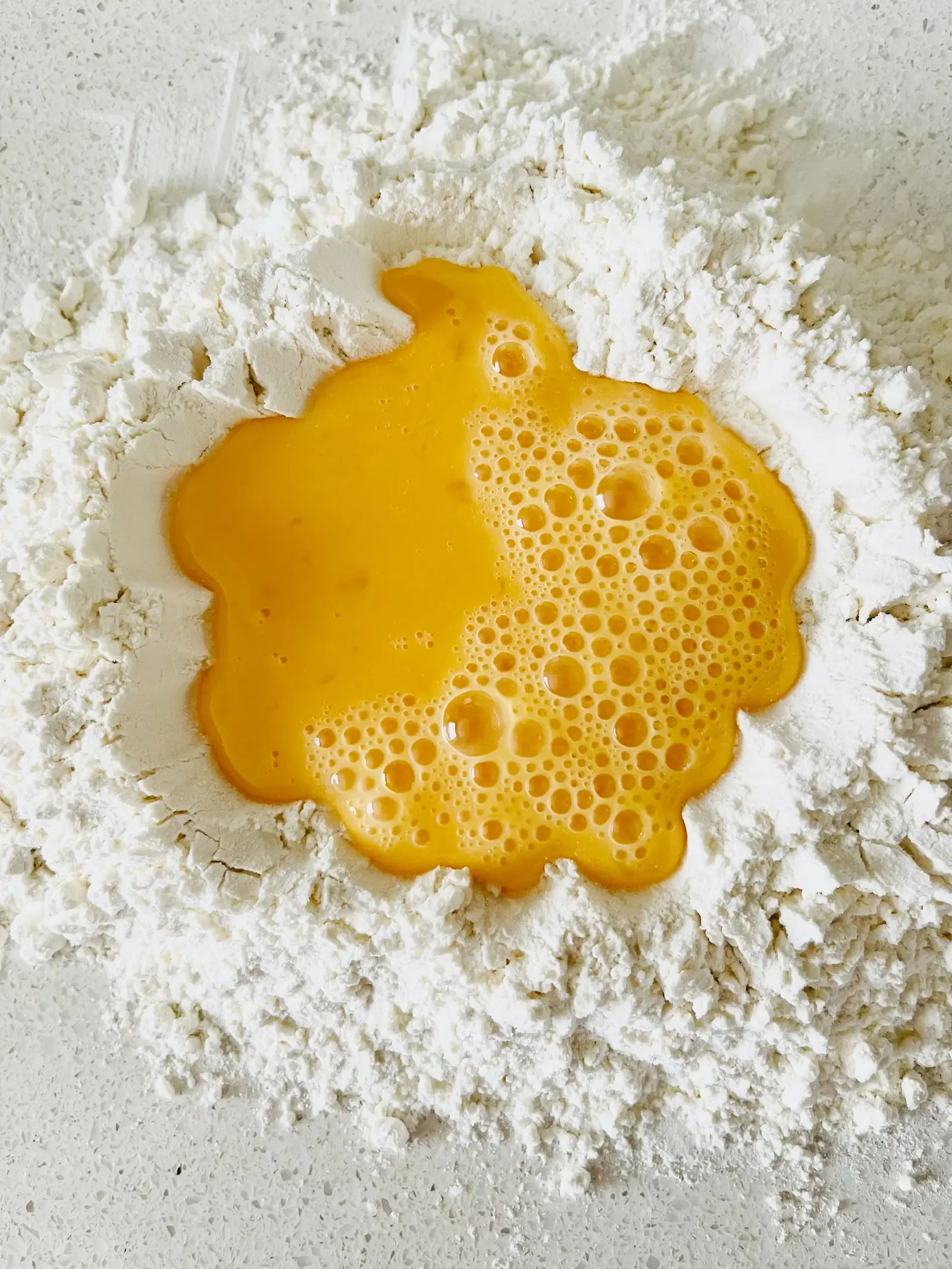
The flour goes onto the wooden board in a mound, and a hollow is pressed into the center. The eggs are cracked into this well, like a small volcano. A fork breaks the yolks and slowly pulls in flour from the inner walls.
Once the mixture thickens, the hands take over. The dough is gathered into a shaggy mass and worked until it holds together. Grandmothers tend to judge the texture by touch, adding a pinch of flour if it feels sticky or a drop of egg if it feels dry.
Kneading and Resting
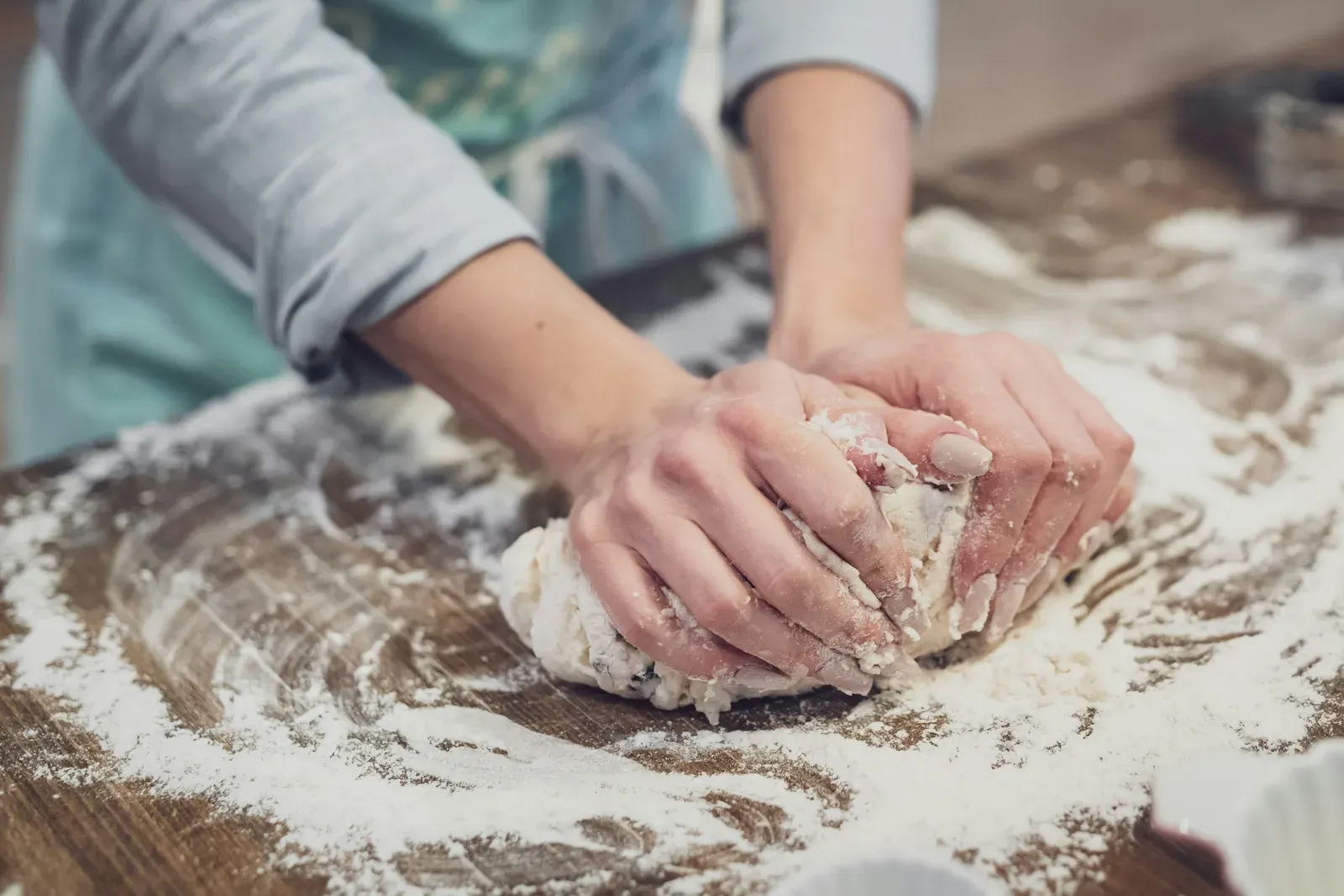
Kneading takes about ten minutes of steady pushing, folding and turning. The goal is a smooth, elastic ball that springs back slightly under a finger. This develops the gluten that will let the dough stretch very thin later without tearing.
The dough is then wrapped or covered and left to rest, typically for around half an hour. Resting relaxes the gluten, so the dough rolls out more easily and doesn’t shrink back. It’s a quiet pause that many home cooks refuse to skip.
The Mattarello and the Art of Rolling
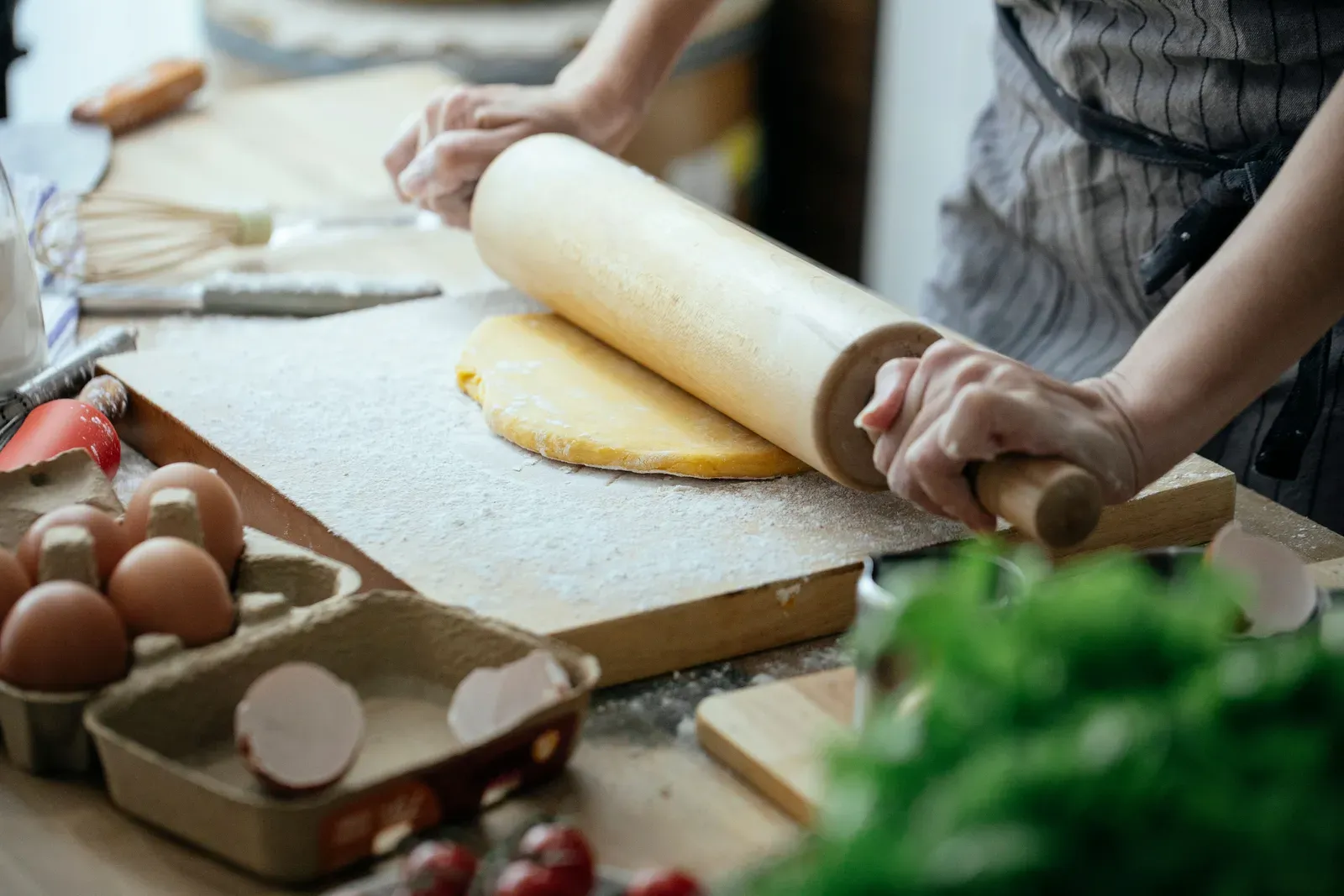
The tool that defines the process is the mattarello, a long, slender wooden rolling pin with no handles. Bolognese ones are often close to a meter in length, far longer than the typical pin used in other countries. The extra length lets the cook roll the whole sheet in broad, even strokes.
The sfoglina rolls the dough away from her body, wraps part of it around the pin, and stretches it as she pulls it back. She turns the sheet repeatedly to keep it round and even. A well rolled sfoglia becomes thin enough that the grain of the board, or even a hand, can be seen faintly through it.
Cutting Tagliatelle
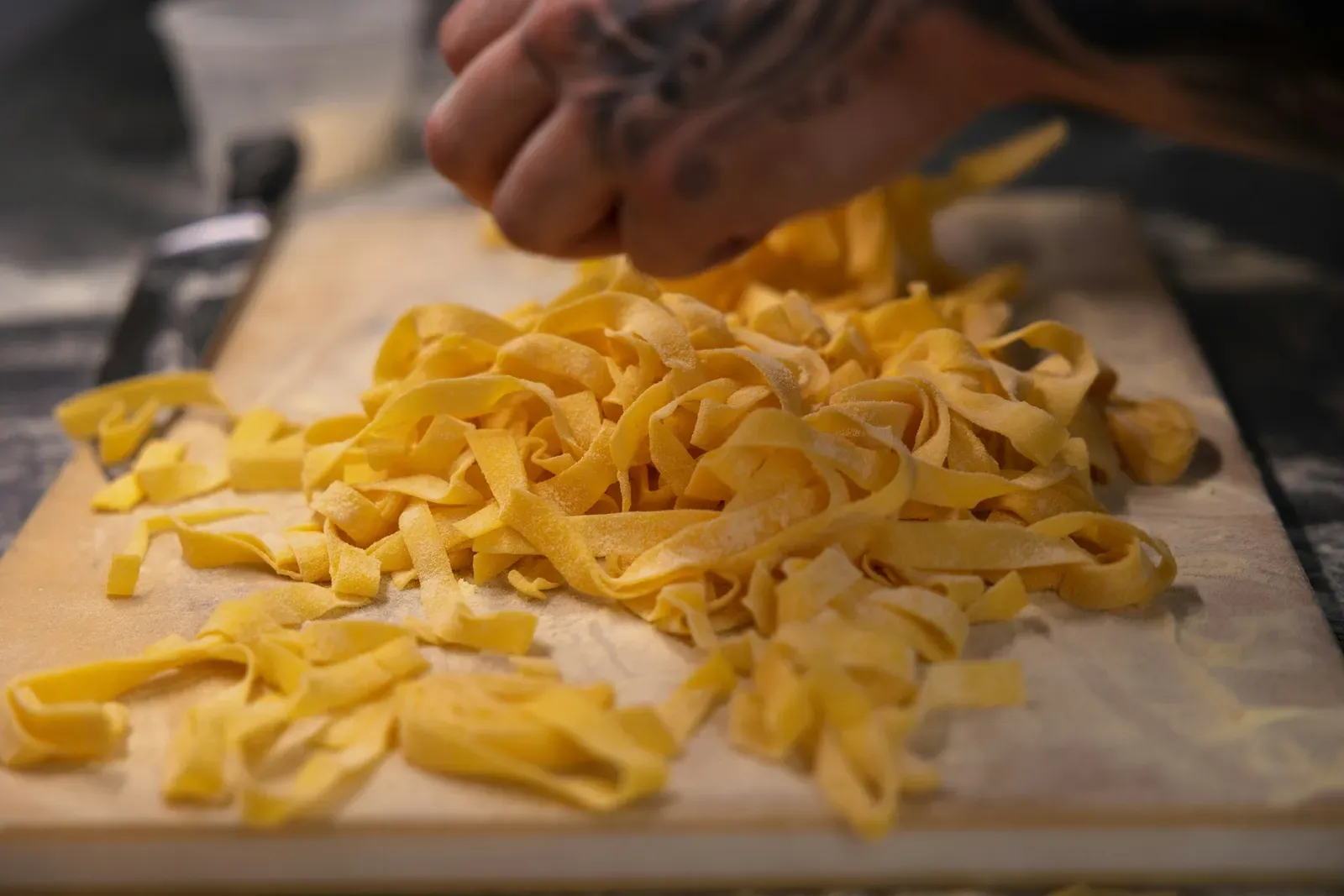
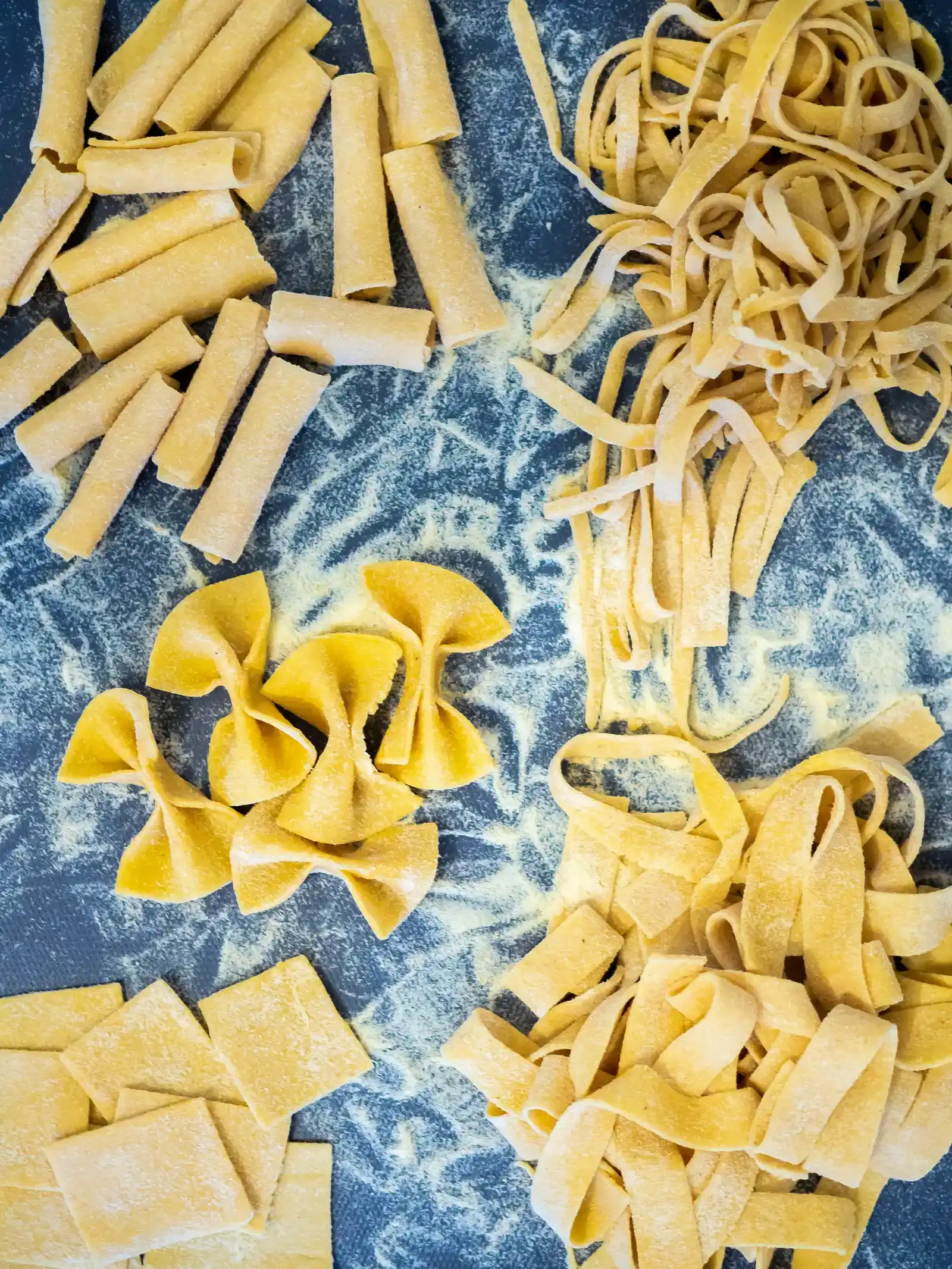
Tagliatelle is the shape most closely tied to the city. After the sheet has dried briefly so it isn’t tacky, it is loosely rolled into a flat spiral. A sharp knife then slices it into ribbons, which are shaken open into nests.
The proportions are taken seriously. In 1972 the Italian Academy of Cuisine deposited a reference description of the tagliatelle at the Bologna Chamber of Commerce, and a golden replica is kept there. It sets the cooked width at 8 millimeters, a detail Bologna still likes to point to as proof of how precise its tradition can be.
Tortellini and Other Filled Pasta
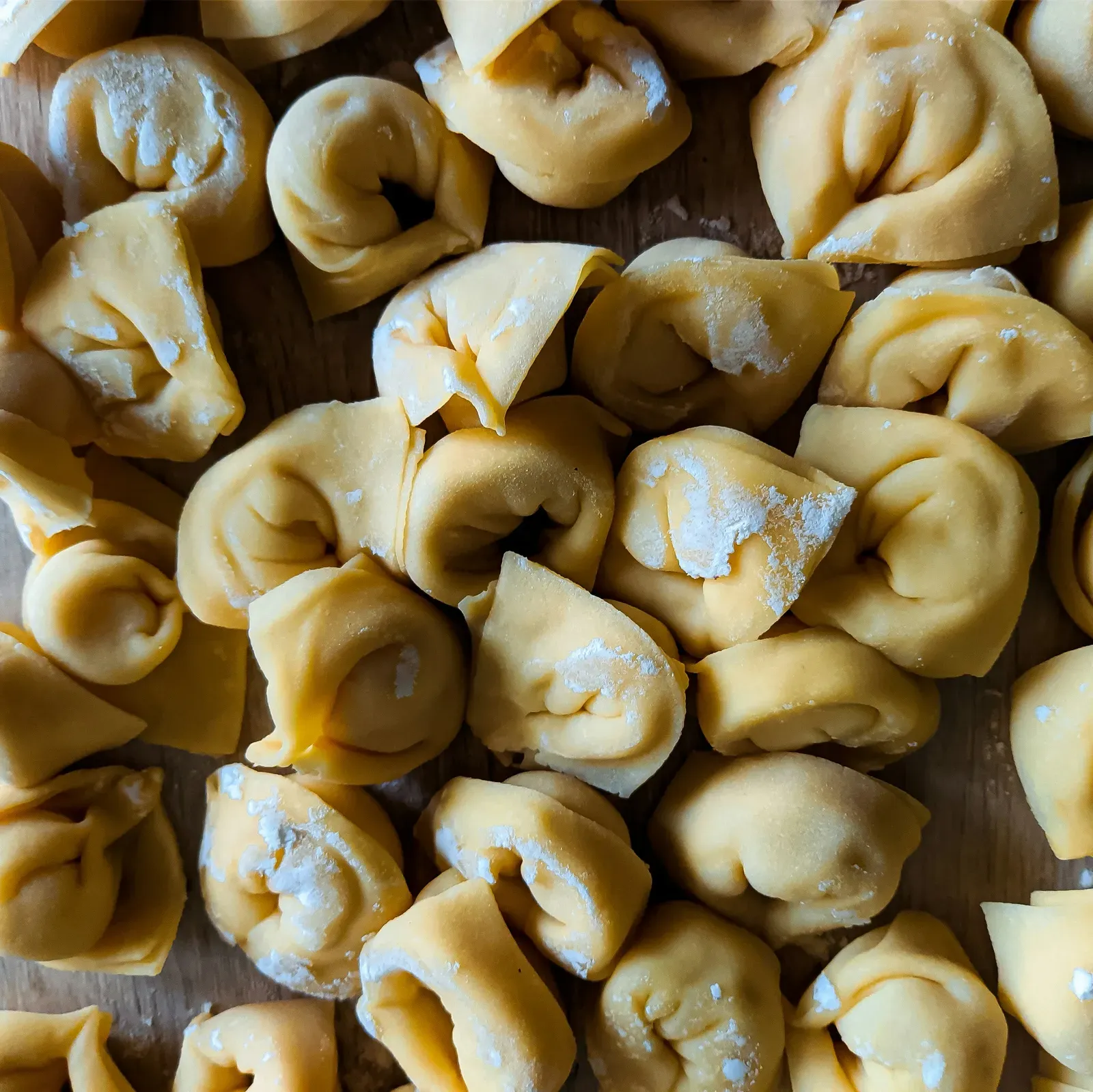
On holidays, and especially at Christmas, the same dough becomes tortellini. Small squares are cut from the sfoglia, filled with a little stuffing, then folded into a triangle and wrapped around a fingertip. The finished shape is often compared to a navel, and local legend links it to the goddess Venus.
The filling traditionally mixes pork loin, prosciutto, mortadella, Parmigiano Reggiano, egg and a touch of nutmeg. Families have their own versions, and arguments over details are part of the tradition. Tortellini are classically served in a clear broth, not with heavy sauce.
Sauces That Fit the Pasta
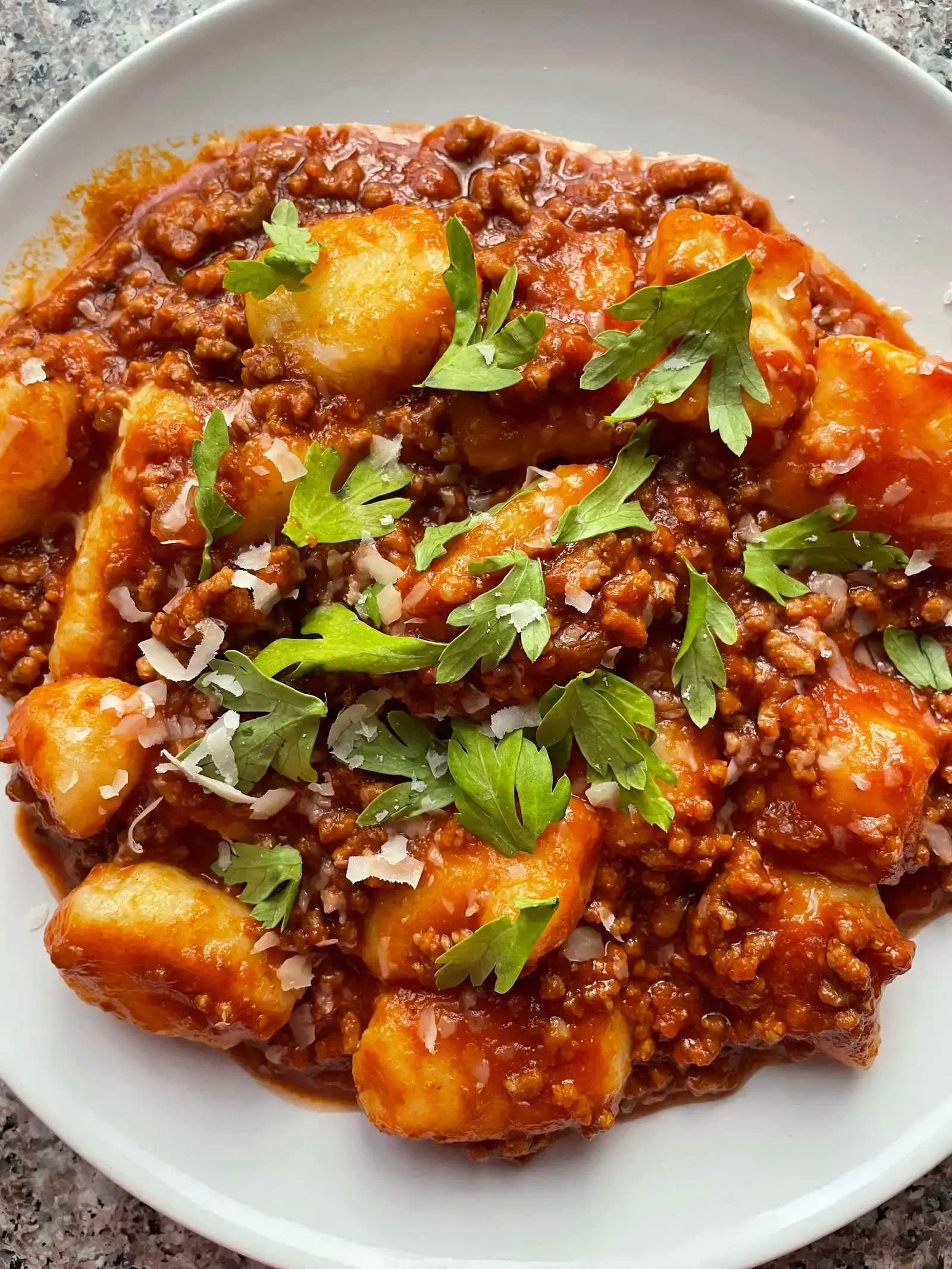
Bolognese cooks choose the sauce to suit the shape. Tagliatelle is paired with ragù, a slow cooked meat sauce built on beef and pork, soffritto, a little tomato and often some milk or wine. It bears little resemblance to the thick tomato heavy mixture many people abroad call Bolognese.
Ragù is simmered for hours so the flavors soften and blend. The porous surface of fresh egg pasta holds the sauce well, which is part of why the pairing lasts. Simpler options, such as butter and Parmigiano, are also common for delicate filled pasta.
Keeping the Tradition Alive
Bologna was named a UNESCO Creative City of Gastronomy in 2021, and its pasta making is a central part of that identity. Cooking schools and small workshops now teach visitors the sfoglina’s method, and many are run by women who learned it at home. Classes usually begin with the same board, eggs and flour.
Pasta shops in the historic center still roll dough by hand each day, which gives travelers a direct look at the craft. At home, the knowledge continues in a quieter way, on Sunday mornings and before holidays. A grandmother’s hands, a long pin and a floured board remain the core of the method.




Leave a Reply